TCI M0938 Magnesium 4-Nitrobenzyl Malonate, bearing CAS number 83972-01-4, is the magnesium salt of a malonate mono-ester in which the ester group is a 4-nitrobenzyl moiety. This compound is a specialised reagent designed to transfer a malonate unit onto an acyl group, delivering β-keto esters with high efficiency. In the organic synthesis laboratory, the material functions as an important building block that bridges activated carboxylic acid derivatives and the β-keto ester framework, one of the most versatile intermediates available for the construction of complex molecules.
The property that leads chemists to select this reagent is its magnesium salt form, which arrives ready to use, so the operator does not need to generate the malonate enolate separately with a strong base that is prone to causing side reactions. The 4-nitrobenzyl group acts as a carboxyl protecting group that remains stable under many reaction conditions yet can be removed selectively by hydrogenolysis or reduction, making it very well suited to fragile target molecules. Its solid form allows accurate weighing and straightforward storage, and supports portionwise addition in laboratory-scale reactions.
In Indonesia, this reagent is used principally in organic synthesis laboratories at universities and research institutes, as well as in research and development units working on pharmaceutical intermediates and fine chemicals. Because it is supplied as a stable solid in defined pack sizes, it fits the working pattern of Indonesian laboratories, where reagents are ordered for specific projects and must remain usable across an extended research programme rather than being consumed in a single campaign.
Related TCI products
- TCI A0039 619-90-9 4-Nitrobenzyl Acetate
- TCI N0875 61312-84-3 4-Nitrobenzyl Acetoacetate
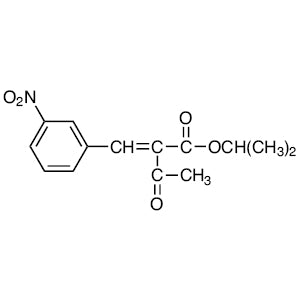
- TCI I1116 39562-25-9 Isopropyl 2-(3-Nitrobenzylidene)-3-oxobutanoate
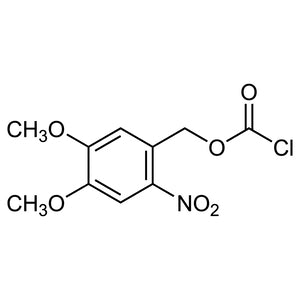
- TCI D6396 42855-00-5 4,5-Dimethoxy-2-nitrobenzyl Carbonochloridate
- TCI M1177 77359-11-6 Mono-4-nitrobenzyl Malonate
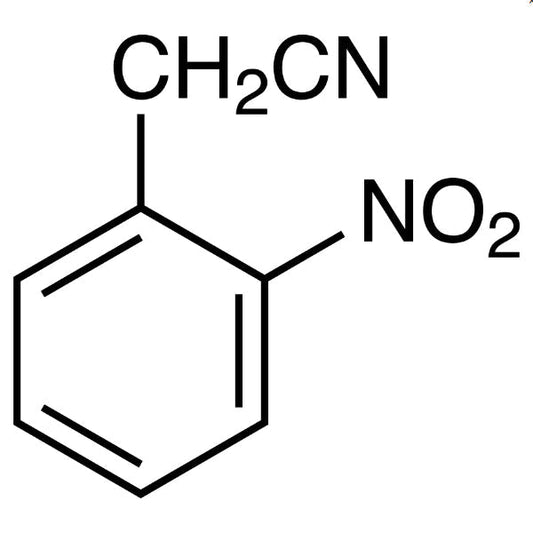
- TCI N0781 610-66-2 2-Nitrobenzyl Cyanide
- β-Keto ester synthesis: the reagent transfers a malonate unit directly onto an acyl group, giving the β-keto ester framework efficiently without a separate enolate generation step.
- Acylation of activated carboxylic acid derivatives: it converts activated acid derivatives into β-keto esters, bridging two classes of intermediate that are otherwise awkward to connect.
- Protected carboxyl chemistry: the 4-nitrobenzyl ester functions as a carboxyl protecting group that survives many reaction conditions and is later removed selectively.
- Synthesis of sensitive target molecules: selective deprotection by hydrogenolysis or reduction lets chemists unmask the acid without exposing fragile substrates to harsh acidic or basic cleavage.
- Multi-step construction of complex molecules: as a non-heterocyclic building block, it supplies a versatile β-keto ester intermediate for onward elaboration in extended synthetic routes.
| Brand | TCI |
|---|---|
| CAS number | 83972-01-4 |
| Molecular formula | — |
| Purity | — |
| Category | Chemistry > Building Blocks > Non-Heterocyclic Building Blocks |
| Pack sizes | available in the standard TCI catalogue pack sizes; please confirm the current option when ordering. |
| Physical form | solid, suitable for accurate weighing and portionwise addition. |
| Storage | keep in the tightly closed original container, protected from moisture. |
Store the reagent in its tightly closed original container in a cool, dry place, away from moisture, since magnesium malonate salts are best protected from humid air. Keep the container clearly labelled and grouped with other organic synthesis reagents rather than with oxidising agents. Weigh and transfer the solid in a fume hood using clean, dry spatulas and dry glassware, and close the container promptly after use to limit exposure to atmospheric moisture. Wear a laboratory coat, safety glasses, and chemically resistant gloves during handling, and consult the manufacturer's safety data sheet before first use for full precautionary guidance and disposal requirements.
—
Produk Terkait
-
4-NitrobenzylAcetate TCI A0039
Regular price From Rp 1.298.850,00Regular price -
4-NitrobenzylAcetoacetate TCI N0875
Regular price From Rp 584.850,00Regular price -
Isopropyl2-(3-Nitrobenzylidene)-3-oxobutanoate TCI I1116
Regular price From Rp 1.405.950,00Regular price -
4,5-Dimethoxy-2-nitrobenzylCarbonochloridate TCI D6396
Regular price From Rp 1.378.650,00Regular price -
Mono-4-nitrobenzylMalonate TCI M1177
Regular price From Rp 1.431.150,00Regular price -
2-NitrobenzylCyanide TCI N0781
Regular price Rp 1.829.100,00Regular price -
2-NitrobenzylBromide TCI N0404
Regular price From Rp 1.060.500,00Regular price -
4-NitrobenzylCyanide TCI N0229
Regular price From Rp 928.200,00Regular price