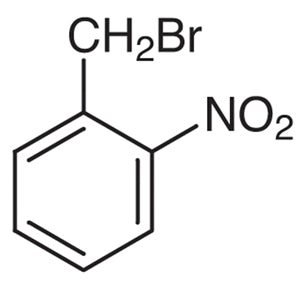
2-Nitrobenzyl Bromide (TCI N0404) is a chemical compound widely used in organic laboratory settings for its versatility in synthetic reactions. This compound serves as a key building block in the synthesis of complex molecules, particularly in substitution and coupling reactions. Its molecular structure features a bromide group attached to a benzene ring substituted with a nitro group, making it a valuable reagent for functional group transformations. Due to its reactivity and chemical stability, it is a preferred choice for researchers aiming to develop new compounds with specific biological or chemical properties.
The compound exhibits excellent solubility in organic solvents such as ethyl acetate and acetone, which makes it easy to handle and incorporate into various reaction protocols. Its chemical stability under specific reaction conditions ensures consistent results in laboratory experiments. Additionally, its reactivity allows for participation in multiple reaction mechanisms, including SN1, SN2, and nucleophilic reactions. These properties make it a reliable and efficient reagent for both academic and industrial research.
In Indonesian laboratories, 2-Nitrobenzyl Bromide is commonly used in organic chemistry research, particularly in academic institutions and research centers. It is a staple in synthetic chemistry workflows, supporting the development of new compounds with targeted functionalities. Its availability and reliability make it a go-to reagent for chemists working on a wide range of projects, from drug discovery to material science.
TCI brochures (PDF)
- Nucleosides, Nucleotides, Nucleic Acids and Related Reagents 2026-03-23 · p. 13
- Organic synthesis is a primary application where 2-Nitrobenzyl Bromide is used for its ability to participate in substitution and coupling reactions, making it essential for the creation of complex molecules.
- Drug development benefits from this compound due to its reactivity and utility in the synthesis of bioactive compounds, supporting the design of new pharmaceuticals.
- Materials science research utilizes this reagent for the synthesis of functional materials, where precise chemical structures are required for desired properties.
- Analytical chemistry laboratories use it as a standard reagent for calibrating instruments and testing reaction mechanisms due to its predictable behavior.
- Teaching laboratories incorporate it into undergraduate and graduate courses to demonstrate key organic reaction mechanisms and synthetic strategies.
| Brand | TCI |
|---|---|
| CAS number | 3958-60-9 |
| Molecular formula | — |
| Purity | — |
| Category | Chemistry > Building Blocks > Non-Heterocyclic Building Blocks |
| Pack sizes | Available in various sizes to meet different research needs |
| Physical form | Liquid |
| Storage | Store in a cool, dry place away from light and incompatible materials |
2-Nitrobenzyl Bromide should be stored in a cool, dry place, away from direct sunlight and sources of heat. It is recommended to keep the compound in a tightly sealed container to prevent evaporation and contamination. Due to its reactivity, it should be stored separately from strong bases and reducing agents to avoid unwanted chemical interactions. In laboratory settings, it is important to handle the compound with appropriate personal protective equipment, including gloves and safety goggles. Proper ventilation should be maintained when working with this reagent to minimize exposure. Regular monitoring of storage conditions ensures the compound remains stable and effective for use in chemical reactions.
—
Product Categories
- Building BlocksNon-Heterocyclic Building BlocksNitrogen Compounds [Non-Heterocyclic Building Blocks]
- Chemical BiologyNucleic Acid ChemistryProtecting Agents for Hydroxy and Amino Groups [Nucleic Acid Synthesis]
- Pharmaceutical Development and Drug Discovery Research ReagentsNucleic Acid ChemistryProtecting Agents for Hydroxy and Amino Groups [Nucleic Acid Synthesis]
Produk Terkait
-
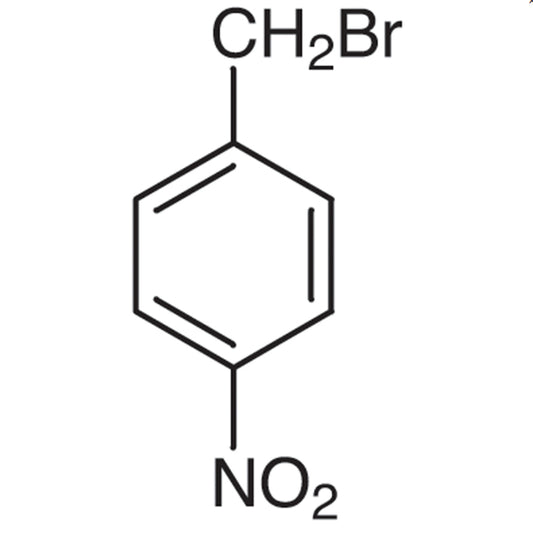
4-NitrobenzylBromide TCI N0181
Regular price From Rp 1.353.450,00Regular price -
4-NitrobenzylAcetate TCI A0039
Regular price From Rp 1.298.850,00Regular price -
4-NitrobenzylAcetoacetate TCI N0875
Regular price From Rp 584.850,00Regular price -
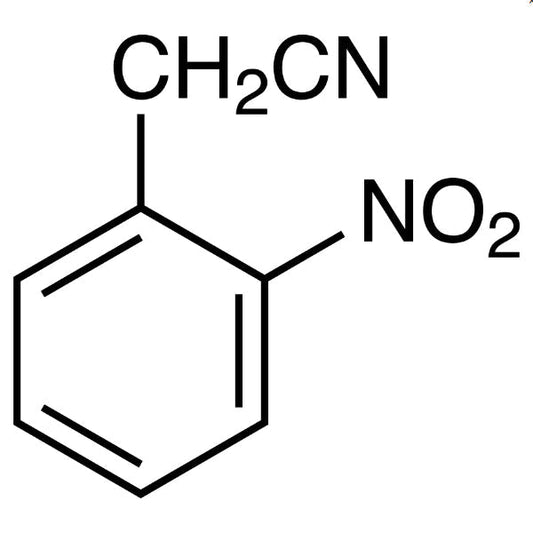
2-NitrobenzylCyanide TCI N0781
Regular price Rp 1.829.100,00Regular price -
4-NitrobenzylCyanide TCI N0229
Regular price From Rp 928.200,00Regular price -
2-NitrobenzylChloride TCI N0182
Regular price From Rp 1.644.300,00Regular price -
4-Methyl-3-nitrobenzylAlcohol TCI M2916
Regular price From Rp 1.829.100,00Regular price -
3-Methyl-4-nitrobenzylAlcohol TCI M2915
Regular price From Rp 689.850,00Regular price