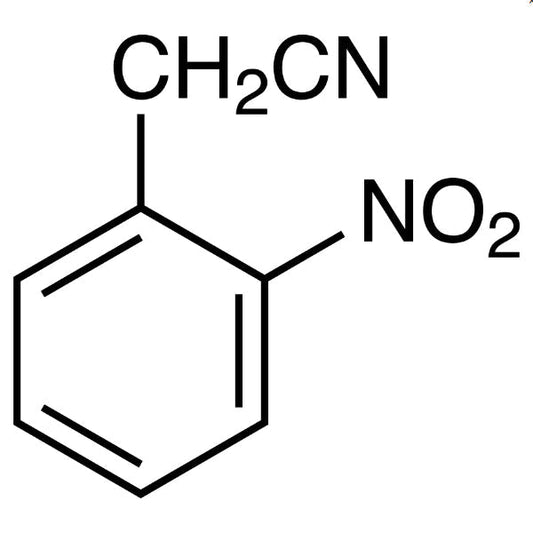
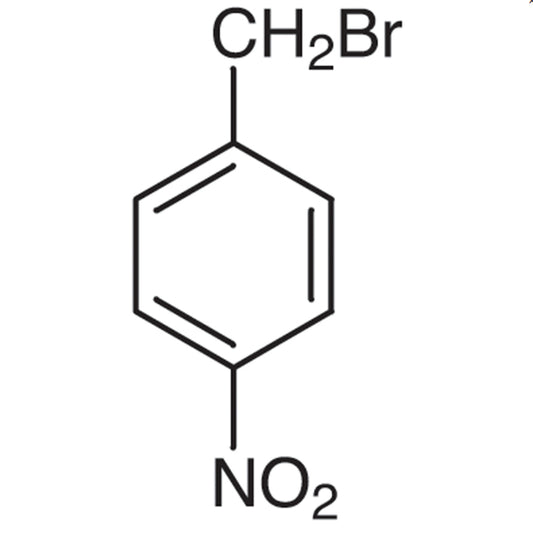
4-Nitrobenzyl Cyanide is a chemical compound widely used as a building block in the synthesis of complex organic molecules. It plays a crucial role in laboratory settings where the formation of carbon-carbon or carbon-oxygen bonds is required. This compound is particularly valuable in organic synthesis due to its reactivity and versatility in participating in various chemical reactions. Its ability to undergo substitution and bond-forming reactions makes it an essential tool for chemists working on molecular structure development.
The compound's chemical properties, including its solubility in organic solvents like ethyl acetate and chloroform, make it highly suitable for use in a wide range of chemical processes. Its stable molecular structure combined with high reactivity allows it to be employed under specific reaction conditions, enhancing the efficiency of synthetic pathways. These characteristics make it a preferred choice for researchers aiming to achieve precise and controlled chemical transformations.
In Indonesian laboratories, 4-Nitrobenzyl Cyanide is extensively used in chemical research, especially in academic institutions and research organizations. It is commonly found in projects focused on the synthesis of new compounds and molecular modifications. Its reliability and effectiveness in laboratory applications have made it a staple in the chemical research community within Indonesia.
- Organic synthesis applications benefit from 4-Nitrobenzyl Cyanide due to its reactivity and ability to form carbon-carbon bonds, making it ideal for constructing complex molecular structures.
- It is widely used in substitution reactions where the introduction of functional groups is essential, offering a reliable starting material for various synthetic routes.
- In molecular modification projects, this compound serves as a versatile intermediate, enabling the creation of new compounds with tailored properties.
- Its solubility in organic solvents facilitates easy handling and integration into reaction mixtures, enhancing the efficiency of chemical processes.
- Research institutions in Indonesia frequently use it for developing new synthetic methodologies, leveraging its chemical properties to advance scientific knowledge.
| Brand | TCI |
|---|---|
| CAS number | 555-21-5 |
| Molecular formula | — |
| Purity | — |
| Category | Chemistry > Building Blocks > Non-Heterocyclic Building Blocks |
| Pack sizes | Available in various quantities as per standard laboratory supply |
| Physical form | Liquid |
| Storage | Store in a cool, dry place away from light and incompatible substances |
4-Nitrobenzyl Cyanide should be stored in a cool, dry environment, away from direct sunlight and sources of heat. It is recommended to keep the compound in a tightly sealed container to prevent exposure to air and moisture. Due to its reactivity, it should be stored separately from strong oxidizing agents and incompatible materials to avoid potential chemical interactions. In laboratory settings, it is important to handle the compound with appropriate personal protective equipment, such as gloves and safety goggles, to ensure safe handling. Proper ventilation should be maintained when working with this compound to minimize inhalation risks. Always follow standard laboratory safety protocols to ensure the safe use and storage of this chemical.
—
Produk Terkait
-
2-NitrobenzylCyanide TCI N0781
Regular price Rp 1.829.100,00Regular price -
4-NitrobenzylAcetate TCI A0039
Regular price From Rp 1.298.850,00Regular price -
4-NitrobenzylAcetoacetate TCI N0875
Regular price From Rp 584.850,00Regular price -
2-NitrobenzylBromide TCI N0404
Regular price From Rp 1.060.500,00Regular price -
2-NitrobenzylChloride TCI N0182
Regular price From Rp 1.644.300,00Regular price -
4-NitrobenzylBromide TCI N0181
Regular price From Rp 1.353.450,00Regular price -
4-Methyl-3-nitrobenzylAlcohol TCI M2916
Regular price From Rp 1.829.100,00Regular price -
3-Methyl-4-nitrobenzylAlcohol TCI M2915
Regular price From Rp 689.850,00Regular price