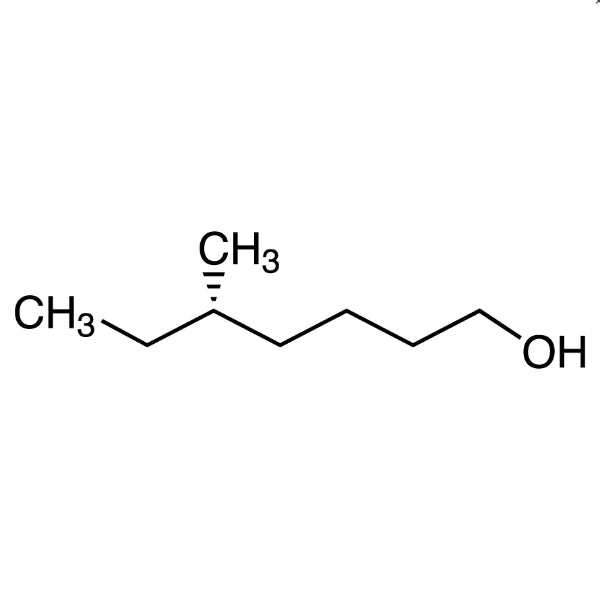
(S)-(+)-5-Methyl-1-heptanol is an organic compound widely used in scientific research, particularly in the fields of materials science and material chemistry. This compound plays a crucial role in the synthesis of complex molecules and is often employed as a building block in the development of advanced materials. Its unique molecular structure makes it a valuable resource for researchers aiming to create functional materials with specific properties. In laboratory settings, it is frequently used in the formulation of materials, especially in the development of liquid crystal compounds that find applications in display technologies and sensor systems. Its versatility and chemical stability make it an essential component in various experimental processes.
One of the key reasons for its popularity is its chemical stability and ability to interact with a wide range of other compounds. The presence of a hydroxyl group in its molecular structure contributes to its good solubility in organic solvents, making it suitable for a variety of synthetic reactions. This solubility and reactivity are critical in achieving the desired outcomes in material synthesis. Additionally, the compound exhibits unique optical properties, which further enhance its applicability in specialized research areas. These characteristics make it a preferred choice for researchers working on advanced material development and functional chemistry.
In Indonesian laboratories, (S)-(+)-5-Methyl-1-heptanol is commonly used in academic and industrial research settings. It is a key component in the development of liquid crystal materials, which are essential for modern display technologies. Its availability and reliability make it a standard material in many research projects, especially those focused on material science and chemical engineering. Its role in supporting innovation and technological advancement is significant in the scientific community.
- Liquid Crystal Material Synthesis: This compound is ideal for creating liquid crystal materials due to its unique molecular structure and optical properties, which are essential for display technologies and sensor applications.
- Organic Synthesis Reactions: Its chemical stability and solubility in organic solvents make it a preferred choice for various synthetic reactions in material science and chemical research.
- Functional Material Development: The compound's ability to interact with other substances allows it to be used in the development of advanced functional materials with specific properties.
- Research in Material Chemistry: It is widely used in academic and industrial research to explore new material properties and applications in different scientific fields.
- Sensor Technology Development: Its optical characteristics make it suitable for use in sensor development, where precise molecular interactions are required for accurate measurements.
| Brand | TCI |
|---|---|
| CAS number | 57803-73-3 |
| Molecular formula | — |
| Purity | — |
| Category | Materials Science > Material Building Blocks > Liquid Crystal (LC) Building Blocks |
| Pack sizes | Available in various sizes as per supplier specifications |
| Physical form | Liquid |
| Storage | Store in a cool, dry place away from direct sunlight |
This compound should be stored in a cool, dry place, away from direct sunlight and sources of heat. It is recommended to use airtight containers made of glass or high-density polyethylene to prevent contamination and maintain its chemical integrity. Due to its organic nature, it should be handled in a well-ventilated area to minimize exposure. Always wear appropriate personal protective equipment, such as gloves and safety goggles, when working with this material. It is important to ensure that it is kept separate from incompatible substances to avoid any potential chemical reactions. Proper storage and handling are essential to maintain its stability and effectiveness in laboratory applications.
—
Produk Terkait
-
TCI B5774 5,10-Bis(4,4,5,5-tetramethyl-1,3,2-dioxaborolan-2-yl)naphtho[1,2-c:5,6-c']bis([1,2,5]oxadiazole)
Regular price Rp 10.255.350,00Regular price -
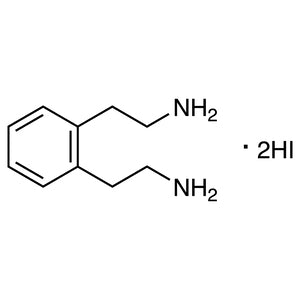
Dihydroiodide TCI B6569
Regular price From Rp 1.936.200,00Regular price -
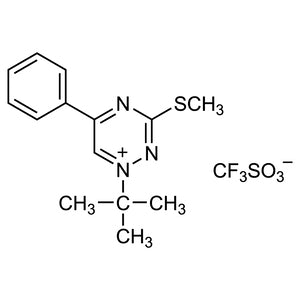
Trifluoromethanesulfonate TCI B7003
Regular price From Rp 1.936.200,00Regular price
![5,10-Bis(4,4,5,5-tetramethyl-1,3,2-dioxaborolan-2-yl)naphtho[1,2-c:5,6-c']bis([1,2,5]oxadiazole) - TCI B5774 - AMI Scientific](http://amiscientific.com/cdn/shop/files/TCI2510B5774.jpg?v=1769180228&width=533)