TCI M0991 3-Methyl-3-heptene is supplied as a mixture of cis and trans isomers. It is an unsaturated eight-carbon hydrocarbon carrying a methyl group on the third carbon, which is also the position of the double bond. This arrangement makes the compound a trisubstituted alkene, a class of substrate that holds particular interest for researchers because its behaviour differs from that of simpler terminal alkenes. In the laboratory, the compound is most commonly employed as a model substrate for probing the scope and limitations of a new reaction method before that method is applied to more complex and more valuable target molecules.
The characteristics that make this material useful are the high degree of substitution around its double bond combined with the steric hindrance that surrounds it. Trisubstituted alkenes tend to be more electron-rich and therefore more reactive toward electrophiles, yet at the same time they are more difficult for bulky catalysts to approach. This dual nature is precisely what makes the compound an honest proving ground for a methodology. Supply as a cis and trans mixture is itself an advantage, since it allows a researcher to observe whether a given reaction is stereospecific. As a volatile liquid hydrocarbon, the material is also straightforward to separate.
Within Indonesian laboratories, this building block belongs to the chemistry portfolio under non-heterocyclic building blocks and serves synthetic and methodology-focused research groups. University and institutional laboratories reach for substrates of this type when validating catalytic protocols, while industrial research units use them to confirm that a published procedure behaves as described before committing scarce advanced intermediates. Its role is therefore that of a reference substrate rather than a production-scale raw material.
Related TCI products
- TCI H0874 14686-14-7 trans-3-Heptene
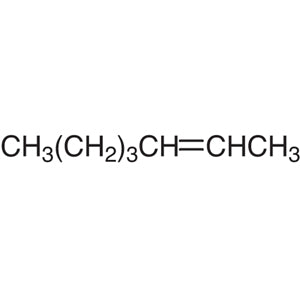
- TCI H0043 592-77-8 2-Heptene (cis- and trans- mixture)
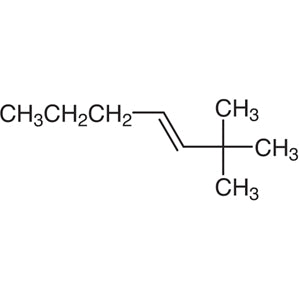
- TCI D1260 19550-75-5 trans-2,2-Dimethyl-3-heptene
- TCI P1841 504-60-9 1,3-Pentadiene (cis- and trans- mixture) (stabilized with TBC)
- TCI P0495 637-50-3 beta-Methylstyrene (cis- and trans- mixture) (stabilized with TBC)
- TCI P0064 109-68-2 2-Pentene (cis- and trans- mixture)
- Reaction methodology development — the trisubstituted double bond provides a demanding but well-defined test of whether a newly devised transformation tolerates substitution and hindrance.
- Catalyst scope screening — bulky catalysts struggle to approach this hindered alkene, making it an effective substrate for distinguishing genuinely capable catalyst systems from limited ones.
- Stereospecificity studies — because the material arrives as a cis and trans mixture, the isomer distribution in the product reveals whether the reaction under study proceeds stereospecifically.
- Electrophilic addition investigations — the electron-rich character of a trisubstituted alkene makes it a responsive substrate for examining how electrophiles engage a substituted carbon-carbon double bond.
- Model substrate work preceding target synthesis — researchers run trial transformations here first, conserving complex and costly target molecules until the chosen method has been demonstrated.
| Brand | TCI |
|---|---|
| CAS number | 7300-03-0 |
| Molecular formula | — |
| Purity | — |
| Category | Chemistry > Building Blocks > Non-Heterocyclic Building Blocks |
| Pack sizes | available in the pack sizes listed for this catalogue item; storage in a cool, well-ventilated area away from ignition sources is advised |
| Physical form | volatile liquid hydrocarbon, supplied as a mixture of cis and trans isomers |
| Storage | — |
- Product code: M0991
Store the container in a cool, well-ventilated place, kept tightly closed and away from heat, sparks, open flames, and other sources of ignition. As a volatile liquid hydrocarbon, the material should remain in its original tightly sealed supplier container or in an equivalent chemically compatible vessel, with the closure checked before returning it to storage. Handle the compound inside a fume hood and wear safety goggles, chemical-resistant gloves, and a laboratory coat. Keep the working area free of ignition sources, transfer the liquid carefully to limit vapour release, and consult the supplier safety data sheet before first use.
—
Produk Terkait
-
trans-3-Heptene TCI H0874
Regular price Rp 4.691.400,00Regular price -
2-Heptene(cis-andtrans-mixture) TCI H0043
Regular price From Rp 2.411.850,00Regular price -
trans-2,2-Dimethyl-3-heptene TCI D1260
Regular price Rp 3.525.900,00Regular price -
1,3-Pentadiene(cis-andtrans-mixture)(stabilizedwithTBC) TCI P1841
Regular price Rp 10.229.100,00Regular price -
beta-Methylstyrene(cis-andtrans-mixture)(stabilizedwithTBC) TCI P0495
Regular price Rp 4.771.200,00Regular price -
2-Pentene(cis-andtrans-mixture) TCI P0064
Regular price From Rp 1.035.300,00Regular price -
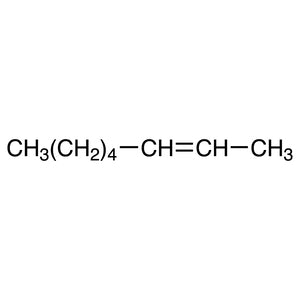
2-Octene(cis-andtrans-mixture) TCI O0042
Regular price From Rp 1.220.100,00Regular price -
4-Methyl-2-pentene(cis-andtrans-mixture) TCI M0395
Regular price From Rp 1.988.700,00Regular price