TCI M1089 2-Mercapto-4(3H)-quinazolinone is a heterocyclic building block that combines a quinazolinone core with a mercapto group at the two position. The quinazolinone core is a bicyclic framework formed from a benzene ring fused to a pyrimidinone ring, and this framework is widely recognised as a pharmacophore in many active molecules. The presence of the sulfur group at the two position means the compound is not merely a passive core, but a highly active reaction entry point for researchers who want to grow structural diversity from a single basic framework.
The main property that makes it a favoured reagent is the high nucleophilicity of the sulfur together with the thiol–thione equilibrium at that position. The sulfur atom reacts rapidly and selectively with alkyl halides and benzyl halides to form thioethers, usually requiring only a weak base at moderate temperature, so the procedure is simple and economical in the number of steps involved. In addition, the amide nitrogen at the three position provides a second alkylation site, so researchers can assemble compounds substituted at two different positions in sequence. Its rigid aromatic framework also confers thermal stability.
In Indonesian laboratories this type of building block is typically used in university and institutional research groups working on synthetic organic chemistry and medicinal chemistry, where a single versatile scaffold allows a series of analogues to be prepared without procuring a separate starting material for each target. The straightforward reaction conditions suit laboratories equipped for routine bench-scale synthesis, and the stable solid form makes the material practical to store and handle between experiments in a teaching or research setting.
Related TCI products
- TCI M2709 1769-24-0 2-Methyl-4(1H)-quinazolinone
- TCI B4317 179688-01-8 7-Benzyloxy-6-methoxy-3H-quinazolin-4-one
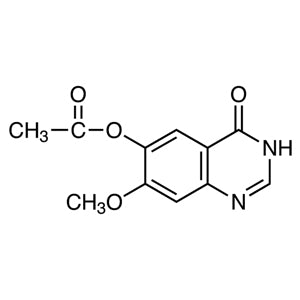
- TCI A2717 179688-53-0 6-Acetoxy-7-methoxy-3H-quinazolin-4-one
- TCI D3816 13794-72-4 6,7-Dimethoxy-3H-quinazolin-4-one
- TCI A0425 2349-67-9 2-Amino-5-mercapto-1,3,4-thiadiazole
- TCI A1455 16691-43-3 3-Amino-5-mercapto-1,2,4-triazole
- Thioether synthesis — the nucleophilic sulfur at the two position couples rapidly and selectively with alkyl and benzyl halides under weak base at moderate temperature, giving a short and reliable route.
- Analogue library preparation — one scaffold bearing two distinct reactive sites lets a research group generate a series of related structures in sequence without sourcing separate starting materials for each.
- Medicinal chemistry scaffold work — the quinazolinone core is a recognised pharmacophore in many active molecules, making this compound a practical entry point for structure–activity exploration programmes.
- Sequential dual-site functionalisation — the amide nitrogen at the three position offers a second alkylation site, so compounds substituted at two different positions can be assembled step by step.
- Heterocyclic methodology studies — the thiol–thione equilibrium and rigid fused-ring framework make this material a useful substrate for investigating selectivity and reaction conditions in heterocyclic chemistry.
| Brand | TCI |
|---|---|
| CAS number | 13906-09-7 |
| Molecular formula | — |
| Purity | — |
| Category | Chemistry > Building Blocks > Heterocyclic Building Blocks |
| Pack sizes | available in the standard research pack sizes offered for this catalogue item |
| Physical form | solid material with a rigid aromatic framework and good thermal stability |
| Storage | keep in a tightly closed container in a cool, dry place away from light |
Store the container tightly closed in a cool, dry and well-ventilated area, protected from direct light and away from sources of heat or ignition. Keep the material in its original supplier container or in a chemically compatible tightly sealed glass or plastic vessel, clearly labelled with the compound name and CAS number. Handle in a fume hood using safety glasses, gloves and a laboratory coat, since thiol-containing heterocycles may have a persistent odour. Avoid dust formation, prolonged inhalation and contact with skin or eyes. Close the container promptly after weighing to limit moisture uptake, and dispose of residues and contaminated consumables through the laboratory's normal chemical waste channel.
—
Produk Terkait
-
2-Methyl-4(1H)-quinazolinone TCI M2709
Regular price Rp 2.625.000,00Regular price -
7-Benzyloxy-6-methoxy-3H-quinazolin-4-one TCI B4317
Regular price From Rp 689.850,00Regular price -
6-Acetoxy-7-methoxy-3H-quinazolin-4-one TCI A2717
Regular price From Rp 584.850,00Regular price -
6,7-Dimethoxy-3H-quinazolin-4-one TCI D3816
Regular price From Rp 505.050,00Regular price -
2-Amino-5-mercapto-1,3,4-thiadiazole TCI A0425
Regular price From Rp 769.650,00Regular price -
3-Amino-5-mercapto-1,2,4-triazole TCI A1455
Regular price From Rp 980.700,00Regular price -
4-Amino-3-hydrazino-5-mercapto-1,2,4-triazole[forDeterminationofAldehydes] TCI A0956
Regular price From Rp 1.670.550,00Regular price -
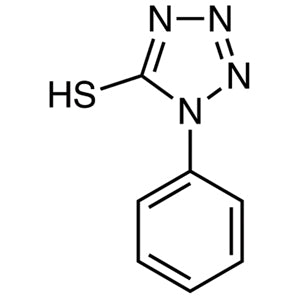
5-Mercapto-1-phenyl-1H-tetrazole TCI P0640
Regular price From Rp 875.700,00Regular price




![1750-12-5 4-Amino-3-hydrazino-5-mercapto-1,2,4-triazole [for Determination of Aldehydes] - AMI Scientific](http://amiscientific.com/cdn/shop/files/TCI2510A0956.jpg?v=1767080402&width=533)