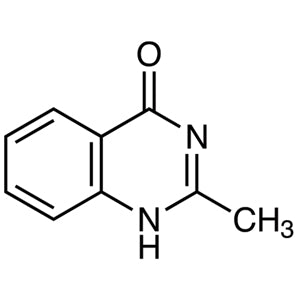
2-Methyl-4(1H)-quinazolinone is a versatile organic compound widely used in laboratory settings for its role in synthetic chemistry. As a heterocyclic building block, it serves as a key intermediate in the synthesis of various functional compounds, including pharmaceuticals and industrial chemicals. Its structural stability and reactivity make it a valuable tool for researchers aiming to develop new molecules with specific properties. This compound is particularly useful in reactions that require controlled functional group manipulation and the formation of complex molecular architectures.
The compound’s unique quinazolinone ring structure provides both chemical stability and reactivity, making it ideal for substitution and cyclization reactions. Its ability to form stable intermediates during synthetic processes enhances the efficiency of chemical synthesis. Additionally, its compatibility with a wide range of functional groups allows for the creation of diverse molecular structures, which is essential in both academic and industrial research. These properties make it a preferred choice for chemists working on drug discovery and material development.
In Indonesian laboratories, 2-Methyl-4(1H)-quinazolinone is commonly used in both fundamental and applied chemical research. It is frequently employed in the development of new pharmaceutical compounds and functional materials. Its availability and reliability support the work of research institutions and universities in Indonesia, contributing to advancements in chemical sciences and related fields.
Related TCI products
- Organic synthesis research, as it serves as a key building block for creating complex heterocyclic compounds.
- Pharmaceutical development, due to its ability to participate in reactions that form drug-like molecules.
- Industrial chemical production, where it is used to synthesize functional compounds for various applications.
- Academic teaching and experimentation, as it is a standard compound used in chemical education and research.
- Material science studies, where it contributes to the development of new functional materials with specific properties.
| Brand | TCI |
|---|---|
| CAS number | 1769-24-0 |
| Molecular formula | — |
| Purity | — |
| Category | Chemistry > Building Blocks > Heterocyclic Building Blocks |
| Pack sizes | Available in various quantities as per supplier specifications |
| Physical form | Solid (as per standard product description) |
| Storage | Store in a cool, dry place away from light and moisture |
This compound should be stored in a cool, dry environment, away from direct sunlight and sources of moisture. It is recommended to use airtight containers to prevent exposure to air and humidity, which could affect its stability. Proper labeling of storage containers is essential for safety and traceability. In laboratory settings, it should be handled with care, using appropriate personal protective equipment such as gloves and safety goggles. It is important to ensure that the compound is kept in a secure location, away from incompatible materials. Regular inspection of storage conditions helps maintain the integrity and usability of the compound for research purposes.
—
Produk Terkait
-
2-Mercapto-4(3H)-quinazolinone TCI M1089
Regular price From Rp 2.094.750,00Regular price -
7-Benzyloxy-6-methoxy-3H-quinazolin-4-one TCI B4317
Regular price From Rp 689.850,00Regular price -
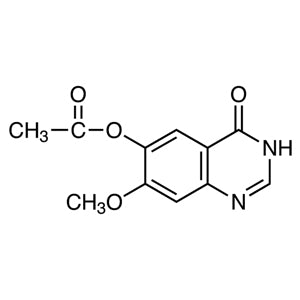
6-Acetoxy-7-methoxy-3H-quinazolin-4-one TCI A2717
Regular price From Rp 584.850,00Regular price -
6,7-Dimethoxy-3H-quinazolin-4-one TCI D3816
Regular price From Rp 505.050,00Regular price -
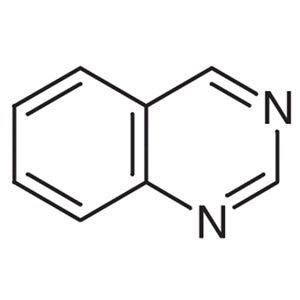
Quinazoline TCI Q0055
Regular price Rp 1.618.050,00Regular price -
O~6~-Benzylguanine TCI B4208
Regular price From Rp 1.167.600,00Regular price -
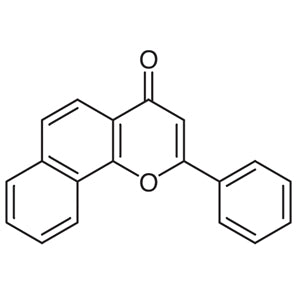
alpha-Naphthoflavone TCI B0056
Regular price From Rp 743.400,00Regular price -
1-Aminobenzotriazole TCI A1464
Regular price From Rp 6.015.450,00Regular price