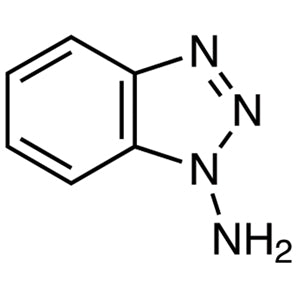
1-Aminobenzotriazole is a versatile chemical compound widely used in laboratory settings for its unique reactivity and structural characteristics. It belongs to the class of heterocyclic compounds and is commonly employed in organic synthesis due to its ability to participate in various chemical reactions. This compound serves as a key building block in the development of more complex molecules, making it essential for researchers in chemistry and pharmaceutical sciences. Its role extends beyond basic research, supporting both educational and industrial applications in the chemical industry.
The compound is valued for its stability and controlled reactivity, which make it a preferred choice in synthetic processes. Its ability to form stable intermediates and engage in coupling reactions enhances its utility in the creation of new compounds. The molecular structure allows it to interact with a variety of functional groups, expanding its applicability in diverse chemical transformations. These properties contribute to its popularity among scientists and researchers looking for reliable and effective reagents.
In Indonesian laboratories, 1-Aminobenzotriazole is frequently used in scientific research, particularly in the fields of organic chemistry and pharmaceutical development. It is commonly found in experiments that require the synthesis of complex compounds, whether for academic study or industrial applications. Its consistent performance and reliability make it a sought-after material for both educational and research purposes.
Advantages (TCI brochure)
- Generates benzyne by oxidative decomposition with lead tetraacetate, eliminating nitrogen
TCI brochures (PDF)
- Aryne/Heteroaryne Precursors 2025-09-16 · p. 3
Related TCI products
- Heterocyclic Compound Synthesis: This compound is ideal for the synthesis of heterocyclic structures due to its ability to participate in coupling and substitution reactions.
- Pharmaceutical Research: Its use in drug development is significant as it can serve as a building block for creating new therapeutic agents.
- Organic Chemistry Education: It is commonly used in teaching laboratories to demonstrate synthetic techniques and reaction mechanisms.
- Material Science Applications: It is employed in the development of new materials due to its chemical versatility and structural properties.
- Functional Group Modification: Its reactivity allows it to be used in modifying existing compounds, enhancing their properties for specific applications.
| Brand | TCI |
|---|---|
| CAS number | 1614-12-6 |
| Molecular formula | — |
| Purity | — |
| Category | Chemistry > Building Blocks > Heterocyclic Building Blocks |
| Pack sizes | Available in various quantities as per supplier specifications |
| Physical form | Solid |
| Storage | Store in a cool, dry place away from light and moisture |
Data from the TCI brochure
| Oxidant | Pb(OAc)4 [L0021] (CH2Cl2, -78 °C) |
|---|
Source: TCI brochure R5110 (2025-09-16)
This compound should be stored in a cool, dry environment, away from direct light and moisture to maintain its chemical integrity. It is recommended to use airtight containers made of glass or polyethylene to prevent contamination and degradation. Due to its chemical nature, it should be handled with care, using appropriate personal protective equipment such as gloves and safety goggles. Avoid exposure to incompatible substances, and ensure proper ventilation in the workspace. Regular monitoring of storage conditions is advised to ensure the material remains stable and safe for use in laboratory settings.
—
Produk Terkait
-
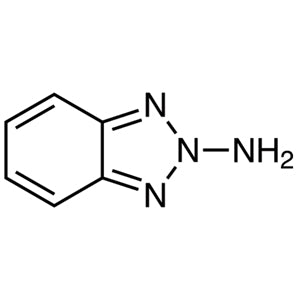
2-Aminobenzotriazole TCI A1585
Regular price From Rp 2.016.000,00Regular price -
9-(1H-Benzotriazol-1-ylmethyl)-9H-carbazole TCI B1967
Regular price From Rp 1.326.150,00Regular price -
1H-Benzotriazole-1-methanol TCI B1903
Regular price Rp 1.696.800,00Regular price -
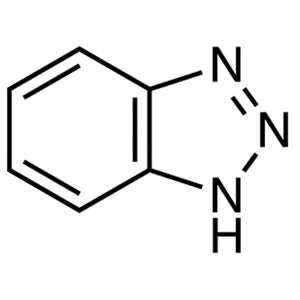
1,2,3-Benzotriazole TCI B0094
Regular price From Rp 505.050,00Regular price -
1-Methyl-1H-benzotriazole TCI M2121
Regular price Rp 1.881.600,00Regular price -
Methyl-1H-benzotriazole(mixture) TCI M0697
Regular price From Rp 875.700,00Regular price -
5-Methyl-1H-benzotriazole TCI M0249
Regular price From Rp 1.087.800,00Regular price -
5,6-Dimethyl-1,2,3-benzotriazole TCI D2177
Regular price Rp 2.916.900,00Regular price