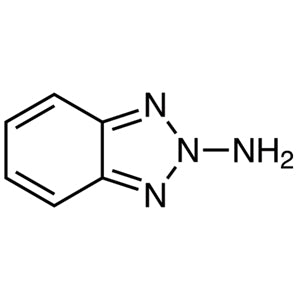
2-Aminobenzotriazole (2-ABT) is a versatile chemical compound widely used in laboratory settings for its unique reactivity and structural properties. It plays a crucial role in synthetic chemistry, particularly in the construction of heterocyclic compounds. As a building block in organic synthesis, 2-ABT is essential for creating complex molecular structures through various reaction mechanisms. Its ability to act as a coupling agent or a reaction inhibitor makes it indispensable in many chemical processes. This compound is commonly found in research laboratories where precision and reliability are paramount.
The stability and reactivity of 2-ABT make it a preferred choice for a wide range of chemical applications. Its molecular structure, featuring a benzotriazole ring with an amino group at the 2-position, allows for high reactivity in electron-activated reactions. This characteristic enables it to participate in specific functional group interactions, making it ideal for targeted chemical transformations. Additionally, its resistance to degradation under various laboratory conditions ensures consistent performance and reliability in experimental setups.
In Indonesian laboratories, 2-ABT is extensively used in both fundamental and applied chemical research. It is a key component in pharmaceutical development, material science, and the synthesis of new compounds. Researchers rely on its predictable behavior and compatibility with various reagents to achieve desired outcomes in their experiments. Its presence in these laboratories underscores its importance in advancing scientific knowledge and innovation.
Related TCI products
- In pharmaceutical research, 2-ABT is used for the synthesis of novel drug molecules due to its reactivity and structural versatility.
- In material science, it serves as a building block for creating advanced polymers and functional materials with specific properties.
- For heterocyclic compound characterization, 2-ABT is employed to study molecular interactions and reaction mechanisms in complex systems.
- In organic synthesis, it acts as a coupling agent, facilitating the formation of stable chemical bonds in multi-step reactions.
- For analytical chemistry applications, it is utilized in the development of sensitive detection methods for trace compounds in various samples.
| Brand | TCI |
|---|---|
| CAS number | 1614-11-5 |
| Molecular formula | — |
| Purity | — |
| Category | Chemistry > Building Blocks > Heterocyclic Building Blocks |
| Pack sizes | Available in standard laboratory quantities as per supplier specifications |
| Physical form | Solid powder |
| Storage | Store in a cool, dry place away from light and moisture |
2-Aminobenzotriazole should be stored in a cool, dry environment to maintain its stability and reactivity. It is recommended to keep the compound in a sealed container to prevent moisture absorption and contamination. Suitable storage containers include glass or high-density polyethylene (HDPE) vessels that are resistant to chemical degradation. Laboratory personnel should handle the material with care, using appropriate personal protective equipment such as gloves and safety goggles. Avoid exposure to direct sunlight and ensure proper ventilation in the workspace to minimize any potential risks. The compound is generally stable under normal laboratory conditions, making it a reliable choice for research applications.
—
Produk Terkait
-
1-Aminobenzotriazole TCI A1464
Regular price From Rp 6.015.450,00Regular price -
9-(1H-Benzotriazol-1-ylmethyl)-9H-carbazole TCI B1967
Regular price From Rp 1.326.150,00Regular price -
1H-Benzotriazole-1-methanol TCI B1903
Regular price Rp 1.696.800,00Regular price -
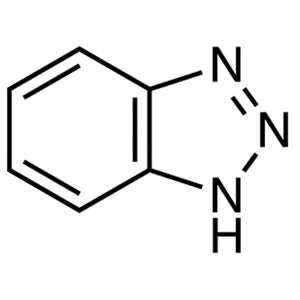
1,2,3-Benzotriazole TCI B0094
Regular price From Rp 505.050,00Regular price -
1-Methyl-1H-benzotriazole TCI M2121
Regular price Rp 1.881.600,00Regular price -
Methyl-1H-benzotriazole(mixture) TCI M0697
Regular price From Rp 875.700,00Regular price -
5-Methyl-1H-benzotriazole TCI M0249
Regular price From Rp 1.087.800,00Regular price -
5,6-Dimethyl-1,2,3-benzotriazole TCI D2177
Regular price Rp 2.916.900,00Regular price