TCI M2121 1-Methyl-1H-benzotriazole is a benzotriazole derivative in which the nitrogen atom at position 1 has been methylated, producing a stable fused heterocycle that no longer carries an N–H proton. The benzotriazole framework is widely recognised in the laboratory as a motif with good coordinating ability and as a leaving group in synthetic chemistry. The N-methylated version serves as a useful building block whenever researchers require a benzotriazole core with the nitrogen substitution position already fixed, so that the problem of N1 and N2 regioisomer mixtures is avoided from the very beginning of a synthetic route.
The properties that make this compound a preferred choice include high thermal and chemical stability, the aromaticity of the fused ring system, and the availability of the N2 and N3 nitrogen atoms as electron-donor sites for metal complex formation. The absence of an N–H proton renders the compound neutral, so it does not interfere with reactions that are sensitive to acidity, while also improving its solubility in common organic solvents. These characteristics together give predictable behaviour across a wide range of reaction conditions, which is exactly what is wanted from a heterocyclic building block.
The fused benzene ring additionally provides positions for further aromatic functionalisation, while the methyl group on nitrogen can act as a directing element in catalysed C–H bond activation reactions. In Indonesian laboratories this combination makes the material suitable for synthetic chemistry groups at universities and research institutes, for coordination chemistry work, and for methodology studies where a well-defined, regiochemically pure benzotriazole scaffold is the starting point for further elaboration.
Related TCI products
- Heterocyclic building block synthesis: supplies a benzotriazole core with the nitrogen substitution position already defined, allowing multi-step routes to proceed without separating N1 and N2 regioisomers later.
- Coordination chemistry and metal complex preparation: the N2 and N3 nitrogen atoms act as electron-donor sites, letting researchers assemble metal complexes around a thermally and chemically stable aromatic ligand framework.
- C–H bond activation methodology: the methyl group on nitrogen can serve as a directing element in catalysed C–H activation reactions, making the compound a convenient substrate for methodology development studies.
- Aromatic functionalisation studies: the fused benzene ring offers defined positions for further substitution, so the molecule works well as a scaffold in electrophilic and directed aromatic chemistry.
- Acid-sensitive reaction systems: because the compound is neutral and carries no N–H proton, it can be introduced into reactions that would otherwise be disturbed by acidic heterocyclic protons.
| Brand | TCI |
|---|---|
| CAS number | 13351-73-0 |
| Molecular formula | — |
| Purity | — |
| Category | Chemistry > Building Blocks > Heterocyclic Building Blocks |
| Pack sizes | available in standard TCI research-scale packaging; please confirm the pack size when ordering |
| Physical form | — |
| Storage | keep in a cool, dry place in a tightly closed original container |
- Product code: M2121
Store the container tightly closed in a cool, dry and well-ventilated area, away from direct sunlight, heat sources and incompatible chemicals. The original manufacturer container is the most suitable storage vessel; if transfer is necessary, use clean glass or chemically compatible closed containers that are clearly labelled with the product name and CAS number. Handle the material inside a fume hood using standard laboratory personal protective equipment, including a lab coat, safety glasses and suitable gloves. Avoid raising dust, keep the container closed when not in use, and consult the manufacturer safety data sheet before handling, use and disposal.
—
Produk Terkait
-
5-BenzotriazolecarboxylicAcid TCI B3869
Regular price Rp 2.147.250,00Regular priceRp 1.517.250,00Sale price Rp 2.147.250,00 -
9-(1H-Benzotriazol-1-ylmethyl)-9H-carbazole TCI B1967
Regular price Rp 1.378.650,00Regular priceRp 979.650,00Sale price Rp 1.378.650,00 -
1H-Benzotriazole-1-methanol TCI B1903
Regular price Rp 1.749.300,00Regular priceRp 1.239.000,00Sale price Rp 1.749.300,00 -
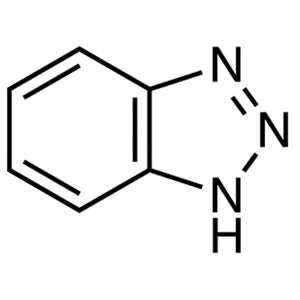
1,2,3-Benzotriazole TCI B0094
Regular price Rp 557.550,00Regular priceRp 405.300,00Sale price Rp 557.550,00 -
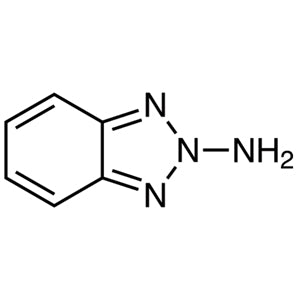
2-Aminobenzotriazole TCI A1585
Regular price Rp 2.068.500,00Regular priceRp 1.461.600,00Sale price Rp 2.068.500,00 -
1-Aminobenzotriazole TCI A1464
Regular price Rp 6.067.950,00Regular priceRp 4.258.800,00Sale price Rp 6.067.950,00 -
Methyl-1H-benzotriazole(mixture) TCI M0697
Regular price Rp 928.200,00Regular priceRp 664.650,00Sale price Rp 928.200,00 -
5-Methyl-1H-benzotriazole TCI M0249
Regular price Rp 1.140.300,00Regular priceRp 812.700,00Sale price Rp 1.140.300,00