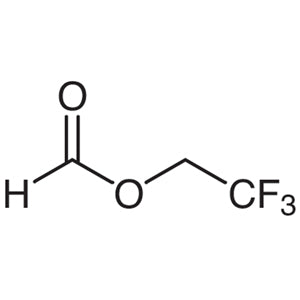
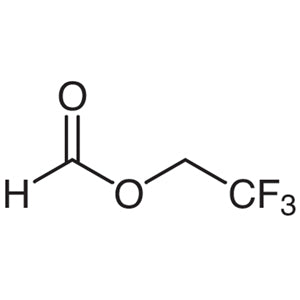
2,2,2-Trifluoroethyl Methanesulfonate is a fluorinated building block widely used in organic chemistry for the synthesis of complex compounds. This reagent plays a crucial role in laboratory settings, particularly in reactions involving substitution or nucleophilic mechanisms. Its electrophilic nature makes it a valuable tool in the formation of fluorinated compounds, which are essential in pharmaceutical and material science applications. Due to its molecular stability and high reactivity, it is a preferred choice for researchers aiming to achieve precise control over molecular structures during synthesis.
The compound's unique properties, including its polar nature and ability to form bonds with various functional groups, make it highly versatile in chemical reactions. The presence of fluorine atoms in its molecular structure enhances its reactivity and selectivity, allowing it to participate in a wide range of synthetic pathways. These characteristics make it an indispensable reagent for chemists working on fluorinated compound development, especially in research environments where precision and efficiency are paramount.
In Indonesian laboratories, 2,2,2-Trifluoroethyl Methanesulfonate is commonly used in scientific research and chemical product development. It is a key component in studies related to fluorinated compound synthesis, supporting both academic and industrial research initiatives. Its availability in the local market ensures that researchers have access to this essential reagent for their experiments and innovations.
- Fluorinated Compound Synthesis: This reagent is ideal for creating fluorinated compounds due to its reactivity and ability to form stable bonds with functional groups.
- Organic Reaction Research: Its electrophilic nature makes it suitable for substitution and nucleophilic reactions, providing versatility in synthetic pathways.
- Pharmaceutical Development: It is used in the synthesis of drug molecules where fluorine atoms are required for enhanced biological activity and stability.
- Material Science Studies: The compound is employed in the creation of advanced materials with specific chemical and physical properties.
- Academic Research: It supports teaching and research in chemistry, particularly in courses and projects involving fluorinated building blocks.
| Brand | TCI |
|---|---|
| CAS number | 25236-64-0 |
| Molecular formula | — |
| Purity | — |
| Category | Chemistry > Building Blocks > Fluorinated Building Blocks |
| Pack sizes | Available in various quantities as per supplier specifications |
| Physical form | Liquid |
| Storage | Store in a cool, dry place away from light and incompatible materials |
This compound should be stored in a cool, dry environment, away from direct sunlight and sources of heat. It is recommended to use airtight containers made of materials compatible with its chemical properties, such as glass or high-density polyethylene. Due to its reactivity, it should be handled with care, using appropriate personal protective equipment. Avoid contact with moisture and incompatible substances to prevent unwanted reactions. Proper labeling and storage conditions are essential to maintain its stability and ensure safe handling in laboratory settings.
—
Produk Terkait
-
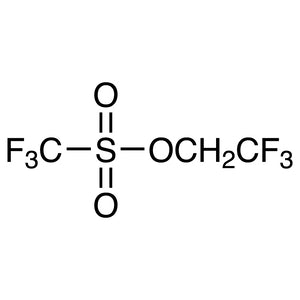
2,2,2-TrifluoroethylTrifluoromethanesulfonate TCI T1604
Regular price From Rp 3.232.950,00Regular price -
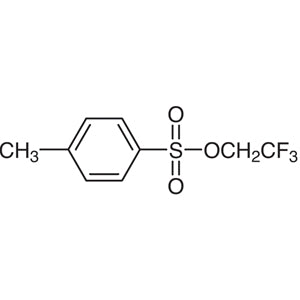
2,2,2-Trifluoroethylp-Toluenesulfonate TCI T1516
Regular price Rp 2.041.200,00Regular price -
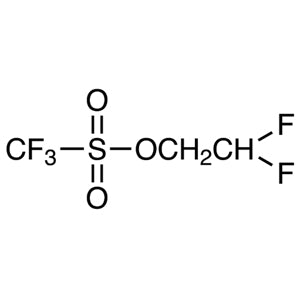
2,2-DifluoroethylTrifluoromethanesulfonate TCI D5299
Regular price From Rp 1.353.450,00Regular price -
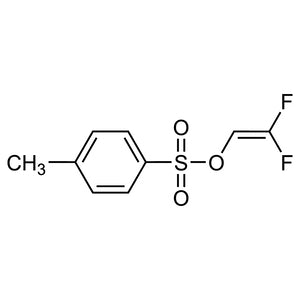
2,2-Difluoroethenyl4-Methylbenzene-1-sulfonate TCI D6545
Regular price From Rp 2.199.750,00Regular price -
2,2,2-TrifluoroethylFormate TCI T2586
Regular price From Rp 769.650,00Regular price -
Tris(2,2,2-trifluoroethyl)orthoformate TCI T4284
Regular price From Rp 1.565.550,00Regular price -
Tris(2,2,2-trifluoroethyl)Phosphite TCI T3991
Regular price From Rp 1.538.250,00Regular price -
2,2,2-TrifluoroethylAcetate TCI T3422
Regular price From Rp 795.900,00Regular price