2,2-Difluoroethenyl 4-Methylbenzene-1-sulfonate is a chemical compound widely used in organic synthesis reactions within laboratory settings. As a fluorinated building block, it serves as a key reagent in the development of complex molecules with specific fluorine-containing structures. Its role in the laboratory is critical for creating stable covalent bonds during synthetic processes. This compound is particularly valued for its ability to participate in a variety of chemical transformations, making it a versatile tool for chemists working on advanced synthesis projects.
The compound's unique properties stem from the presence of fluorine atoms, which significantly influence its reactivity and polarity. These characteristics allow for more precise and efficient chemical reactions, enabling researchers to achieve desired outcomes with greater control. The fluorine atoms also contribute to the molecule’s stability, which is essential in maintaining reaction conditions and preventing unwanted side reactions. This combination of reactivity and stability makes it a preferred choice for applications requiring high specificity and reliability.
In Indonesian laboratories, this compound is commonly utilized in organic chemistry research, especially in academic and research institutions. It is frequently employed in projects focused on fluorinated compound synthesis, including pharmaceutical and materials science applications. Its role in drug development is particularly significant due to the reactivity and structural versatility it offers. Researchers in Indonesia rely on this compound for its consistent performance and compatibility with various synthetic methodologies.
Advantages (TCI brochure)
- Enables the synthesis of various fluorinated compounds, e.g. gem-difluorovinyl group, difluoromethylene, and fluorovinyl groups.
- Allows selective control of the conversion of the tosyl (Ts) group and the fluorine group, depending on reaction conditions.
- Demonstrates potential for application in radiolabeling with radioactive fluorine (18F).
TCI brochures (PDF)
- Reagent for the Introduction of Fluorine‑Containing Groups such as gem-Fluorovinyl Group 2026-05-07 · p. 1
- Fluorination Reagents, Fluorinated Building Blocks 2026-03-18 · p. 8
Related TCI products
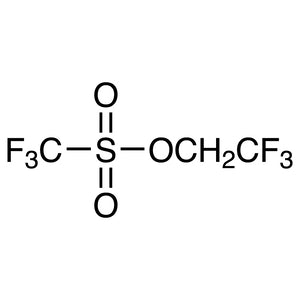
- TCI T1604 6226-25-1 2,2,2-Trifluoroethyl Trifluoromethanesulfonate
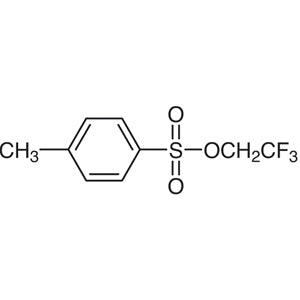
- TCI T1516 433-06-7 2,2,2-Trifluoroethyl p-Toluenesulfonate
- TCI M1193 25236-64-0 2,2,2-Trifluoroethyl Methanesulfonate
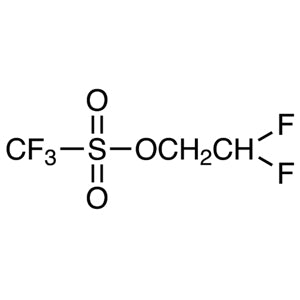
- TCI D5299 74427-22-8 2,2-Difluoroethyl Trifluoromethanesulfonate
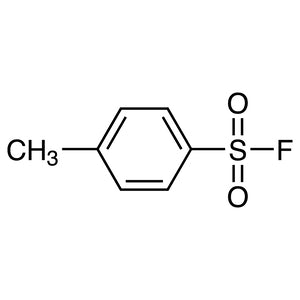
- TCI M3518 455-16-3 4-Methylbenzenesulfonyl Fluoride
- TCI T4150 79410-57-4 Trifluoromethyl 1,1,2,2,3,3,4,4,4-Nonafluorobutane-1-sulfonate
- Fluorinated Compound Synthesis: This compound is ideal for creating fluorinated molecules due to its reactivity and structural versatility, enabling precise control over molecular design.
- Organic Chemistry Research: It is widely used in academic and research settings for developing new compounds with specific functional groups and properties.
- Pharmaceutical Development: Its ability to participate in complex reactions makes it valuable in the synthesis of potential drug candidates with enhanced stability and bioavailability.
- Materials Science Innovation: The compound supports the creation of advanced materials with unique chemical properties, beneficial for industrial and technological applications.
- Analytical Chemistry Applications: It serves as a reference standard for analytical techniques, ensuring accurate identification and quantification of fluorinated compounds.
From the TCI brochure
- Synthesis of gem-difluorovinyl and fluorovinyl groups as bioisosteres of carbonyl and amide groups
- Synthesis of vinyl fluorides via gem-difluorovinyl, vinyl boronate, or vinyl BF3K intermediates
- Reactions with Ar-XH (X = O, S) to give fluorinated ethers and thioethers (ref. 8)
- Reaction with alkynes to give fluorinated enynes (ref. 11)
- LAH reduction to a fluorovinyl tosylate (ref. 9)
- Reaction with aldehydes (ref. 16), with allylic acetates (ref. 15), with cyclopropanes (ref. 14), and with an N-methoxymethyl amine reagent (ref. 10)
- Synthesis of isoquinolinones and related products with N-methoxybenzamides (ref. 12)
- Radiolabeling with 18F (ref. 13)
| Brand | TCI |
|---|---|
| CAS number | 185739-14-4 |
| Molecular formula | — |
| Purity | — |
| Category | Chemistry > Building Blocks > Fluorinated Building Blocks |
| Pack sizes | Available in various quantities as per standard laboratory supply options |
| Physical form | Solid or liquid, depending on the specific formulation |
| Storage | Store in a cool, dry place away from light and moisture |
Data from the TCI brochure
| Pack size | 1 g / 5 g |
|---|---|
| E/Z ratio | 95/5 (Product of LAH reaction (ref. 9); reaction conditions not stated in brochure) |
Source: TCI brochure RR226 (2026-05-07)
This compound should be stored in a cool, dry environment, away from direct light and moisture to maintain its chemical integrity. It is recommended to use airtight containers made of materials compatible with its chemical properties, such as glass or high-density polyethylene. Due to its fluorinated nature, it may require careful handling to prevent exposure, especially in environments with high humidity or reactive conditions. Always ensure proper ventilation when working with this compound and follow standard laboratory safety protocols to minimize risks. Regular monitoring of storage conditions is advised to ensure long-term stability and usability.
References cited in the TCI brochure
- Thomas M. Gøgsig. Direct Vinylation and Difluorovinylation of Arylboronic Acids Using Vinyl- and 2,2-Difluorovinyl Tosylates via the Suzuki−Miyaura Cross Coupling The Journal of Organic Chemistry, 2008. doi:10.1021/jo7027097
- Hironobu Sakaguchi. Copper-Catalyzed Regioselective Monodefluoroborylation of Polyfluoroalkenes en Route to Diverse Fluoroalkenes Journal of the American Chemical Society, 2017. doi:10.1021/jacs.7b08343
- Baojian Xiong. Nickel-Catalyzed Cross-Electrophile Coupling Reactions for the Synthesis of gem -Difluorovinyl Arenes ACS Catalysis, 2020. doi:10.1021/acscatal.0c03993
- Motoyuki Isoda. Convergent Synthesis of Fluoroalkenes Using a Dual-Reactive Unit The Journal of Organic Chemistry, 2021. doi:10.1021/acs.joc.0c02474
- Sandip Porey. Nondirected C–H/C–F Coupling for the Synthesis of α-Fluoro Olefinated Arenes ACS Catalysis, 2023. doi:10.1021/acscatal.3c02975
- Xiang Fang. The nucleophilic addition reactions of difluorovinyl tosylates with O- and S-nucleophiles Journal of Fluorine Chemistry, 2004. doi:10.1016/j.jfluchem.2004.05.014
- He Zhang. Monofluorovinyl Tosylate: A Useful Building Block for the Synthesis of Terminal Vinyl Monofluorides via Suzuki−Miyaura Coupling Organic Letters, 2010. doi:10.1021/ol102645g
- Indrawan McAlpine. Synthesis of Small 3-Fluoro- and 3,3-Difluoropyrrolidines Using Azomethine Ylide Chemistry The Journal of Organic Chemistry, 2015. doi:10.1021/acs.joc.5b00853
- Takumi Fujino. Synthesis of Difluorinated Enynes through Sonogashira-Type Coupling Organic Letters, 2016. doi:10.1021/acs.orglett.6b02919
- Jia-Qiang Wu. Experimental and Theoretical Studies on Rhodium-Catalyzed Coupling of Benzamides with 2,2-Difluorovinyl Tosylate: Diverse Synthesis of Fluorinated Heterocycles Journal of the American Chemical Society, 2017. doi:10.1021/jacs.7b00118
- Carlotta Taddei. Synthesis of [18F]PS13 and Evaluation as a PET Radioligand for Cyclooxygenase-1 in Monkey ACS Chemical Neuroscience, 2021. doi:10.1021/acschemneuro.0c00737
- Baojian Xiong. Stereoselective gem -Difluorovinylation of gem -Difluorinated Cyclopropanes Enabled by Ni/Pd Cooperative Catalysis ACS Catalysis, 2021. doi:10.1021/acscatal.1c02952
- Xiaochun He. Nickel-Catalyzed Cross-Electrophile Coupling Reactions between Allylic Acetates and gem-Difluorovinyl Tosylate Organic Letters, 2022. doi:10.1021/acs.orglett.2c01245
- Yu-Tao Liu. Chromium-Catalyzed Defluorinative Reductive Coupling of Aldehydes with gem-Difluoroalkenes Organic Letters, 2023. doi:10.1021/acs.orglett.3c00016
- Guillaume Magueur. Fluoro-artemisinins: When a gem-difluoroethylene replaces a carbonyl group Journal of Fluorine Chemistry, 2006. doi:10.1016/j.jfluchem.2005.12.013
- Ayumu Niida. Unequivocal Synthesis of (Z)-Alkene and (E)-Fluoroalkene Dipeptide Isosteres To Probe Structural Requirements of the Peptide Transporter PEPT1 Organic Letters, 2006. doi:10.1021/ol052781k
Product Categories
Produk Terkait
-
2,2,2-TrifluoroethylTrifluoromethanesulfonate TCI T1604
Regular price From Rp 3.232.950,00Regular priceRp 2.260.650,00Sale price From Rp 3.232.950,00 -
2,2,2-Trifluoroethylp-Toluenesulfonate TCI T1516
Regular price Rp 2.041.200,00Regular priceRp 1.426.950,00Sale price Rp 2.041.200,00 -
2,2,2-TrifluoroethylMethanesulfonate TCI M1193
Regular price From Rp 1.353.450,00Regular priceRp 946.050,00Sale price From Rp 1.353.450,00 -
2,2-DifluoroethylTrifluoromethanesulfonate TCI D5299
Regular price From Rp 1.353.450,00Regular priceRp 946.050,00Sale price From Rp 1.353.450,00 -
4-MethylbenzenesulfonylFluoride TCI M3518
Regular price From Rp 1.803.900,00Regular priceRp 1.261.050,00Sale price From Rp 1.803.900,00 -
Trifluoromethyl1,1,2,2,3,3,4,4,4-Nonafluorobutane-1-sulfonate TCI T4150
Regular price From Rp 2.889.600,00Regular priceRp 2.020.200,00Sale price From Rp 2.889.600,00 -
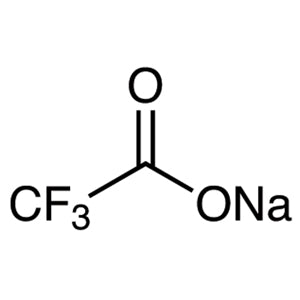
SodiumTrifluoroacetate TCI T1336
Regular price From Rp 689.850,00Regular priceRp 497.700,00Sale price From Rp 689.850,00 -
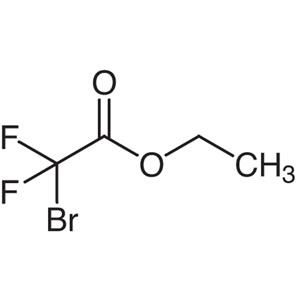
EthylBromodifluoroacetate TCI B1463
Regular price From Rp 769.650,00Regular priceRp 553.350,00Sale price From Rp 769.650,00