1-(Methoxymethyl)-1H-benzotriazole is a synthetic reagent widely used in chemical laboratories for its role in carbon-carbon bond formation. This compound is essential in various synthetic reactions, including substitution and condensation processes. Its versatility makes it a valuable tool in the development of complex organic molecules. In the laboratory, it is commonly used to facilitate the synthesis of compounds with specific structural features, enabling researchers to create new materials and pharmaceuticals.
The compound's chemical stability under certain conditions makes it a preferred choice for synthetic chemists. It can act as both a reagent and a reaction inhibitor, depending on the reaction context. Its ability to form bonds with various functional groups enhances its utility in diverse chemical applications. The compound's molecular structure allows it to participate in multiple types of reactions without significant degradation, making it a reliable reagent in synthetic chemistry.
In Indonesian laboratories, 1-(Methoxymethyl)-1H-benzotriazole is frequently used by researchers in organic chemistry and pharmaceutical development. It supports the creation of new compounds with specific properties, contributing to advancements in material science and drug discovery. Its availability and reliability make it a standard component in many synthetic processes conducted in academic and industrial research settings.
Related TCI products
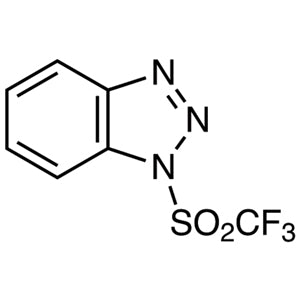
- TCI T3167 117632-84-5 1-(Trifluoromethanesulfonyl)-1H-benzotriazole
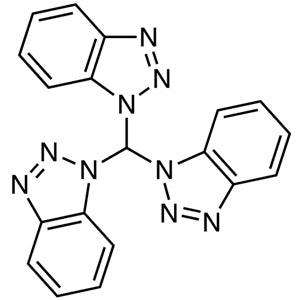
- TCI T3141 88088-95-3 Tris(1H-benzotriazol-1-yl)methane
- TCI T2059 3089-11-0 2,4,6-Tris[bis(methoxymethyl)amino]-1,3,5-triazine
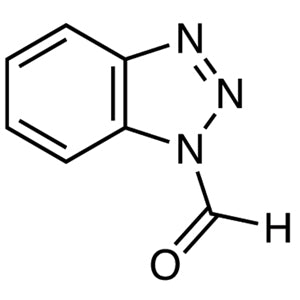
- TCI B3920 72773-04-7 1H-Benzotriazole-1-carboxaldehyde
- TCI B1967 124337-34-4 9-(1H-Benzotriazol-1-ylmethyl)-9H-carbazole
- TCI B1903 28539-02-8 1H-Benzotriazole-1-methanol
- Organic synthesis applications benefit from this reagent’s ability to form carbon-carbon bonds efficiently, supporting the creation of complex molecular structures.
- Pharmaceutical research utilizes this compound in the development of new drugs, as it enables the synthesis of compounds with specific functional groups.
- Material science experiments rely on its stability and reactivity to produce advanced polymers and functional materials.
- Analytical chemistry processes use it as a reagent in reactions that require controlled bond formation and functional group modification.
- Industrial chemical production incorporates it in large-scale synthesis to ensure consistent quality and structural integrity of final products.
| Brand | TCI |
|---|---|
| CAS number | 71878-80-3 |
| Molecular formula | — |
| Purity | — |
| Category | Chemistry > Synthetic Reagents > C-C Bond Formation |
| Pack sizes | Available in various quantities as per standard laboratory supply |
| Physical form | Solid powder |
| Storage | Store in a cool, dry place away from direct sunlight and moisture |
This compound should be stored in a cool, dry environment, away from direct sunlight and moisture to maintain its chemical stability. It is recommended to use airtight containers to prevent exposure to air and humidity, which could affect its reactivity. In laboratory settings, it should be handled with appropriate personal protective equipment, such as gloves and safety goggles, to ensure safe handling. Due to its chemical nature, it should be stored separately from incompatible substances to avoid any potential reactions. Proper labeling of storage containers is essential for safety and identification purposes. Regular monitoring of storage conditions is advised to ensure the compound remains in optimal condition for use.
—
Produk Terkait
-
1-(Trifluoromethanesulfonyl)-1H-benzotriazole TCI T3167
Regular price From Rp 1.670.550,00Regular priceRp 1.183.350,00Sale price From Rp 1.670.550,00 -
Tris(1H-benzotriazol-1-yl)methane TCI T3141
Regular price From Rp 2.227.050,00Regular priceRp 1.572.900,00Sale price From Rp 2.227.050,00 -
2,4,6-Tris[bis(methoxymethyl)amino]-1,3,5-triazine TCI T2059
Regular price From Rp 2.702.700,00Regular priceRp 1.905.750,00Sale price From Rp 2.702.700,00 -
1H-Benzotriazole-1-carboxaldehyde TCI B3920
Regular price From Rp 2.757.300,00Regular priceRp 1.943.550,00Sale price From Rp 2.757.300,00 -
9-(1H-Benzotriazol-1-ylmethyl)-9H-carbazole TCI B1967
Regular price From Rp 1.378.650,00Regular priceRp 979.650,00Sale price From Rp 1.378.650,00 -
1H-Benzotriazole-1-methanol TCI B1903
Regular price Rp 1.749.300,00Regular priceRp 1.239.000,00Sale price Rp 1.749.300,00 -
1,4-Bis(methoxymethyl)benzene TCI B1530
Regular price From Rp 928.200,00Regular priceRp 648.900,00Sale price From Rp 928.200,00 -
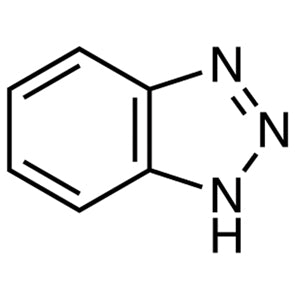
1,2,3-Benzotriazole TCI B0094
Regular price From Rp 557.550,00Regular priceRp 405.300,00Sale price From Rp 557.550,00