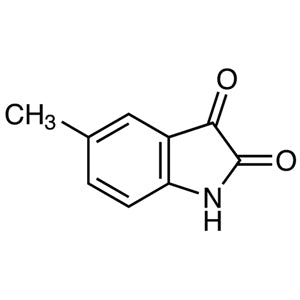
TCI M1703 5-Methylisatin is an isatin derivative carrying a methyl group at the five position of the aromatic ring. Isatin itself is indoline-2,3-dione, an indole framework bearing two adjacent carbonyl groups, and it is this framework that makes the compound one of the most productive heterocyclic building blocks in organic chemistry. In the laboratory, the material serves as a starting point for constructing a wide range of heterocyclic systems through well-established reactions, from condensation at the position-three ketone group through to ring expansions that convert the isatin framework into quinolines.
The property that makes 5-Methylisatin such a frequent choice is the presence of two carbonyl centres with distinctly different reactivity. The ketone carbonyl at position three is far more electrophilic and becomes the target of nucleophilic attack, while the amide carbonyl at position two is considerably less reactive, so researchers can achieve good selectivity without resorting to complicated protecting-group strategies. The N-H group permits alkylation or acylation to generate variation at nitrogen, and the methyl substituent at position five introduces electronic and lipophilic differences that are useful in structure-activity relationship studies.
In Indonesian laboratories, this material is typically handled in university research groups, synthetic organic chemistry laboratories, and medicinal chemistry programmes where substituted heterocycles are prepared on a research scale. It is generally used in small quantities for exploratory synthesis, method development, and the preparation of compound libraries, where a reliable and well-characterised building block allows a route to be reproduced without ambiguity about the starting material.
- Heterocyclic synthesis: the isatin framework acts as a versatile entry point for building indole, quinoline, and related ring systems through established synthetic routes.
- Condensation chemistry at the position-three ketone: the highly electrophilic ketone carbonyl reacts readily with nucleophiles, giving predictable and selective transformations without protecting-group strategies.
- Ring expansion to quinolines: the isatin skeleton can be rearranged into quinoline systems, making this compound a direct precursor for an important class of heterocycles.
- N-functionalisation studies: the free N-H group allows alkylation or acylation, so researchers can generate systematic variation at the nitrogen position from one common starting material.
- Structure-activity relationship investigations: the methyl group at position five contributes defined electronic and lipophilic differences useful when comparing analogues within a medicinal chemistry series.
| Brand | TCI |
|---|---|
| CAS number | 608-05-9 |
| Molecular formula | — |
| Purity | — |
| Category | Chemistry > Building Blocks > Heterocyclic Building Blocks |
| Pack sizes | available in standard TCI research-scale packaging; please confirm the currently listed size when ordering |
| Physical form | — |
| Storage | store in a tightly closed container in a cool, dry place away from light |
- Product code: M1703
- Chemical name: 5-Methylisatin (5-methylindoline-2,3-dione)
Store the material in its original tightly closed container in a cool, dry, well-ventilated place, protected from light and kept away from strong oxidising agents. Keep the container closed when not in use to limit exposure to atmospheric moisture, and return it promptly to storage after weighing. Handle the solid in a fume hood using a dust mask where appropriate, together with safety goggles, a laboratory coat, and chemically resistant gloves, and avoid generating airborne dust. Weigh using clean, dry spatulas to prevent contamination of the stock. Wash hands thoroughly after handling, and consult the manufacturer's safety data sheet before first use for full hazard information and disposal guidance.
—
Produk Terkait
-
1-Methylisatin TCI M2706
Regular price From Rp 1.035.300,00Regular price -
1-Ethylisatin TCI E1483
Regular price Rp 4.347.000,00Regular price -
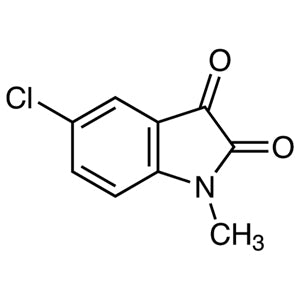
5-Chloro-1-methylisatin TCI C3195
Regular price From Rp 1.749.300,00Regular price -
N-MethylisatoicAnhydride TCI M0743
Regular price From Rp 1.140.300,00Regular price -
1-Benzylisatin TCI B4751
Regular price Rp 3.605.700,00Regular price -
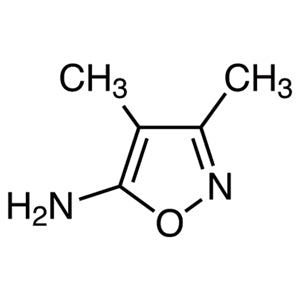
5-Amino-3,4-dimethylisoxazole TCI A3179
Regular price From Rp 1.193.850,00Regular price -
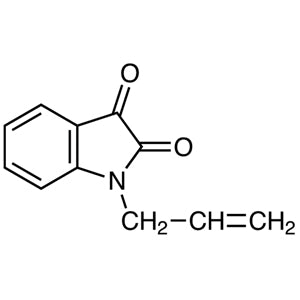
1-Allylisatin TCI A2943
Regular price Rp 4.611.600,00Regular price -
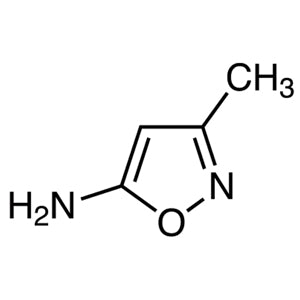
5-Amino-3-methylisoxazole TCI A2867
Regular price From Rp 1.008.000,00Regular price