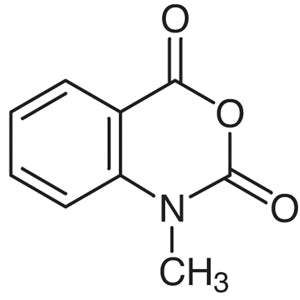
N-Methylisatoic Anhydride is a chemical compound widely used in organic reactions as a building block for the synthesis of heterocyclic compounds. It plays a crucial role in laboratories where the creation of complex molecular structures is required. This compound is particularly valuable in the development of indole and quinoline derivatives, which are essential in pharmaceutical and chemical research. Its versatility makes it a key reagent in synthetic pathways that demand high reactivity and specificity.
As an anhydride, N-Methylisatoic Anhydride exhibits high reactivity, especially towards water and other organic solvents. This property allows it to function as a coupling agent or linker in complex chemical reactions. Its ability to participate in substitution reactions and ring-forming processes makes it a preferred choice for researchers aiming to synthesize bioactive compounds. The compound is typically solid at room temperature, has a distinct odor, and dissolves well in organic solvents such as ethyl acetate and chloroform.
In Indonesian laboratories, N-Methylisatoic Anhydride is extensively used in organic chemistry and pharmaceutical research. It is a common component in experiments focused on the synthesis of biologically active compounds. Many research institutions and universities rely on this compound for its effectiveness in creating complex molecular structures. Its consistent performance and reliability make it a staple in both academic and industrial research settings.
Advantages (TCI brochure)
- Widely used as a SHAPE reagent.
- Unsuitable for modification of intracellular RNA.
TCI brochures (PDF)
- RNA Structure Analysis Reagent that Sulfonylates the 2'-OH Group of RNA and is Stable in Aqueous Solvents 2024-06-21 · p. 1
- RNA Structure Analysis Reagents 2026-08-20 · p. 1
- Organic synthesis of heterocyclic compounds due to its reactivity and ability to form complex ring structures.
- Pharmaceutical research for the development of bioactive molecules and drug candidates.
- Academic studies in chemical engineering and medicinal chemistry for experimental purposes.
- Industrial applications in the production of specialty chemicals and fine chemicals.
- Analytical chemistry for use in reaction intermediates and compound characterization.
From the TCI brochure
- SHAPE reagent for RNA structure analysis
| Brand | TCI |
|---|---|
| CAS number | 10328-92-4 |
| Molecular formula | — |
| Purity | — |
| Category | Chemistry > Building Blocks > Heterocyclic Building Blocks |
| Pack sizes | Available in various quantities as per supplier specifications |
| Physical form | Solid |
| Storage | Store in a cool, dry place away from moisture and direct sunlight |
Data from the TCI brochure
| Half-life time | 430 sec. (Measurement conditions vary according to the reported paper.) |
|---|
Source: TCI brochure LL098 (2026-08-20)
N-Methylisatoic Anhydride should be stored in a cool, dry environment to maintain its chemical integrity. It is recommended to keep the compound in airtight containers to prevent exposure to moisture and air, which can affect its reactivity. Due to its high reactivity, it should be handled in a well-ventilated area, and appropriate personal protective equipment should be worn. Avoid contact with water and organic solvents during storage and handling. The compound is best stored in glass or polyethylene containers to minimize chemical interactions. Regular monitoring of storage conditions is advised to ensure the material remains stable and safe for use in laboratory settings.
—
Produk Terkait
-
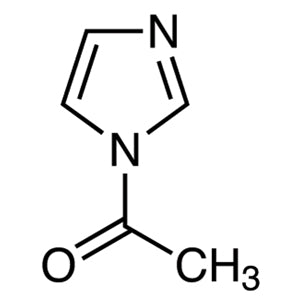
N-Acetylimidazole TCI A0694
Regular price Rp 1.035.300,00Regular price -
1M6 TCI M3589
Regular price Rp 4.108.650,00Regular price -
1M7 TCI M3578
Regular price Rp 4.823.700,00Regular price -
1-Methylisatin TCI M2706
Regular price From Rp 1.035.300,00Regular price -
5-Methylisatin TCI M1703
Regular price From Rp 1.087.800,00Regular price -
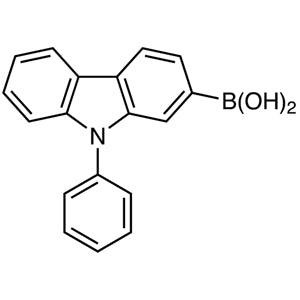
9-Phenylcarbazole-2-boronicAcid(containsvaryingamountsofAnhydride) TCI P2169
Regular price From Rp 477.750,00Regular price -
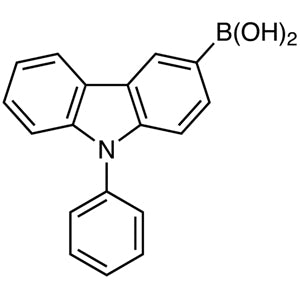
9-Phenylcarbazole-3-boronicAcid(containsvaryingamountsofAnhydride) TCI P2001
Regular price From Rp 1.670.550,00Regular price -
5-Formyl-2-thiopheneboronicAcid(containsvaryingamountsofAnhydride) TCI F0549
Regular price From Rp 823.200,00Regular price