

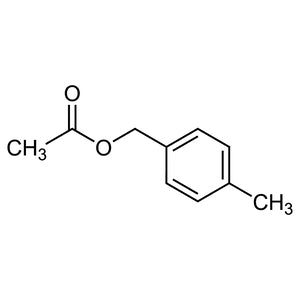
TCI M1744 4-Methylbenzyl Acetate is the acetate ester of 4-methylbenzyl alcohol, a simple aromatic compound that combines a toluene ring with an acetylated benzylic group. In the organic chemistry laboratory it serves both as a non-heterocyclic building block and as a practical model substrate. The acetate group acts as a protected form of the benzylic alcohol, one that can be released again through basic hydrolysis or alcoholysis whenever the free hydroxyl group is required at a later stage of a synthesis. Its structural simplicity means that its behaviour across a wide range of chemical transformations is easy to understand and predict.
Several properties account for its frequent selection. The benzylic ester bond it contains is reasonably stable under neutral conditions yet responsive to both acid and base catalysis, which gives good control over the timing of deprotection. The methyl group at the para position slightly raises the electron density of the ring and stabilises benzylic intermediates, a characteristic that proves useful in solvolysis studies and substitution reactions. The compound also dissolves readily in common organic solvents such as ethyl acetate, dichloromethane, and acetone, so it combines easily with standard reaction and work-up systems.
In Indonesian laboratories this material is typically found in university organic synthesis groups, research institute chemistry units, and industrial development laboratories that prepare aromatic intermediates. It is commonly used in protecting-group exercises, mechanistic teaching experiments, and small-scale synthetic routes where a well-behaved benzylic ester is needed. Because handling is straightforward and solubility is predictable, it fits comfortably into routine bench work without demanding specialised equipment.
- Non-heterocyclic building block in aromatic synthesis, supplying a para-substituted benzylic framework that can be elaborated further once the acetate group is removed under controlled conditions.
- Protected benzylic alcohol intermediate, allowing the hydroxyl function to be masked during incompatible steps and then liberated by basic hydrolysis or alcoholysis when required.
- Model substrate for solvolysis studies, since the para-methyl group stabilises benzylic intermediates and makes reaction pathways easier to follow and interpret mechanistically.
- Substitution reaction research, where the predictable electronic contribution of the methyl substituent on the ring gives a clean baseline for comparing reactivity across related compounds.
- Teaching and demonstration work in organic chemistry courses, because its simple structure and familiar ester chemistry illustrate protection and deprotection concepts clearly for students.
| Brand | TCI (Tokyo Chemical Industry) |
|---|---|
| CAS number | 2216-45-7 |
| Molecular formula | — |
| Purity | — |
| Category | Chemistry > Building Blocks > Non-Heterocyclic Building Blocks |
| Pack sizes | available in standard TCI research-scale packaging; please confirm the currently listed sizes when ordering |
| Physical form | — |
| Storage | keep in a tightly closed container in a cool, dry, well-ventilated place away from direct sunlight |
- Product Code: M1744
Store the container tightly closed in a cool, dry, and well-ventilated area, away from direct sunlight, heat sources, and strong oxidising agents. Original manufacturer bottles or compatible tightly sealed glass containers are suitable; keep the closure secure to limit exposure to moisture and air, since the ester bond is sensitive to hydrolysis under acidic or basic conditions. Handle the material in a fume hood using safety glasses, chemical-resistant gloves, and a laboratory coat. Avoid contact with skin and eyes and avoid inhaling vapours. Label all working aliquots clearly and consult the manufacturer's safety data sheet before first use and before disposal.
—
Produk Terkait
-
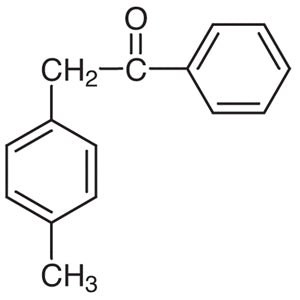
4-MethylbenzylPhenylKetone TCI M1639
Regular price From Rp 1.908.900,00Regular price -
Bis(4-methylbenzyl)Oxalate TCI D6189
Regular price Rp 610.050,00Regular price -
ButylAcetate[forSpectrophotometry] TCI A0228
Regular price Rp 1.538.250,00Regular price -
VinylAcetateMonomer(stabilizedwithHQ) TCI A0045
Regular price Rp 477.750,00Regular price -
PropylAcetate TCI A0044
Regular price From Rp 477.750,00Regular price -
PhenylAcetate TCI A0043
Regular price Rp 452.550,00Regular price -
n-OctylAcetate TCI A0042
Regular price From Rp 505.050,00Regular price -
NonylAcetate TCI A0041
Regular price From Rp 505.050,00Regular price

![123-86-4 Butyl Acetate [for Spectrophotometry] - AMI Scientific](http://amiscientific.com/cdn/shop/files/TCI2510A0228.jpg?v=1767078302&width=533)


