

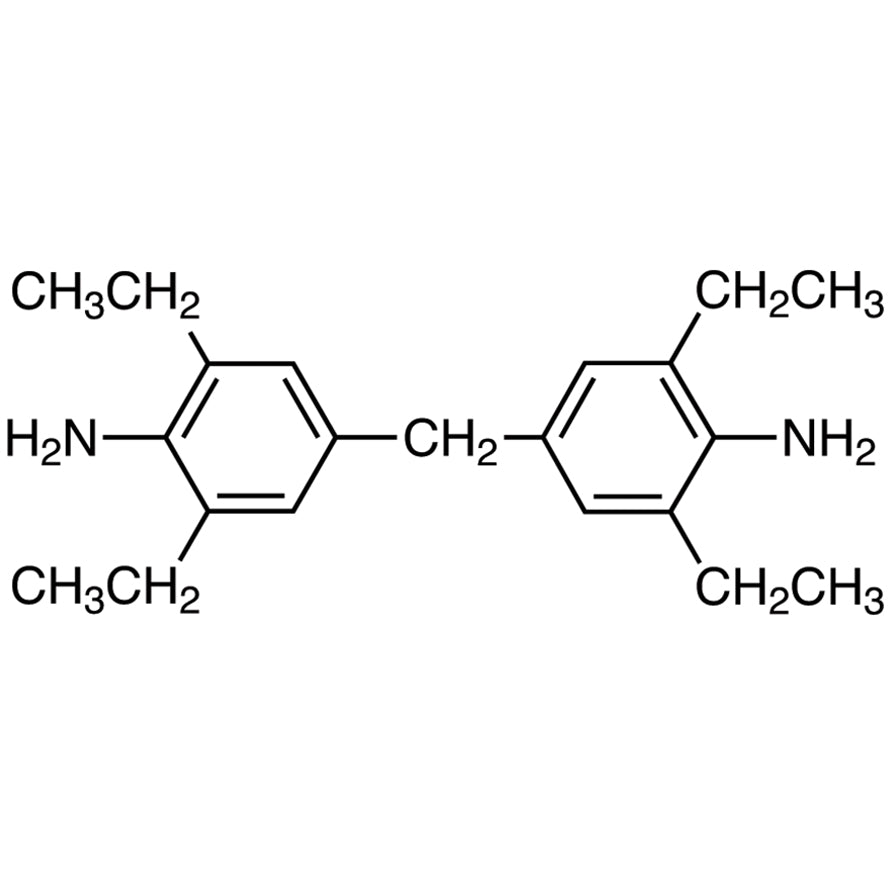
4,4'-Methylenebis(2,6-diethylaniline) is a chemical compound widely used as a monomer in polymer synthesis. This material plays a crucial role in the development of various polymers and macromolecules, particularly in the creation of thermoplastic and composite materials. In the laboratory, it serves as a foundational component for forming polymer structures with desirable mechanical and thermal properties. Its versatility makes it an essential reagent in both academic and industrial research settings.
The compound is favored for its stable chemical properties and controlled reactivity, which allow for efficient polymerization reactions. Its molecular structure, featuring two ethyl groups connecting two aniline rings via a methylene bridge, provides high chemical stability and enables consistent performance in synthetic processes. These characteristics make it a reliable choice for applications requiring precision and reproducibility. Additionally, its good solubility in organic solvents enhances its usability in a wide range of chemical reactions.
In Indonesian laboratories, this compound is commonly used in research and development projects focused on new material creation, especially in polymer technology and industrial chemistry. Its application supports innovation in material science, contributing to the advancement of chemical processes and product development in the region.
TCI brochures (PDF)
- Raw Materials for Polyimide Synthesis 2026-05-11 · p. 5
Related TCI products
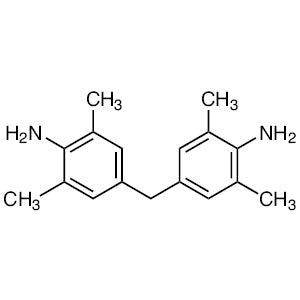
- TCI M3403 4073-98-7 4,4'-Methylenebis(2,6-dimethylaniline)
- TCI M1238 19900-72-2 4,4'-Methylenebis(2-ethyl-6-methylaniline)
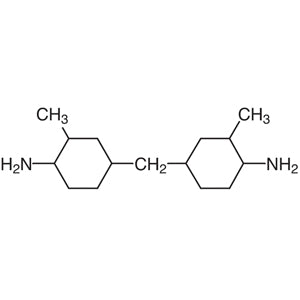
- TCI M1422 6864-37-5 4,4'-Methylenebis(2-methylcyclohexylamine) (mixture of isomers)
- TCI M0699 1761-71-3 4,4'-Methylenebis(cyclohexylamine) (mixture of isomers)
- TCI M3183 106246-33-7 4,4'-Methylenebis(3-chloro-2,6-diethylaniline)
- TCI B6650 5285-60-9 4,4'-Methylenebis[N-(sec-butyl)aniline]
- Polymer synthesis for thermoplastic and composite material development due to its role as a key monomer in forming stable polymer structures.
- Organic chemistry research where controlled reactivity and chemical stability are essential for efficient polymerization reactions.
- Material science experiments requiring high chemical stability and consistent performance in synthetic processes.
- Industrial chemistry applications involving the production of advanced polymers with specific mechanical and thermal properties.
- Research and development in polymer technology for creating new materials with enhanced performance characteristics.
| Brand | TCI |
|---|---|
| CAS number | 13680-35-8 |
| Molecular formula | — |
| Purity | — |
| Category | Materials Science > Polymer/Macromolecule Reagents > Monomers |
| Pack sizes | Available in various quantities as per standard laboratory supply |
| Physical form | Solid powder |
| Storage | Store in a cool, dry place away from moisture and direct sunlight |
This compound should be stored in a cool, dry environment, away from moisture and direct sunlight to maintain its chemical stability. It is recommended to use airtight containers made of glass or high-density polyethylene to prevent contamination and degradation. Due to its chemical nature, it is important to handle it with appropriate personal protective equipment, such as gloves and safety goggles, to ensure laboratory safety. Avoid exposure to heat and open flames, as it may react with certain substances. Proper labeling and storage conditions are essential to ensure the material remains effective for its intended applications. Always follow standard laboratory safety protocols when working with this compound.
—
Produk Terkait
-
4,4'-Methylenebis(2,6-dimethylaniline) TCI M3403
Regular price From Rp 2.359.350,00Regular price -
4,4'-Methylenebis(2-ethyl-6-methylaniline) TCI M1238
Regular price Rp 875.700,00Regular price -
4,4'-Methylenebis(2-methylcyclohexylamine)(mixtureofisomers) TCI M1422
Regular price From Rp 505.050,00Regular price -
4,4'-Methylenebis(cyclohexylamine)(mixtureofisomers) TCI M0699
Regular price From Rp 477.750,00Regular price -
4,4'-Methylenebis(3-chloro-2,6-diethylaniline) TCI M3183
Regular price Rp 1.140.300,00Regular price -
4,4'-Methylenebis[N-(sec-butyl)aniline] TCI B6650
Regular price From Rp 1.008.000,00Regular price -
5-Trifluoromethyl-1,3-phenylenediamine TCI T3239
Regular price Rp 1.273.650,00Regular price -
m-Tolidine TCI T3098
Regular price Rp 2.386.650,00Regular price



![4,4'-Methylenebis[N-(sec-butyl)aniline] (CAS 5285-60-9) - TCI B6650 - AMI Scientific](http://amiscientific.com/cdn/shop/files/TCI2510B6650.jpg?v=1768816090&width=533)

