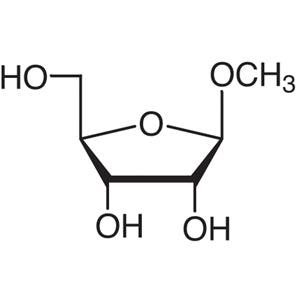
TCI M1965 Methyl beta-D-Ribofuranoside is a simple glycoside formed from ribose held in its furanose ring form, with a methyl group installed at the anomeric position. The compound matters in the laboratory because that methyl group locks ribose into the beta configuration and into the five-membered ring, so the material no longer undergoes the mutarotation equilibrium that free sugars display in solution. For researchers working in glycoscience and nucleoside chemistry, this behaviour gives a clean, well-defined model system rather than a shifting mixture of anomers and ring sizes, and it also serves as a starting material for the synthesis of more elaborate sugar derivatives.
The characteristics that make this compound a preferred choice are the stability of its anomeric configuration and the availability of three free hydroxyl groups that can be modified selectively. The difference in reactivity between the primary hydroxyl and the secondary hydroxyls allows chemists to install protecting groups in stages, opening a route toward modified nucleosides, oligosaccharides, or carbohydrate probes. Documented purity and identity from TCI are a considerable help when the compound is used as a structural reference in nuclear magnetic resonance analysis, because clean signals make it easier to assign the configuration of derived products prepared along the same route.
In Indonesian laboratories, this material is typically encountered in university and institutional research groups pursuing synthetic carbohydrate and nucleoside chemistry, as well as in analytical work where a configurationally defined ribose derivative is needed as a reference. It is normally ordered in small research quantities for method development and multi-step synthesis rather than for routine bulk use, and is handled alongside other fine organic reagents under standard laboratory chemical management practice.
TCI brochures (PDF)
Related TCI products
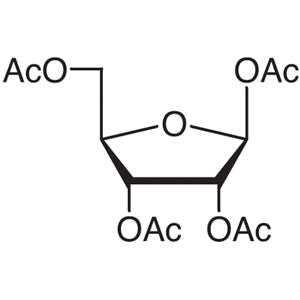
- TCI R0066 13035-61-5 Tetra-O-acetyl-beta-D-ribofuranose
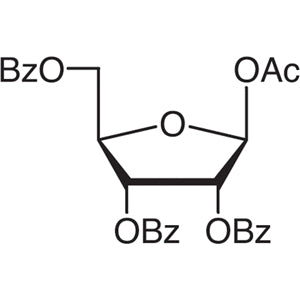
- TCI R0067 6974-32-9 beta-D-Ribofuranose 1-Acetate 2,3,5-Tribenzoate
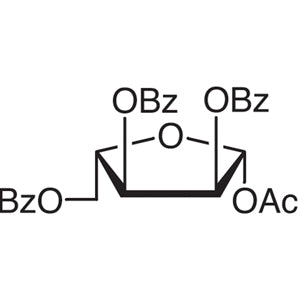
- TCI T2641 22224-41-5 1,3,5-Tri-O-benzoyl-alpha-D-ribofuranose
- TCI T2607 62211-93-2 1,2,3-Tri-O-acetyl-5-deoxy-beta-D-ribofuranose
- TCI R0080 3080-30-6 beta-L-Ribofuranose 1-Acetate 2,3,5-Tribenzoate
- TCI M3528 4099-85-8 Methyl 2,3-O-Isopropylidene-beta-D-ribofuranoside
- Glycoscience research model: the locked beta-furanoside configuration removes anomeric equilibration, giving a stable and unambiguous substrate for studying the intrinsic reactivity of ribose hydroxyl groups.
- Selective protecting-group chemistry: the reactivity contrast between the primary and secondary hydroxyls allows stepwise, regioselective protection strategies to be developed and optimised before committing valuable intermediates.
- Modified nucleoside synthesis: the compound serves as a defined ribose building block from which nucleoside analogues can be constructed without first resolving anomeric or ring-size mixtures.
- Oligosaccharide and carbohydrate probe preparation: the three free hydroxyl groups provide clear handles for chain extension and for attaching reporter or linker functionality in probe design.
- NMR structural reference: documented identity and purity yield clean spectra, helping researchers assign anomeric configuration in derivative products prepared through comparable synthetic sequences.
| Brand | TCI (Tokyo Chemical Industry), catalogue number M1965 |
|---|---|
| CAS number | 7473-45-2 |
| Molecular formula | — |
| Purity | — |
| Category | Chemistry > Chemical Biology > Glycoscience |
| Pack sizes | available in standard TCI research pack sizes; please confirm the current packaging options when ordering |
| Physical form | — |
| Storage | store according to the conditions stated on the manufacturer's label and safety data sheet |
- Chemical name: Methyl beta-D-Ribofuranoside
Store the container tightly closed in a cool, dry place away from direct sunlight, moisture, and sources of ignition, following the storage conditions printed on the manufacturer's label and safety data sheet. Keep the material in its original TCI container, or transfer it to a clean, chemically compatible, well-sealed vessel that is clearly labelled with the compound name and CAS number. Handle in a well-ventilated area or fume hood, wearing a laboratory coat, safety glasses, and suitable gloves. Avoid generating dust, keep the substance away from incompatible materials, and consult the safety data sheet before first use, during handling, and when planning waste disposal.
—
Product Categories
- Chemical BiologyGlycoscienceGlyco Building Blocks
- Chemical BiologyGlycoscienceMonosaccharides [Glycoscience]
- Chemical BiologyNucleic Acid ChemistryRiboses and 2'-Deoxyriboses [Nucleic Acid Synthesis]
- Pharmaceutical Development and Drug Discovery Research ReagentsNucleic Acid ChemistryRiboses and 2'-Deoxyriboses [Nucleic Acid Synthesis]
- GlycoscienceGlyco Building BlocksProtected Sugars [Oligosaccharides by Component Sugar]
- GlycoscienceMonosaccharides [Glycoscience]Riboses [Glycoscience]
- Biochemicals and ReagentsCarbohydrates
- Pharmaceutical Development and Drug Discovery ResearchNucleic Acid ChemistryRiboses and 2'-Deoxyriboses [Nucleic Acid Synthesis]
Produk Terkait
-
Tetra-O-acetyl-beta-D-ribofuranose TCI R0066
Regular price From Rp 530.250,00Regular price -
beta-D-Ribofuranose1-Acetate2,3,5-Tribenzoate TCI R0067
Regular price From Rp 1.115.100,00Regular price -
1,3,5-Tri-O-benzoyl-alpha-D-ribofuranose TCI T2641
Regular price From Rp 1.776.600,00Regular price -
1,2,3-Tri-O-acetyl-5-deoxy-beta-D-ribofuranose TCI T2607
Regular price From Rp 477.750,00Regular price -
beta-L-Ribofuranose1-Acetate2,3,5-Tribenzoate TCI R0080
Regular price Rp 2.199.750,00Regular price -
Methyl2,3-O-Isopropylidene-beta-D-ribofuranoside TCI M3528
Regular price From Rp 769.650,00Regular price -
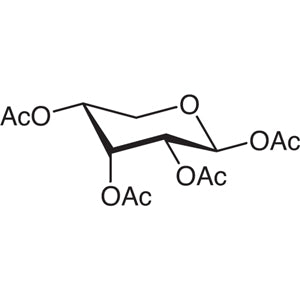
Tetra-O-acetyl-beta-D-ribopyranose TCI R0065
Regular price Rp 1.829.100,00Regular price -
2-Deoxy-2-fluoro-1,3,5-tri-O-benzoyl-alpha-D-arabinofuranose TCI D4594
Regular price From Rp 1.405.950,00Regular price