

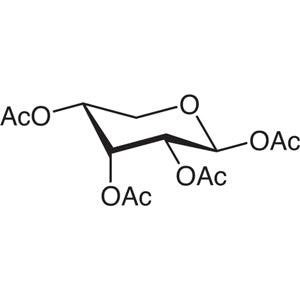
Tetra-O-acetyl-beta-D-ribopyranose is a chemical compound widely used in chemical and biochemical experiments, particularly in the study of glycosides and carbohydrate structures. As a derivative of ribose, a pentose sugar found in numerous biological molecules, it plays a crucial role in molecular research. Its complex molecular structure makes it a valuable tool for scientists working in the field of glycoscience. This compound is commonly used as a building block for the synthesis of other compounds and is essential in structural analysis techniques such as infrared spectroscopy and NMR.
The stability of its chemical structure, combined with its high purity, makes Tetra-O-acetyl-beta-D-ribopyranose a preferred choice for laboratory applications. Its ability to undergo specific reactions with various reagents allows for precise molecular modifications, enhancing its utility in synthetic chemistry. The compound’s crystalline or solid form also facilitates easy handling and storage, making it suitable for use in both small and large-scale laboratory settings. Its consistent performance ensures reliable results in experiments requiring chemical accuracy and reproducibility.
In Indonesian laboratories, Tetra-O-acetyl-beta-D-ribopyranose is frequently used in research related to chemistry, biochemistry, and pharmaceutical sciences. Local researchers often rely on this compound for studies on carbohydrate structures, glycosidic linkages, and molecular modifications. Its availability and reliability make it an essential component in academic and industrial research settings across Indonesia.
Related TCI products
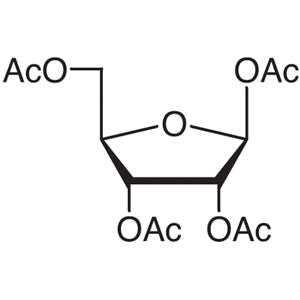
- TCI R0066 13035-61-5 Tetra-O-acetyl-beta-D-ribofuranose
- TCI T2607 62211-93-2 1,2,3-Tri-O-acetyl-5-deoxy-beta-D-ribofuranose
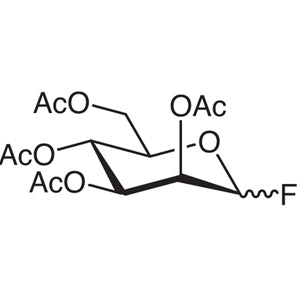
- TCI T2567 174511-17-2 2,3,4,6-Tetra-O-acetyl-D-mannopyranosyl Fluoride
- TCI T2307 92051-23-5 1,3,4,6-Tetra-O-acetyl-2-O-(trifluoromethanesulfonyl)-beta-D-mannopyranose
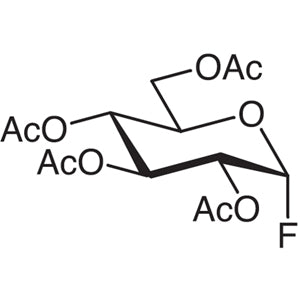
- TCI T1995 3934-29-0 2,3,4,6-Tetra-O-acetyl-alpha-D-glucopyranosyl Fluoride
- TCI T1733 68733-20-0 1,3,4,6-Tetra-O-acetyl-2-azido-2-deoxy-alpha-D-mannopyranose
- Glycoside Synthesis: This compound is ideal for synthesizing glycosides due to its stable structure and reactivity with various reagents.
- Structural Analysis: It is commonly used in NMR and IR spectroscopy to analyze the molecular structure of carbohydrates and their derivatives.
- Molecular Modification Studies: Its ability to undergo specific chemical reactions makes it suitable for studying molecular modifications in glycoscience research.
- Biochemical Research: It supports studies on carbohydrate metabolism and glycosylation processes in biological systems.
- Pharmaceutical Development: It is used in the development of drug molecules that involve carbohydrate-based structures and functional groups.
| Brand | TCI |
|---|---|
| CAS number | 4049-34-7 |
| Molecular formula | — |
| Purity | — |
| Category | Chemistry > Chemical Biology > Glycoscience |
| Pack sizes | Available in various quantities as per standard laboratory requirements |
| Physical form | Solid or crystalline |
| Storage | Store in a cool, dry place away from moisture and direct sunlight |
Tetra-O-acetyl-beta-D-ribopyranose should be stored in a cool, dry environment to maintain its chemical stability and prevent degradation. It is best kept in airtight containers to avoid exposure to moisture and contaminants. Due to its solid or crystalline form, it is easy to handle and measure in laboratory settings. Standard laboratory precautions should be followed, including proper labeling and storage away from incompatible substances. Regular checks for contamination or degradation are recommended to ensure the compound remains suitable for use in experiments. Proper handling ensures the integrity of the compound and supports accurate and reliable research outcomes.
—
Product Categories
Produk Terkait
-
Tetra-O-acetyl-beta-D-ribofuranose TCI R0066
Regular price From Rp 530.250,00Regular price -
1,2,3-Tri-O-acetyl-5-deoxy-beta-D-ribofuranose TCI T2607
Regular price From Rp 477.750,00Regular price -
2,3,4,6-Tetra-O-acetyl-D-mannopyranosylFluoride TCI T2567
Regular price From Rp 5.460.000,00Regular price -
1,3,4,6-Tetra-O-acetyl-2-O-(trifluoromethanesulfonyl)-beta-D-mannopyranose TCI T2307
Regular price Rp 1.326.150,00Regular price -
2,3,4,6-Tetra-O-acetyl-alpha-D-glucopyranosylFluoride TCI T1995
Regular price Rp 3.312.750,00Regular price -
1,3,4,6-Tetra-O-acetyl-2-azido-2-deoxy-alpha-D-mannopyranose TCI T1733
Regular price Rp 5.460.000,00Regular price -
2,3,4,6-Tetra-O-acetyl-beta-D-glucopyranosylIsothiocyanate[forHPLCLabeling] TCI A5514
Regular price From Rp 1.829.100,00Regular price -
2-Acetamido-1,3,4,6-tetra-O-acetyl-2-deoxy-beta-D-glucopyranose TCI A1459
Regular price From Rp 1.035.300,00Regular price



![14152-97-7 2,3,4,6-Tetra-O-acetyl-beta-D-glucopyranosyl Isothiocyanate [for HPLC Labeling] - AMI Scientific](http://amiscientific.com/cdn/shop/files/TCI2510A5514.jpg?v=1767084905&width=533)
