2-Acetamido-1,3,4,6-tetra-O-acetyl-2-deoxy-beta-D-glucopyranose is a chemical compound widely used in laboratory research across the fields of chemical biology and glycoscience. This compound is a derivative of glucose and possesses a complex molecular structure that plays a crucial role in the study of glycans and molecular interactions. Due to its unique chemical properties, it is frequently employed in enzymatic reactions, particularly in research related to glycosylation and enzyme activity. Its presence in various biochemical studies underscores its importance as a versatile and reliable reagent.
The compound's high purity and specific molecular structure make it a preferred choice for experiments requiring precision and consistency. Its stability under certain conditions and reactivity with a range of enzymes enhance its utility in biochemical applications. These characteristics ensure that it remains a key component in analytical techniques such as chromatography and spectroscopy. Its ability to serve as a standard in these methods further solidifies its role in laboratory research.
In Indonesian laboratories, this compound is commonly used in pharmaceutical, biotechnology, and food chemistry research. It supports the development of new analytical techniques for complex compounds and aids in understanding biological mechanisms. Its application in academic and research institutions highlights its significance in advancing scientific knowledge in these fields.
TCI brochures (PDF)
Related TCI products
- TCI M1604 1820583-64-9 4-Methoxyphenyl 3-O-Allyl-6-O-benzyl-2-deoxy-2-phthalimido-beta-D-glucopyranoside
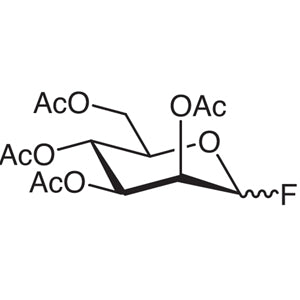
- TCI T2567 174511-17-2 2,3,4,6-Tetra-O-acetyl-D-mannopyranosyl Fluoride
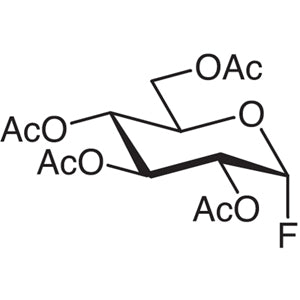
- TCI T1995 3934-29-0 2,3,4,6-Tetra-O-acetyl-alpha-D-glucopyranosyl Fluoride
- TCI M2695 219814-65-0 Methyl (Phenyl 5-Acetamido-4,7,8-tri-O-acetyl-9-azido-3,5,9-trideoxy-2-thio-D-glycero-beta-D-galacto-2-nonulopyranosid)onate
- TCI M2319 934591-76-1 Methyl 5-Acetamido-7,8,9-tri-O-acetyl-5-N,4-O-carbonyl-3,5-dideoxy-2-S-phenyl-2-thio-D-glycero-beta-D-galacto-2-nonulopyranosylonate
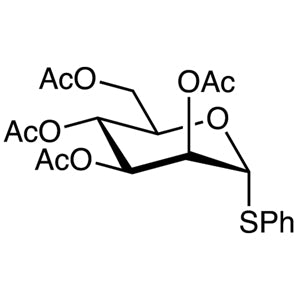
- TCI P2521 108032-93-5 Phenyl 2,3,4,6-Tetra-O-acetyl-1-thio-alpha-D-mannopyranoside
- Enzymatic Reaction Studies: This compound serves as a substrate or inhibitor in enzymatic reactions, aiding in the investigation of glycosylation and enzyme activity.
- Glycoscience Research: Its complex structure makes it ideal for studying glycans and molecular interactions, supporting advanced glycoscience investigations.
- Chromatographic Analysis: It is used as a standard in chromatography to ensure accurate separation and identification of compounds in complex mixtures.
- Spectroscopic Analysis: Its chemical stability allows it to be used as a reference material in spectroscopic techniques for molecular characterization.
- Biochemical Research: It supports studies on enzyme mechanisms and molecular interactions, contributing to advancements in biochemical understanding.
| Brand | TCI |
|---|---|
| CAS number | 7772-79-4 |
| Molecular formula | — |
| Purity | — |
| Category | Chemistry > Chemical Biology > Glycoscience |
| Pack sizes | Available in various quantities as per supplier specifications |
| Physical form | Solid (as per standard product description) |
| Storage | Store in a cool, dry place away from moisture and light |
This compound should be stored in a cool, dry environment, away from direct sunlight and moisture. It is recommended to keep it in a sealed container to prevent exposure to air and humidity. Due to its chemical nature, it should be handled with appropriate personal protective equipment, such as gloves and safety goggles, to ensure laboratory safety. Proper ventilation is essential when working with this material to minimize inhalation risks. It is important to avoid contact with skin and eyes, and in case of accidental exposure, immediate rinsing with water is advised. Safe storage and handling practices are crucial to maintaining the integrity of the compound and ensuring a secure laboratory environment.
—
Product Categories
- GlycoscienceGlyco Building BlocksProtected Sugars [Oligosaccharides by Component Sugar]
- GlycoscienceGlyco Building BlocksGlycosyl Donors [Glyco Building Blocks]
- GlycoscienceGlyco Building BlocksSugar Building Blocks by Target Oligosaccharides
- GlycoscienceMonosaccharides [Glycoscience]Glucosamines [Glycoscience]
- Biochemicals and ReagentsCarbohydrates
Produk Terkait
-
4-Methoxyphenyl3-O-Allyl-6-O-benzyl-2-deoxy-2-phthalimido-beta-D-glucopyranoside TCI M1604
Regular price From Rp 2.889.600,00Regular priceRp 2.035.950,00Sale price From Rp 2.889.600,00 -
2,3,4,6-Tetra-O-acetyl-D-mannopyranosylFluoride TCI T2567
Regular price From Rp 5.512.500,00Regular priceRp 3.870.300,00Sale price From Rp 5.512.500,00 -
2,3,4,6-Tetra-O-acetyl-alpha-D-glucopyranosylFluoride TCI T1995
Regular price Rp 3.365.250,00Regular priceRp 2.368.800,00Sale price Rp 3.365.250,00 -
Methyl(Phenyl5-Acetamido-4,7,8-tri-O-acetyl-9-azido-3,5,9-trideoxy-2-thio-D-glycero-beta-D-galacto-2-nonulopyranosid)onate TCI M2695
Regular price Rp 24.088.050,00Regular priceRp 16.859.850,00Sale price Rp 24.088.050,00 -
Methyl5-Acetamido-7,8,9-tri-O-acetyl-5-N,4-O-carbonyl-3,5-dideoxy-2-S-phenyl-2-thio-D-glycero-beta-D-galacto-2-nonulopyranosylonate TCI M2319
Regular price From Rp 6.413.400,00Regular priceRp 4.500.300,00Sale price From Rp 6.413.400,00 -
Phenyl2,3,4,6-Tetra-O-acetyl-1-thio-alpha-D-mannopyranoside TCI P2521
Regular price Rp 5.855.850,00Regular priceRp 4.110.750,00Sale price Rp 5.855.850,00 -
Fluoride TCI T2568
Regular price Rp 5.777.100,00Regular priceRp 4.055.100,00Sale price Rp 5.777.100,00