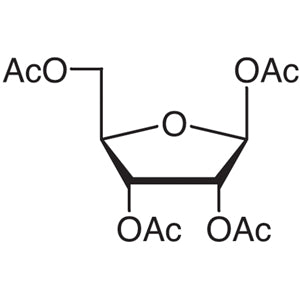
Tetra-O-acetyl-beta-D-ribofuranose is a chemical compound widely used in chemical and biochemical experiments, particularly in glycoscience research. As a derivative of ribofuranose, a monosaccharide, this compound plays a crucial role in the study of molecular structures of biomolecules. Its stability and high purity make it an essential reagent for various laboratory applications, supporting both fundamental and applied research in the field of chemistry. This compound is especially valuable for its ability to undergo specific chemical reactions, such as deacetylation, which opens up multiple synthetic pathways for the creation of complex molecules.
The compound's chemical properties, including its reactivity and structural integrity, make it a preferred choice for researchers. Its molecular structure allows for controlled modifications, making it ideal for the synthesis of glycosides and other bioactive molecules. The high purity and consistent quality of Tetra-O-acetyl-beta-D-ribofuranose ensure reliable results in experiments, which is critical for scientific accuracy. These characteristics make it a go-to material for laboratories requiring precision and reproducibility in their experiments.
In Indonesian laboratories, Tetra-O-acetyl-beta-D-ribofuranose is commonly used in biochemical, pharmacological, and organic chemistry research. It is a key component in experiments that explore molecular structures and functions, supporting both academic and industrial research efforts. Its versatility and reliability have made it a staple in the laboratories of educational institutions and research centers across Indonesia.
TCI brochures (PDF)
Related TCI products
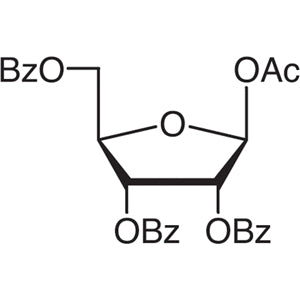
- TCI R0067 6974-32-9 beta-D-Ribofuranose 1-Acetate 2,3,5-Tribenzoate
- TCI M1965 7473-45-2 Methyl beta-D-Ribofuranoside
- TCI T2607 62211-93-2 1,2,3-Tri-O-acetyl-5-deoxy-beta-D-ribofuranose
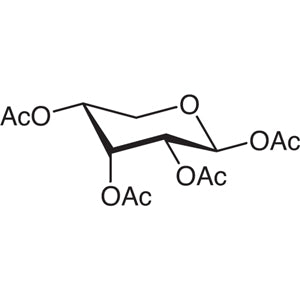
- TCI R0065 4049-34-7 Tetra-O-acetyl-beta-D-ribopyranose
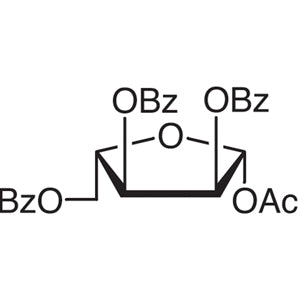
- TCI T2641 22224-41-5 1,3,5-Tri-O-benzoyl-alpha-D-ribofuranose
- TCI R0080 3080-30-6 beta-L-Ribofuranose 1-Acetate 2,3,5-Tribenzoate
- Glycoside Synthesis: This compound is ideal for synthesizing glycosides due to its stable structure and reactivity, allowing for controlled chemical modifications.
- Structural Biology Studies: It is used to investigate the structural properties of biomolecules, aiding in the understanding of molecular interactions and functions.
- Organic Chemistry Research: Its chemical reactivity supports a wide range of organic synthesis reactions, making it a valuable tool in synthetic chemistry.
- Biochemical Analysis: It is utilized in biochemical experiments to study carbohydrate metabolism and related biological processes.
- Drug Development: Its role in synthesizing bioactive molecules makes it useful in the development of new pharmaceutical compounds.
| Brand | TCI |
|---|---|
| CAS number | 13035-61-5 |
| Molecular formula | — |
| Purity | — |
| Category | Chemistry > Chemical Biology > Glycoscience |
| Pack sizes | Available in various quantities as per standard laboratory requirements |
| Physical form | White crystalline solid |
| Storage | Store in a cool, dry place away from direct sunlight |
Tetra-O-acetyl-beta-D-ribofuranose should be stored in a cool, dry environment to maintain its chemical stability and prevent degradation. It is recommended to keep the compound in airtight containers to minimize exposure to moisture and air, which could affect its purity. Due to its chemical reactivity, it should be handled with care, using appropriate personal protective equipment such as gloves and safety goggles. It is important to store the compound away from incompatible materials to avoid any potential chemical reactions. Regular inspection of storage conditions ensures the compound remains in optimal condition for use in laboratory experiments.
—
Product Categories
- Chemical BiologyGlycoscienceGlyco Building Blocks
- Chemical BiologyGlycoscienceMonosaccharides [Glycoscience]
- Chemical BiologyNucleic Acid ChemistryRiboses and 2'-Deoxyriboses [Nucleic Acid Synthesis]
- Pharmaceutical Development and Drug Discovery Research ReagentsNucleic Acid ChemistryRiboses and 2'-Deoxyriboses [Nucleic Acid Synthesis]
- GlycoscienceGlyco Building BlocksProtected Sugars [Oligosaccharides by Component Sugar]
- GlycoscienceMonosaccharides [Glycoscience]Riboses [Glycoscience]
- Biochemicals and ReagentsCarbohydrates
- Pharmaceutical Development and Drug Discovery ResearchNucleic Acid ChemistryRiboses and 2'-Deoxyriboses [Nucleic Acid Synthesis]
Produk Terkait
-
beta-D-Ribofuranose1-Acetate2,3,5-Tribenzoate TCI R0067
Regular price From Rp 1.115.100,00Regular price -
Methylbeta-D-Ribofuranoside TCI M1965
Regular price From Rp 2.227.050,00Regular price -
1,2,3-Tri-O-acetyl-5-deoxy-beta-D-ribofuranose TCI T2607
Regular price From Rp 477.750,00Regular price -
Tetra-O-acetyl-beta-D-ribopyranose TCI R0065
Regular price Rp 1.829.100,00Regular price -
1,3,5-Tri-O-benzoyl-alpha-D-ribofuranose TCI T2641
Regular price From Rp 1.776.600,00Regular price -
beta-L-Ribofuranose1-Acetate2,3,5-Tribenzoate TCI R0080
Regular price Rp 2.199.750,00Regular price -
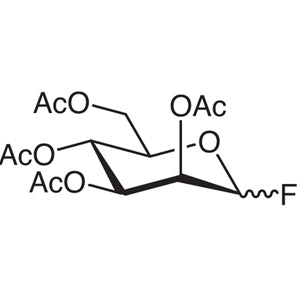
2,3,4,6-Tetra-O-acetyl-D-mannopyranosylFluoride TCI T2567
Regular price From Rp 5.460.000,00Regular price -
1,3,4,6-Tetra-O-acetyl-2-O-(trifluoromethanesulfonyl)-beta-D-mannopyranose TCI T2307
Regular price Rp 1.326.150,00Regular price