![106261-49-8 4-[(4-Methyl-1-piperazinyl)methyl]benzoic Acid Dihydrochloride - AMI Scientific](http://amiscientific.com/cdn/shop/files/TCI2510M2110.jpg?v=1767126069&width=1946)
![106261-49-8 4-[(4-Methyl-1-piperazinyl)methyl]benzoic Acid Dihydrochloride - AMI Scientific](http://amiscientific.com/cdn/shop/files/TCI2510M2110.jpg?v=1767126069&width=1445)
4-[(4-Methyl-1-piperazinyl)methyl]benzoic Acid Dihydrochloride is a versatile chemical compound widely used in synthetic laboratory applications. This compound is essential for researchers working in organic chemistry, as it serves as a building block in the synthesis of complex molecules. Its unique molecular structure allows it to participate in various chemical reactions, making it a valuable reagent in the development of new compounds. Due to its chemical stability and solubility, it is frequently used in reactions that require controlled and predictable outcomes.
One of the key properties that make this compound a preferred choice is its ability to form stable bonds with functional groups. The presence of the dihydrochloride group enhances its solubility in organic solvents, which is crucial for many synthetic processes. Additionally, its molecular structure supports a wide range of chemical modifications, enabling researchers to tailor its properties for specific applications. These characteristics make it an essential component in the synthesis of pharmaceuticals, materials, and other chemical products.
In Indonesian laboratories, this compound is commonly used in organic synthesis research conducted by universities and research institutions. It plays a vital role in the development of new compounds with potential applications in the pharmaceutical and chemical industries. Its reliability and effectiveness make it a standard reagent in many laboratory settings, contributing to the advancement of scientific research in Indonesia.
Related TCI products
- Organic Synthesis: This compound is ideal for creating complex organic molecules by linking benzoic acid and piperazine structures, enabling the development of new pharmaceuticals and materials.
- Pharmaceutical Research: It is used in the synthesis of drug candidates due to its ability to form stable bonds with functional groups, enhancing the efficiency of drug development processes.
- Material Science: The compound is employed in the creation of advanced materials, as its molecular structure allows for the incorporation of various functional groups into polymer-based materials.
- Analytical Chemistry: It serves as a reference standard for analytical techniques, providing a reliable compound for quality control and method validation.
- Industrial Chemistry: Its stability and solubility make it suitable for industrial applications where controlled chemical reactions are required.
| Brand | TCI |
|---|---|
| CAS number | 106261-49-8 |
| Molecular formula | — |
| Purity | — |
| Category | Chemistry > Building Blocks > Non-Heterocyclic Building Blocks |
| Pack sizes | Available in various quantities as per standard laboratory supply |
| Physical form | Solid powder |
| Storage | Store in a cool, dry place away from moisture and direct sunlight |
This compound should be stored in a cool, dry environment to maintain its chemical stability. It is recommended to use airtight containers to prevent moisture absorption, which could affect its solubility and reactivity. Due to its potential reactivity, it should be handled in a well-ventilated area, and appropriate personal protective equipment such as gloves and safety goggles should be worn. Avoid exposure to heat or direct sunlight to prevent degradation. It is also important to ensure that it is stored separately from incompatible substances to maintain laboratory safety. Regular inspection of storage conditions is advised to ensure the compound remains in optimal condition for use.
—
Produk Terkait
-
3,4,5-Tris(dodecyloxy)benzoicAcid TCI T3606
Regular price Rp 3.738.000,00Regular price -
4-(4-Methylphenoxy)benzoicAcid TCI T3391
Regular price From Rp 2.889.600,00Regular price -
2-(p-Tolyl)benzoicAcid TCI T2377
Regular price From Rp 769.650,00Regular price -
3,4,5-Tris(benzyloxy)benzoicAcid TCI T1869
Regular price From Rp 3.260.250,00Regular price -
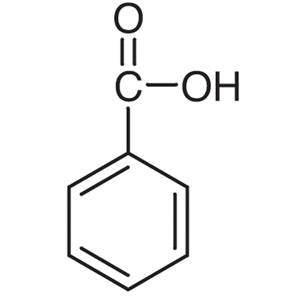
BenzoicAcid TCI B2635
Regular price From Rp 505.050,00Regular price -
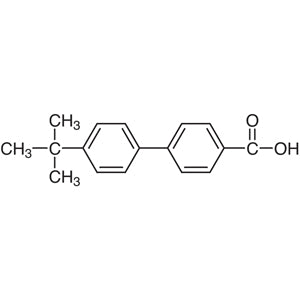
4-(4-tert-Butylphenyl)benzoicAcid TCI B1986
Regular price From Rp 2.677.500,00Regular price -
4-(2-Bromoethyl)benzoicAcid TCI B1944
Regular price From Rp 5.724.600,00Regular price -
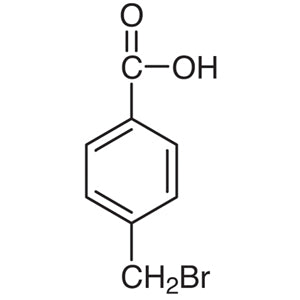
4-(Bromomethyl)benzoicAcid TCI B0845
Regular price From Rp 1.405.950,00Regular price