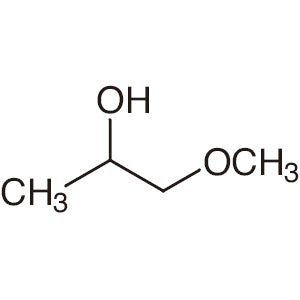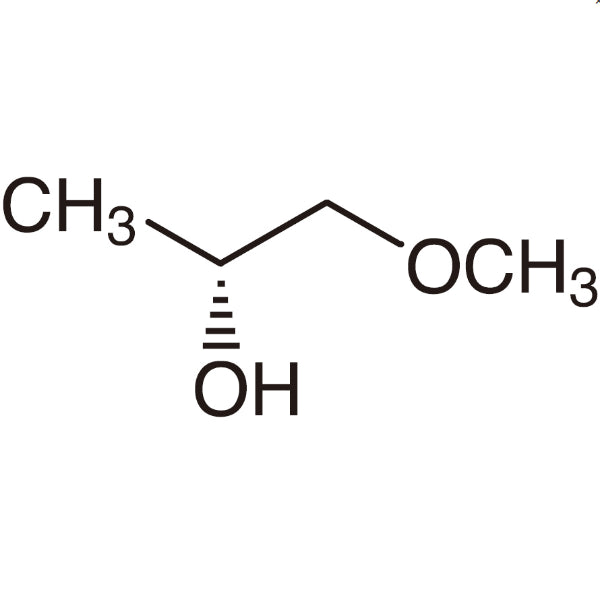
(R)-(-)-1-Methoxy-2-propanol is a chiral compound widely used in asymmetric synthesis to construct molecules with specific biological activities. This compound plays a crucial role in organic chemistry laboratories, where it serves as a building block for creating optically active compounds. Its stereochemical properties make it an essential tool for researchers aiming to develop pharmaceuticals and advanced chemical materials. Due to its ability to influence the stereochemistry of final products, it is highly valued in synthetic processes requiring precision and control.
The compound’s optical activity and chiral nature are the key factors that make it a preferred choice in laboratory settings. These properties allow for the selective formation of enantiomers, which is critical in drug development and other specialized chemical applications. Its chemical stability and compatibility with various reaction conditions further enhance its utility. As a chiral building block, it provides a reliable foundation for complex molecular synthesis, enabling scientists to achieve desired outcomes with greater accuracy and efficiency.
In Indonesian laboratories, (R)-(-)-1-Methoxy-2-propanol is commonly used in scientific research and pharmaceutical development. Its role in creating optically active compounds is vital for the production of new drugs and materials. Researchers rely on this compound to meet the demand for consistent and high-quality chiral intermediates, ensuring the success of their synthetic processes. Its importance in both academic and industrial settings underscores its value in modern chemical research.
- Asymmetric synthesis for creating optically active compounds used in pharmaceutical development due to its chiral nature and stereochemical control.
- Organic chemistry research for constructing complex molecules requiring precise stereochemical configurations and controlled reactions.
- Drug development processes where optically active intermediates are essential for producing therapeutically effective compounds.
- Material science applications for synthesizing chiral compounds used in advanced chemical materials and functional polymers.
- Academic research in chemical synthesis where controlled stereochemistry is required for producing specific molecular structures.
| Brand | TCI |
|---|---|
| CAS number | 4984-22-9 |
| Molecular formula | — |
| Purity | — |
| Category | Chemistry > Asymmetric Synthesis > Chiral Building Blocks |
| Pack sizes | — |
| Physical form | Liquid |
| Storage | Store in a cool, dark place away from moisture and direct sunlight. |
This compound should be stored in a cool, dark environment to maintain its chemical stability and optical activity. It is recommended to keep it in a tightly sealed container to prevent exposure to moisture and air, which can affect its integrity. Due to its chiral nature, it is important to handle it with care to avoid contamination or unintended stereochemical changes. Laboratory personnel should wear appropriate personal protective equipment, such as gloves and safety goggles, when handling this material. Proper ventilation should be ensured in the workspace to minimize any potential exposure. Regular monitoring of storage conditions is advised to ensure the compound remains in optimal condition for use in synthetic processes.
—
Produk Terkait
-
(S)-(+)-1-Methoxy-2-propanol TCI M2408
Regular price Rp 2.571.450,00Regular price -
(S)-(+)-1-Benzyloxy-2-propanol TCI B4117
Regular price From Rp 1.565.550,00Regular price -
(S)-(-)-1-Phenyl-1-propanol TCI P1931
Regular price Rp 6.545.700,00Regular price -
(R)-(+)-1-Phenyl-1-propanol TCI P1930
Regular price Rp 4.797.450,00Regular price -
(S)-(-)-3-Chloro-1-phenyl-1-propanol TCI C2424
Regular price Rp 1.696.800,00Regular price -
(R)-(+)-3-Chloro-1-phenyl-1-propanol TCI C2423
Regular price Rp 1.326.150,00Regular price -
3-Methoxy-1-propanol TCI M1475
Regular price From Rp 1.881.600,00Regular price -
1-Methoxy-2-propanol TCI M0126
Regular price From Rp 477.750,00Regular price