

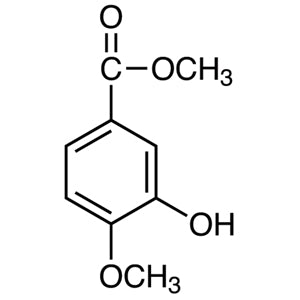
Methyl Isovanillate is a chemical compound widely used in synthetic and analytical laboratory applications. As a building block, it serves as a fundamental component for the synthesis of more complex chemical structures. This compound plays a crucial role in organic chemistry, where it is utilized to create aromatic and heterocyclic compounds. Its versatility makes it an essential reagent in various laboratory processes, supporting both research and development activities. Methyl Isovanillate is particularly valued for its stability and reactivity, which facilitate efficient chemical reactions. Its unique molecular structure allows for compatibility with a wide range of reagents, enhancing its utility in different experimental setups.
The compound is known for its stable molecular structure and moderate reactivity, making it a preferred choice in laboratory settings. These properties ensure that it can be reliably used in a variety of chemical reactions without undergoing unwanted side reactions. Its chemical characteristics allow it to interact effectively with various reagents, enabling the synthesis of a broad range of compounds. Additionally, Methyl Isovanillate has a distinct aroma, which makes it suitable for applications in fragrance and flavor development. This characteristic further expands its use in industries such as cosmetics and food science.
In Indonesian laboratories, Methyl Isovanillate is commonly used in organic chemistry research, especially in pharmaceutical and industrial chemical applications. It is a key component in the development of new compounds and is frequently employed in synthetic processes. Its availability and reliability make it a popular choice among researchers and chemists working in the field. The compound’s role in both analytical and synthetic processes underscores its importance in the laboratory environment.
- Organic synthesis in pharmaceutical research due to its ability to form aromatic and heterocyclic compounds.
- Flavor and fragrance development because of its distinct aroma and chemical versatility.
- Analytical chemistry applications for its stability and compatibility with various reagents.
- Industrial chemical production as a building block for complex compound synthesis.
- Research in cosmetic formulation due to its potential in creating natural-scented products.
| Brand | TCI |
|---|---|
| CAS number | 6702-50-7 |
| Molecular formula | — |
| Purity | — |
| Category | Chemistry > Building Blocks > Non-Heterocyclic Building Blocks |
| Pack sizes | Available in various quantities as per standard laboratory supply |
| Physical form | Solid or liquid, depending on the specific product variant |
| Storage | Store in a cool, dry place away from direct sunlight |
Methyl Isovanillate should be stored in a cool, dry environment to maintain its chemical stability. It is recommended to keep it in a tightly sealed container to prevent moisture absorption and contamination. Avoid exposure to direct sunlight and high temperatures, as these can affect its reactivity and shelf life. When handling, ensure proper ventilation to minimize inhalation of vapors. Use appropriate personal protective equipment such as gloves and safety goggles to ensure safety during experiments. This compound is generally non-hazardous under normal laboratory conditions, but standard safety protocols should be followed to ensure safe handling and storage.
—
Produk Terkait
-
IsovanillicAcid TCI I0295
Regular price From Rp 875.700,00Regular price -
Isovanillin TCI H0263
Regular price From Rp 1.485.750,00Regular price -
IsovanillylAlcohol TCI I0648
Regular price Rp 743.400,00Regular price


