

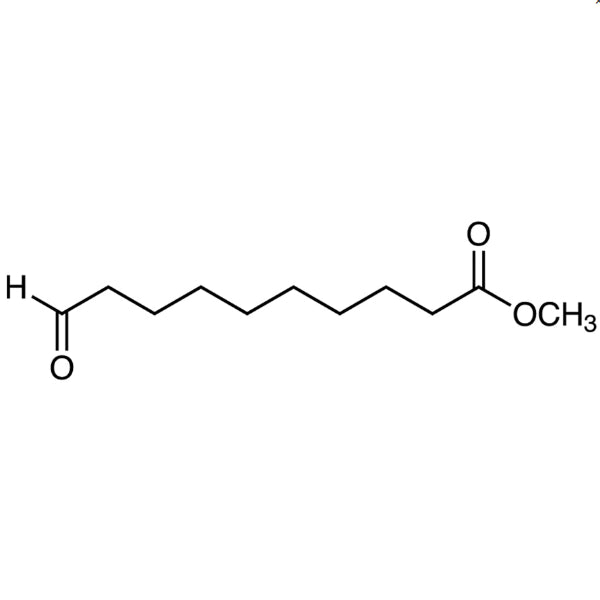
Methyl 9-Formylnonanoate is a chemical compound widely used in scientific experiments, particularly in the fields of biochemistry and pharmacological research. This compound serves as a key component in the synthesis of complex molecules, including those with specific biological activities. Its versatility makes it an essential tool for researchers aiming to develop new pharmaceuticals or understand molecular interactions. In laboratory settings, it is frequently used as a building block for the production of other compounds with applications in medicine, pharmacy, and biotechnology.
The compound's molecular structure is stable and easily modified through specific chemical reactions, making it a preferred choice for molecular modification studies. Its ability to undergo various chemical transformations supports its use in synthetic pathways and structural analysis. Additionally, Methyl 9-Formylnonanoate exhibits good solubility in organic solvents, which simplifies processes such as separation and identification in chemical analysis. These properties contribute to its effectiveness in a wide range of laboratory applications.
In Indonesian laboratories, Methyl 9-Formylnonanoate is commonly used in scientific research, especially in the fields of bio-pharmaceuticals and biochemistry. Many research institutions and universities rely on this compound to develop new pharmaceutical products or investigate the mechanisms of action of specific compounds. Its availability in the local market facilitates ongoing research and development efforts in these areas.
Related TCI products
- Biochemical Synthesis: Methyl 9-Formylnonanoate is ideal for synthesizing complex organic molecules due to its stable molecular structure and reactivity.
- Pharmacological Research: It is used to study the biological activity of compounds, supporting drug discovery and development efforts.
- Structural Modification Studies: The compound's ability to undergo chemical transformations makes it suitable for exploring molecular modifications in synthetic chemistry.
- Analytical Chemistry: Its solubility in organic solvents aids in separation and identification techniques such as chromatography and spectroscopy.
- Biotechnology Applications: It is employed in the development of biopharmaceuticals and bioactive compounds through molecular engineering approaches.
| Brand | TCI |
|---|---|
| CAS number | 14811-73-5 |
| Molecular formula | — |
| Purity | — |
| Category | Life Science > Biochemicals and Reagents > Lipids |
| Pack sizes | Available in various quantities as per standard laboratory supply |
| Physical form | Solid or liquid, depending on the specific product formulation |
| Storage | Store in a cool, dry place away from direct sunlight and moisture |
Methyl 9-Formylnonanoate should be stored in a cool, dry environment to maintain its stability and prevent degradation. It is recommended to use airtight containers to protect it from moisture and air exposure. When handling the compound, it is important to follow standard laboratory safety protocols, including the use of personal protective equipment such as gloves and safety goggles. Due to its chemical nature, it should be kept away from incompatible substances and stored in a well-ventilated area. Proper storage ensures the compound remains effective for its intended applications in research and development.
—
Product Categories
Produk Terkait
-
Methyl9-Hydroxynonanoate TCI H0835
Regular price From Rp 9.195.900,00Regular price
