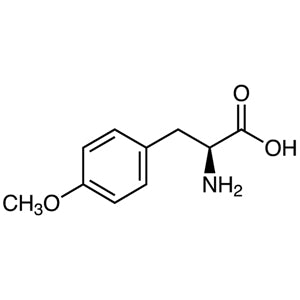
O-Methyl-L-tyrosine is a chemical compound widely used in laboratory experiments across both chemical and biochemical fields. It belongs to the category of peptide chemistry and plays a crucial role in organic synthesis and molecular structure modification. This compound serves as a key reagent in various research activities, particularly in the development of bioactive compounds and the study of molecular interactions. Its presence in Indonesian laboratories supports a wide range of scientific investigations, from basic research to applied studies in pharmaceutical development.
The stability of O-Methyl-L-tyrosine’s chemical structure makes it a preferred choice for chemical reactions requiring functional group modification or the synthesis of complex molecules. It can react with various reagents under controlled conditions, enabling researchers to explore new chemical pathways and biological activities. Its versatility in reacting with different chemical agents allows it to be a valuable tool in both synthetic and analytical laboratory settings. This compound is especially useful in studies involving enzymatic mechanisms and reaction kinetics.
In Indonesian laboratories, O-Methyl-L-tyrosine is commonly used in pure chemical and biochemical research. It is a key component in the synthesis of organic compounds, drug development, and molecular interaction studies. Its availability in the local market ensures that researchers can access this essential material for their experiments. Its role in supporting scientific innovation makes it an important resource for academic and industrial research in Indonesia.
TCI brochures (PDF)
- Non-Canonical Amino Acids for Protein Site-specific Modification by Genetic Code Expansion 2024-04-16 · p. 2
- Amino Acids and Peptide Synthesis Reagents 2025-08-14 · p. 31
Related TCI products
- Organic synthesis experiments benefit from O-Methyl-L-tyrosine due to its ability to participate in functional group modifications and complex molecule construction.
- Biochemical research utilizes this compound to study molecular interactions and enzyme activity in controlled environments.
- Peptide chemistry applications leverage its structural properties for the development of bioactive compounds and pharmaceuticals.
- Molecular modification studies rely on its reactivity to create new chemical structures with specific biological functions.
- Drug development projects use O-Methyl-L-tyrosine as a building block for synthesizing compounds with potential therapeutic applications.
| Brand | TCI |
|---|---|
| CAS number | 6230-11-1 |
| Molecular formula | — |
| Purity | — |
| Category | Chemistry > Chemical Biology > Peptide Chemistry |
| Pack sizes | Available in standard laboratory quantities |
| Physical form | Solid powder |
| Storage | Store in a cool, dry place away from direct sunlight |
O-Methyl-L-tyrosine should be stored in a cool, dry environment to maintain its chemical stability. It is recommended to keep the compound in a sealed container to prevent moisture absorption and contamination. Avoid exposure to direct sunlight and high humidity, as these conditions may affect its reactivity and purity. When handling, use appropriate personal protective equipment such as gloves and safety goggles to ensure safety. The compound is generally stable under normal laboratory conditions but should be handled with care to prevent accidental spills or exposure. Proper storage and handling practices are essential to maintain its effectiveness and ensure safe laboratory operations.
—
Product Categories
Produk Terkait
-
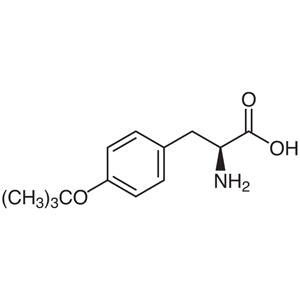
O-tert-Butyl-L-tyrosine TCI B3212
Regular price From Rp 822.150,00Regular priceRp 590.100,00Sale price From Rp 822.150,00 -
O-Benzyl-L-tyrosine TCI B3210
Regular price Rp 875.700,00Regular priceRp 627.900,00Sale price Rp 875.700,00 -
3,5-Dibromo-L-tyrosine TCI D0213
Regular price Rp 1.458.450,00Regular priceRp 1.035.300,00Sale price Rp 1.458.450,00 -
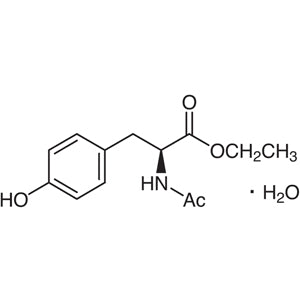
N-Acetyl-L-tyrosineEthylEsterMonohydrate TCI A0118
Regular price From Rp 662.550,00Regular priceRp 478.800,00Sale price From Rp 662.550,00 -
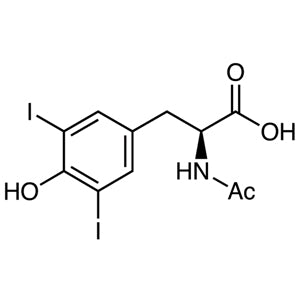
N-Acetyl-3,5-diiodo-L-tyrosine TCI A0087
Regular price Rp 1.060.500,00Regular priceRp 757.050,00Sale price Rp 1.060.500,00 -
L-TyrosineMethylEster TCI T2736
Regular price From Rp 1.167.600,00Regular priceRp 831.600,00Sale price From Rp 1.167.600,00 -
L-Tyrosinetert-ButylEster TCI T2446
Regular price From Rp 1.801.800,00Regular priceRp 1.275.750,00Sale price From Rp 1.801.800,00 -
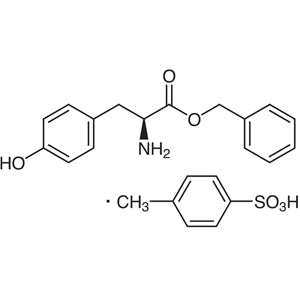
L-TyrosineBenzylEsterp-Toluenesulfonate TCI T2443
Regular price From Rp 1.670.550,00Regular priceRp 1.183.350,00Sale price From Rp 1.670.550,00