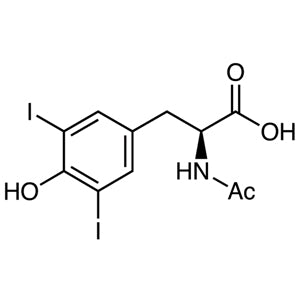
O-Benzyl-L-tyrosine is a chemical compound widely used in chemical and biochemical experiments, particularly in peptide synthesis and organic molecule modification. As a key reagent in laboratory settings, it plays a crucial role in the development of complex compounds with applications in pharmacology, biotechnology, and organic chemistry. Its structural stability allows for precise chemical reactions, making it an essential component in the synthesis of peptides and biological analogs. This compound is favored for its ability to interact specifically with various reagents, enabling controlled and reproducible experimental outcomes.
One of the main reasons O-Benzyl-L-tyrosine is preferred is its excellent solubility in organic solvents, which simplifies purification and reaction processes. Its chemical stability ensures consistent performance across different experimental conditions, while its reactivity allows for the formation of a wide range of derivatives. These properties make it a reliable choice for researchers aiming to achieve high precision and accuracy in their work. Additionally, its compatibility with standard laboratory techniques enhances its utility in both academic and industrial research environments.
In Indonesian laboratories, O-Benzyl-L-tyrosine is commonly used in chemical and molecular biology research. It is integral to experiments involving the synthesis of complex compounds, drug development, and structural studies. Its role in creating molecular frameworks for pharmaceutical and biotechnological applications underscores its importance in advancing scientific research in the region. Researchers rely on its predictable behavior and versatility to achieve reliable results in their experiments.
TCI brochures (PDF)
- Amino Acids and Peptide Synthesis Reagents 2025-08-14 · p. 30
- Reagents for Biological Research 2025-03-11 · p. 58
Related TCI products
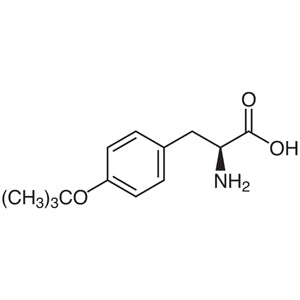
- TCI B3212 18822-59-8 O-tert-Butyl-L-tyrosine
- TCI M2276 6230-11-1 O-Methyl-L-tyrosine
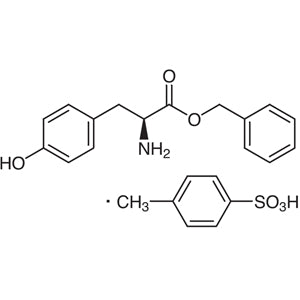
- TCI T2443 53587-11-4 L-Tyrosine Benzyl Ester p-Toluenesulfonate
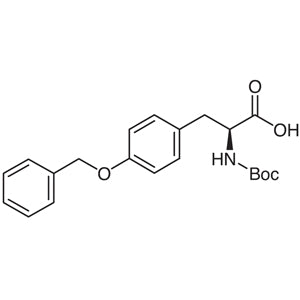
- TCI B1631 2130-96-3 N-(tert-Butoxycarbonyl)-O-benzyl-L-tyrosine
- TCI B5343 19391-35-6 N-(tert-Butoxycarbonyl)-L-tyrosine Benzyl Ester
- TCI B0861 4726-96-9 O-Benzyl-L-serine
- Peptide Synthesis: O-Benzyl-L-tyrosine is used in solid-phase peptide synthesis to introduce tyrosine residues into peptide chains, enabling the creation of complex biomolecules.
- Organic Molecule Modification: Its reactivity allows for the functionalization of organic compounds, facilitating the development of new chemical structures with specific properties.
- Drug Development: It serves as a building block in the synthesis of pharmaceutical compounds, supporting research into novel therapeutic agents.
- Structural Studies: The compound is employed in studies that aim to understand molecular structures and their interactions, contributing to biochemical research.
- Biochemical Research: It is utilized in experiments that require precise chemical modifications, aiding in the investigation of biological processes and molecular mechanisms.
| Brand | TCI |
|---|---|
| CAS number | 16652-64-5 |
| Molecular formula | — |
| Purity | — |
| Category | Chemistry > Chemical Biology > Peptide Chemistry |
| Pack sizes | Available in various quantities as per standard laboratory supply |
| Physical form | Solid |
| Storage | Store in a cool, dry place away from light and moisture |
O-Benzyl-L-tyrosine should be stored in a cool, dry environment, away from direct light and moisture to maintain its chemical stability. It is recommended to use airtight containers to prevent exposure to humidity and air, which may affect its integrity. In laboratory settings, proper ventilation should be ensured when handling the compound to minimize inhalation risks. Always wear appropriate personal protective equipment, such as gloves and safety goggles, when working with this material. It is important to follow standard laboratory safety protocols to ensure safe handling and prevent any potential chemical reactions or contamination.
—
Product Categories
Produk Terkait
-
O-tert-Butyl-L-tyrosine TCI B3212
Regular price From Rp 822.150,00Regular priceRp 590.100,00Sale price From Rp 822.150,00 -
O-Methyl-L-tyrosine TCI M2276
Regular price Rp 2.013.900,00Regular priceRp 1.423.800,00Sale price Rp 2.013.900,00 -
L-TyrosineBenzylEsterp-Toluenesulfonate TCI T2443
Regular price From Rp 1.670.550,00Regular priceRp 1.183.350,00Sale price From Rp 1.670.550,00 -
N-(tert-Butoxycarbonyl)-O-benzyl-L-tyrosine TCI B1631
Regular price From Rp 900.900,00Regular priceRp 645.750,00Sale price From Rp 900.900,00 -
N-(tert-Butoxycarbonyl)-L-tyrosineBenzylEster TCI B5343
Regular price From Rp 1.458.450,00Regular priceRp 1.035.300,00Sale price From Rp 1.458.450,00 -
O-Benzyl-L-serine TCI B0861
Regular price From Rp 795.900,00Regular priceRp 572.250,00Sale price From Rp 795.900,00 -
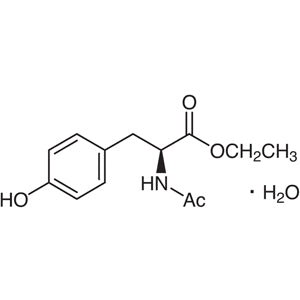
N-Acetyl-L-tyrosineEthylEsterMonohydrate TCI A0118
Regular price From Rp 662.550,00Regular priceRp 478.800,00Sale price From Rp 662.550,00 -
N-Acetyl-3,5-diiodo-L-tyrosine TCI A0087
Regular price Rp 1.060.500,00Regular priceRp 757.050,00Sale price Rp 1.060.500,00