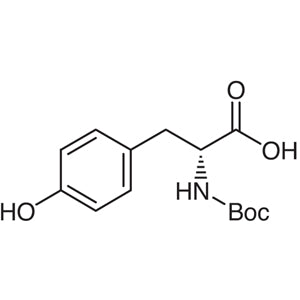
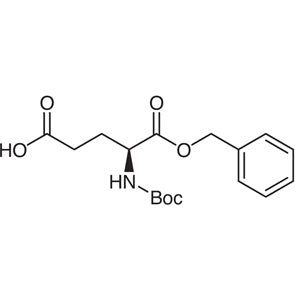
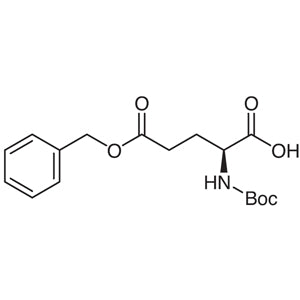
N-(tert-Butoxycarbonyl)-O-benzyl-L-tyrosine is a chemical compound widely used in peptide synthesis and biochemical research. This compound serves as a key building block in the creation of complex peptide structures, making it essential for laboratories engaged in chemical biology and peptide chemistry. Its role as a protected amino acid derivative allows for controlled and selective chemical reactions, which is critical in the development of pharmaceutical compounds and bioactive molecules. Due to its chemical stability, it is also valued for its ability to prevent unwanted side reactions during synthetic processes.
The compound's unique structure, featuring both a tert-butoxycarbonyl group and an O-benzyl group, provides researchers with the flexibility to manipulate and modify peptide sequences with precision. These functional groups enable selective deprotection and coupling reactions, which are fundamental in the synthesis of peptides and proteins. Its chemical inertness under specific conditions further enhances its utility, making it a reliable reagent in various synthetic protocols.
In Indonesian laboratories, this compound is frequently used in scientific research, particularly in the fields of pharmacology and biochemical studies. It supports the development of new drugs and the investigation of protein structures and functions. Its availability plays a crucial role in advancing research activities in chemistry and biology, contributing to the growth of scientific knowledge and innovation in the region.
TCI brochures (PDF)
- Amino Acids and Peptide Synthesis Reagents 2025-08-14 · p. 12
Related TCI products
- TCI B3485 47375-34-8 N-(tert-Butoxycarbonyl)-O-tert-butyl-L-tyrosine
- TCI B2963 70642-86-3 N-(tert-Butoxycarbonyl)-D-tyrosine
- TCI B1640 3978-80-1 N-(tert-Butoxycarbonyl)-L-tyrosine
- TCI B4303 34404-30-3 1-Benzyl N-(tert-Butoxycarbonyl)-D-glutamate
- TCI B2408 30925-18-9 1-Benzyl N-(tert-Butoxycarbonyl)-L-aspartate
- TCI B1864 30924-93-7 1-Benzyl N-(tert-Butoxycarbonyl)-L-glutamate
- Peptide Synthesis: This compound is ideal for constructing complex peptide sequences due to its protective groups, allowing controlled deprotection during synthesis.
- Pharmaceutical Development: Its use in drug research enables the creation of bioactive molecules with specific structural and functional properties.
- Biochemical Studies: It supports investigations into protein structure and function by providing a stable and reactive building block for synthetic peptides.
- Molecular Modeling: The compound's known chemical properties aid in the design and simulation of molecular interactions in research settings.
- Academic Research: It is commonly used in university laboratories to teach and conduct experiments in peptide chemistry and chemical biology.
| Brand | TCI |
|---|---|
| CAS number | 2130-96-3 |
| Molecular formula | — |
| Purity | — |
| Category | Chemistry > Chemical Biology > Peptide Chemistry |
| Pack sizes | Available in various quantities as per standard laboratory supply |
| Physical form | Solid powder |
| Storage | Store in a cool, dry place away from light and moisture |
This compound should be stored in a cool, dry environment, away from direct sunlight and moisture. It is recommended to keep it in a sealed container to prevent exposure to air and humidity. Due to its chemical stability, it does not require refrigeration but should be protected from potential contaminants. In laboratory settings, it is important to handle it with appropriate personal protective equipment, such as gloves and safety goggles, to ensure safe handling. Always ensure that the storage area is well-ventilated and free from incompatible substances. Proper storage helps maintain the compound's integrity and ensures its effectiveness in research applications.
—
Product Categories
Produk Terkait
-
N-(tert-Butoxycarbonyl)-O-tert-butyl-L-tyrosine TCI B3485
Regular price From Rp 1.087.800,00Regular priceRp 775.950,00Sale price From Rp 1.087.800,00 -
N-(tert-Butoxycarbonyl)-D-tyrosine TCI B2963
Regular price From Rp 1.696.800,00Regular priceRp 1.202.250,00Sale price From Rp 1.696.800,00 -
N-(tert-Butoxycarbonyl)-L-tyrosine TCI B1640
Regular price From Rp 955.500,00Regular priceRp 683.550,00Sale price From Rp 955.500,00 -
1-BenzylN-(tert-Butoxycarbonyl)-D-glutamate TCI B4303
Regular price From Rp 1.246.350,00Regular priceRp 887.250,00Sale price From Rp 1.246.350,00 -
1-BenzylN-(tert-Butoxycarbonyl)-L-aspartate TCI B2408
Regular price From Rp 1.008.000,00Regular priceRp 720.300,00Sale price From Rp 1.008.000,00 -
1-BenzylN-(tert-Butoxycarbonyl)-L-glutamate TCI B1864
Regular price From Rp 1.618.050,00Regular priceRp 1.146.600,00Sale price From Rp 1.618.050,00 -
O-Benzyl-N-(tert-butoxycarbonyl)-D-serine TCI B1863
Regular price From Rp 582.750,00Regular priceRp 423.150,00Sale price From Rp 582.750,00 -
5-BenzylN-(tert-Butoxycarbonyl)-L-glutamate TCI B1633
Regular price From Rp 1.643.250,00Regular priceRp 1.164.450,00Sale price From Rp 1.643.250,00