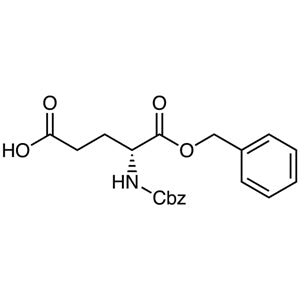
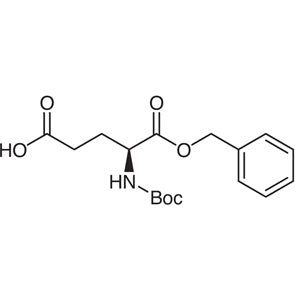
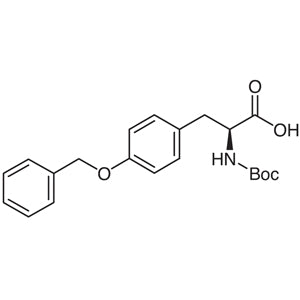
5-Benzyl N-(tert-Butoxycarbonyl)-L-glutamate is a chemical compound widely used in chemical and biochemical experiments, particularly in the field of peptide chemistry. This compound plays a crucial role in the synthesis of peptides, serving as a building block for constructing complex molecular structures, including those found in proteins. Its presence in laboratory settings enables researchers to develop and test new compounds with potential applications in medicine and pharmacology. Due to its versatility, it is a key reagent in various biochemical processes that require precise molecular manipulation.
The compound's chemical stability and ability to interact with a variety of reagents make it a preferred choice for researchers. Its complex molecular structure allows it to participate in high-precision chemical reactions, making it ideal for applications that demand accuracy and reliability. Additionally, its role as a substrate in peptidase reactions enhances its utility in biochemical research. These properties contribute to its popularity among scientists working in pharmacology, biochemistry, and organic chemistry.
In Indonesian laboratories, 5-Benzyl N-(tert-Butoxycarbonyl)-L-glutamate is commonly used by researchers in pharmaceutical and biochemical fields. It is also sought after by academic institutions and research organizations engaged in drug development and protein mechanism studies. Its application in peptide synthesis for drug development makes it an essential component in modern laboratory practices.
TCI brochures (PDF)
- Amino Acids and Peptide Synthesis Reagents 2025-08-14 · p. 12
Related TCI products
- TCI B4303 34404-30-3 1-Benzyl N-(tert-Butoxycarbonyl)-D-glutamate
- TCI B4281 65706-99-2 1-Benzyl N-Benzyloxycarbonyl-D-glutamate
- TCI B3989 3705-42-8 1-Benzyl N-Benzyloxycarbonyl-L-glutamate
- TCI B3902 5680-86-4 5-Benzyl N-Benzyloxycarbonyl-L-glutamate
- TCI B1864 30924-93-7 1-Benzyl N-(tert-Butoxycarbonyl)-L-glutamate
- TCI B2408 30925-18-9 1-Benzyl N-(tert-Butoxycarbonyl)-L-aspartate
- Peptide Synthesis: This compound is essential for constructing complex peptide structures, which are vital in drug development and biochemical research.
- Biochemical Research: Its role as a substrate in peptidase reactions makes it ideal for studying enzyme mechanisms and protein interactions.
- Pharmaceutical Development: It is frequently used in the synthesis of bioactive peptides with potential therapeutic applications.
- Organic Chemistry Studies: Its chemical stability and reactivity make it a valuable reagent in organic synthesis experiments.
- Protein Mechanism Analysis: It aids in understanding the structural and functional aspects of proteins through precise molecular manipulation.
| Brand | TCI |
|---|---|
| CAS number | 13574-13-5 |
| Molecular formula | — |
| Purity | — |
| Category | Chemistry > Chemical Biology > Peptide Chemistry |
| Pack sizes | As per supplier specifications |
| Physical form | Solid (as per standard chemical properties) |
| Storage | Store in a cool, dry place away from direct sunlight |
This compound should be stored in a cool, dry environment to maintain its chemical stability. It is recommended to keep it in a tightly sealed container to prevent moisture absorption and contamination. Avoid exposure to direct sunlight and high humidity levels to preserve its integrity. When handling, ensure proper laboratory safety practices are followed, including the use of personal protective equipment. It is advisable to store it in a well-ventilated area to minimize any potential risks associated with chemical exposure. Regular monitoring of storage conditions will help ensure the compound remains suitable for use in laboratory applications.
—
Product Categories
Produk Terkait
-
1-BenzylN-(tert-Butoxycarbonyl)-D-glutamate TCI B4303
Regular price From Rp 1.246.350,00Regular priceRp 887.250,00Sale price From Rp 1.246.350,00 -
1-BenzylN-Benzyloxycarbonyl-D-glutamate TCI B4281
Regular price Rp 2.464.350,00Regular priceRp 1.738.800,00Sale price Rp 2.464.350,00 -
1-BenzylN-Benzyloxycarbonyl-L-glutamate TCI B3989
Regular price From Rp 1.563.450,00Regular priceRp 1.108.800,00Sale price From Rp 1.563.450,00 -
5-BenzylN-Benzyloxycarbonyl-L-glutamate TCI B3902
Regular price Rp 1.510.950,00Regular priceRp 1.072.050,00Sale price Rp 1.510.950,00 -
1-BenzylN-(tert-Butoxycarbonyl)-L-glutamate TCI B1864
Regular price From Rp 1.618.050,00Regular priceRp 1.146.600,00Sale price From Rp 1.618.050,00 -
1-BenzylN-(tert-Butoxycarbonyl)-L-aspartate TCI B2408
Regular price From Rp 1.008.000,00Regular priceRp 720.300,00Sale price From Rp 1.008.000,00 -
O-Benzyl-N-(tert-butoxycarbonyl)-D-serine TCI B1863
Regular price From Rp 582.750,00Regular priceRp 423.150,00Sale price From Rp 582.750,00 -
N-(tert-Butoxycarbonyl)-O-benzyl-L-tyrosine TCI B1631
Regular price From Rp 900.900,00Regular priceRp 645.750,00Sale price From Rp 900.900,00