


N-Methoxycarbonylmaleimide (N-MOM) is a versatile chemical compound widely used in laboratory settings for its ability to participate in various chemical reactions. It serves as a key building block in the synthesis of complex molecules, particularly in the development of heterocyclic compounds and functionalized structures. This compound is commonly employed in coupling reactions, where it facilitates the formation of peptide bonds and other molecular linkages. Its role in organic chemistry makes it an essential reagent for researchers aiming to construct intricate molecular frameworks with specific functionalities.
The chemical properties of N-MOM, including its stability and controlled reactivity, make it a preferred choice for synthetic chemists. Its ability to react with a variety of functional groups, such as amines and hydroxyls, enhances its utility in diverse synthetic pathways. This flexibility allows for the design of molecules with tailored properties, making N-MOM a valuable tool in both academic and industrial research. Its predictable behavior under various reaction conditions ensures reliable results, which is crucial for the success of experimental work.
In Indonesian laboratories, N-Methoxycarbonylmaleimide is frequently used in organic chemistry research, especially in the fields of pharmacology, biochemistry, and materials science. It plays a significant role in the development of new compounds with potential applications in medicine and industry. Its widespread use in these areas highlights its importance as a fundamental reagent in chemical synthesis and innovation.
Related TCI products
- TCI P0900 941-69-5 N-Phenylmaleimide
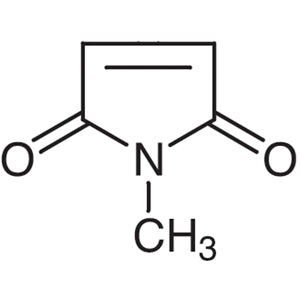
- TCI M0807 930-88-1 N-Methylmaleimide
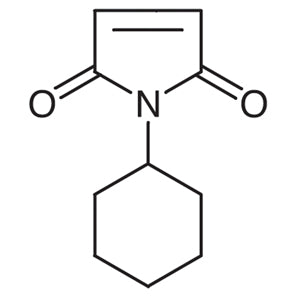
- TCI C1044 1631-25-0 N-Cyclohexylmaleimide
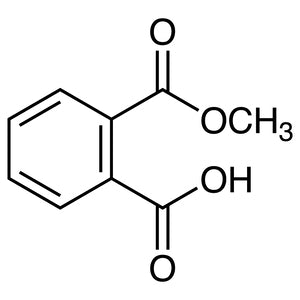
- TCI M3783 4376-18-5 2-(Methoxycarbonyl)benzoic Acid
- TCI M3703 141046-52-8 4-(Methoxycarbonyl)bicyclo[2.1.1]hexane-1-carboxylic Acid
- TCI M3701 110371-28-3 5-(Methoxycarbonyl)bicyclo[3.1.1]heptane-1-carboxylic Acid
- Organic synthesis applications benefit from N-Methoxycarbonylmaleimide's ability to form stable intermediates in complex molecule construction.
- Peptide bond formation in biochemistry relies on its reactivity with amino groups to create essential molecular linkages.
- Heterocyclic compound synthesis is enhanced by its capacity to participate in ring-forming reactions with high selectivity.
- Functional group modification in material science utilizes its reactivity with hydroxyl and other polar groups for tailored properties.
- Drug development research employs this compound to build molecular scaffolds with potential therapeutic applications.
| Brand | TCI |
|---|---|
| CAS number | 55750-48-6 |
| Molecular formula | — |
| Purity | — |
| Category | Chemistry > Building Blocks > Non-Heterocyclic Building Blocks |
| Pack sizes | Available in various quantities as per standard laboratory supply |
| Physical form | Solid |
| Storage | Store in a cool, dry place away from moisture and direct sunlight |
N-Methoxycarbonylmaleimide should be stored in a cool, dry environment to maintain its chemical stability. It is recommended to keep the compound in a sealed container to prevent exposure to moisture and air, which can affect its reactivity. Suitable storage conditions include a controlled temperature range of 15–25°C. Laboratory personnel should handle the compound with care, using appropriate personal protective equipment such as gloves and safety goggles. Due to its chemical nature, it is important to avoid contact with incompatible substances and ensure proper ventilation when working with this material. Always follow standard laboratory safety protocols to minimize risks associated with handling reactive chemicals.
—
Produk Terkait
-
N-Phenylmaleimide TCI P0900
Regular price From Rp 505.050,00Regular price -
N-Methylmaleimide TCI M0807
Regular price From Rp 2.625.000,00Regular price -
N-Cyclohexylmaleimide TCI C1044
Regular price From Rp 1.749.300,00Regular price -
2-(Methoxycarbonyl)benzoicAcid TCI M3783
Regular price From Rp 1.273.650,00Regular price -
4-(Methoxycarbonyl)bicyclo[2.1.1]hexane-1-carboxylicAcid TCI M3703
Regular price Rp 5.352.900,00Regular price -
5-(Methoxycarbonyl)bicyclo[3.1.1]heptane-1-carboxylicAcid TCI M3701
Regular price Rp 5.247.900,00Regular price -
4-(Methoxycarbonyl)cubane-1-carboxylicAcid TCI M3466
Regular price Rp 3.817.800,00Regular price -
3-(Methoxycarbonyl)bicyclo[111]pentane-1-carboxylicAcid TCI M3149
Regular price From Rp 955.500,00Regular price

![141046-52-8 4-(Methoxycarbonyl)bicyclo[2.1.1]hexane-1-carboxylic Acid - AMI Scientific](http://amiscientific.com/cdn/shop/files/TCI2510M3703.jpg?v=1767128696&width=533)
![110371-28-3 5-(Methoxycarbonyl)bicyclo[3.1.1]heptane-1-carboxylic Acid - AMI Scientific](http://amiscientific.com/cdn/shop/files/TCI2510M3701.jpg?v=1767128692&width=533)

![83249-10-9 3-(Methoxycarbonyl)bicyclo[1.1.1]pentane-1-carboxylic Acid - AMI Scientific](http://amiscientific.com/cdn/shop/files/TCI2510M3149.jpg?v=1767127805&width=533)