


Methyl 1,2,4-Triazole-3-carboxylate, identified by CAS number 4928-88-5, is the methyl ester of 1,2,4-triazole-3-carboxylic acid — a heterocyclic building block that combines a nitrogen-rich triazole ring with a reactive ester group. The 1,2,4-triazole ring is one of the most frequently encountered motifs in medicinal chemistry and agrochemical research, valued for its capacity to form hydrogen bonds and to interact with metal centres. In the laboratory, this compound serves as a practical entry point to a wide range of functionalised triazole derivatives without the need to construct the ring system from scratch.
The principal appeal of this material lies in its readily convertible ester group. The methyl ester can be hydrolysed to the corresponding carboxylic acid, subjected to aminolysis to give amides, reduced to the alcohol, or converted into a hydrazide for subsequent heterocycle formation. At the same time, the nitrogen atoms of the triazole ring provide sites for alkylation and for coordination chemistry. It is this combination of two distinct centres of reactivity within a single small molecule that makes the compound such an efficient starting material for building compound libraries. Its solid form allows accurate weighing and supports long-term storage.
Research laboratories in Indonesia draw on building blocks of this kind in synthetic organic chemistry programmes, in the preparation of candidate compounds for biological evaluation, and in postgraduate and academic research work. Because the triazole ring is already assembled, groups working with limited synthetic infrastructure can move directly to the derivatisation step, shortening route development and reducing the number of preparative stages required before a target structure is reached.
Related TCI products
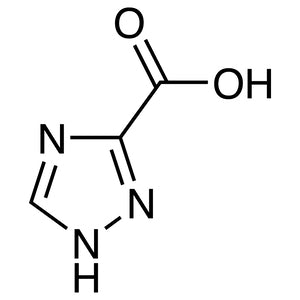
- TCI T3824 4928-87-4 1H-1,2,4-Triazole-3-carboxylic Acid
- TCI T2402 3641-08-5 1,2,4-Triazole-3-carboxamide
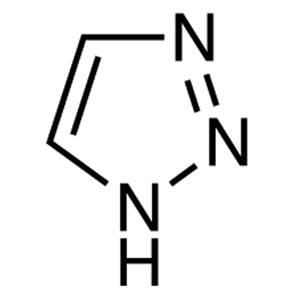
- TCI T1880 288-36-8 1H-1,2,3-Triazole
- TCI A1462 45534-08-5 3-Amino-5-methylthio-1H-1,2,4-triazole
- TCI A1455 16691-43-3 3-Amino-5-mercapto-1,2,4-triazole
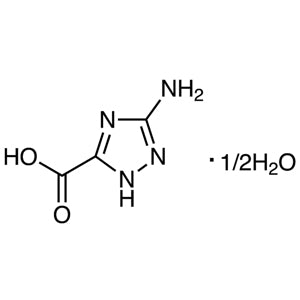
- TCI A1256 3641-13-2 3-Amino-1,2,4-triazole-5-carboxylic Acid Hemihydrate
- Heterocyclic derivative synthesis — the pre-formed 1,2,4-triazole ring removes the need for ring construction, allowing chemists to begin work directly at the functionalisation stage.
- Amide library preparation — aminolysis of the methyl ester with a range of amines gives triazole carboxamides, making the compound well suited to parallel synthesis of related analogues.
- Carboxylic acid intermediate generation — straightforward hydrolysis of the ester delivers 1,2,4-triazole-3-carboxylic acid for use in coupling reactions and further elaboration.
- Hydrazide and fused heterocycle routes — conversion of the ester to the hydrazide opens access to extended heterocyclic systems commonly targeted in medicinal chemistry programmes.
- Coordination chemistry studies — the nitrogen atoms of the triazole ring offer donor sites for metal binding, supporting the preparation and investigation of metal complexes.
| Brand | TCI |
|---|---|
| CAS number | 4928-88-5 |
| Molecular formula | — |
| Purity | — |
| Category | Chemistry > Building Blocks > Heterocyclic Building Blocks |
| Pack sizes | please refer to the packaging options listed on this product page |
| Physical form | solid |
| Storage | keep in a cool, dry place in a tightly closed container |
- Product code: M2368
Store the container tightly closed in a cool, dry and well-ventilated area, away from direct sunlight, moisture and sources of ignition. Original supplier packaging or a tightly sealed glass or chemically compatible plastic container is suitable for both storage and any repackaging. Handle the solid in a fume hood or other well-ventilated workspace and wear appropriate personal protective equipment, including safety glasses, gloves and a laboratory coat. Avoid the generation of dust during weighing and transfer, keep the container closed when not in use, and consult the manufacturer's safety data sheet before first use for full hazard information and disposal guidance.
—
Produk Terkait
-
1H-1,2,4-Triazole-3-carboxylicAcid TCI T3824
Regular price From Rp 2.942.100,00Regular price -
1,2,4-Triazole-3-carboxamide TCI T2402
Regular price From Rp 2.094.750,00Regular price -
1H-1,2,3-Triazole TCI T1880
Regular price From Rp 2.625.000,00Regular price -
3-Amino-5-methylthio-1H-1,2,4-triazole TCI A1462
Regular price From Rp 689.850,00Regular price -
3-Amino-5-mercapto-1,2,4-triazole TCI A1455
Regular price From Rp 980.700,00Regular price -
3-Amino-1,2,4-triazole-5-carboxylicAcidHemihydrate TCI A1256
Regular price Rp 2.491.650,00Regular price -
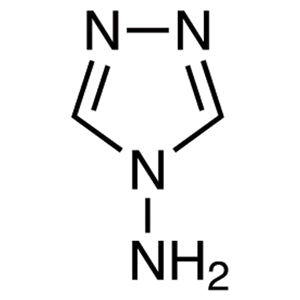
4-Amino-1,2,4-triazole TCI A1137
Regular price From Rp 1.405.950,00Regular price -
4-Amino-3-hydrazino-5-mercapto-1,2,4-triazole[forDeterminationofAldehydes] TCI A0956
Regular price From Rp 1.670.550,00Regular price



![1750-12-5 4-Amino-3-hydrazino-5-mercapto-1,2,4-triazole [for Determination of Aldehydes] - AMI Scientific](http://amiscientific.com/cdn/shop/files/TCI2510A0956.jpg?v=1767080402&width=533)