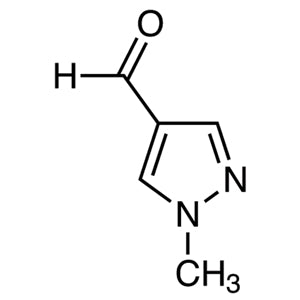
1-Methylpyrazole-4-carboxaldehyde, CAS 25016-11-9, is a heterocyclic building block that combines a pyrazole ring bearing a methyl substituent on the nitrogen atom with an aldehyde group at the C-4 position. The pyrazole ring is one of the most productive motifs in modern medicinal chemistry and agrochemistry, while the aldehyde group provides a highly versatile reactive entry point. The combination of the two makes this compound widely used as a starting material for constructing more elaborate molecules in organic synthesis laboratories, where a dependable and well-defined heterocyclic scaffold is required.
The advantage that makes this reagent a preferred choice lies in the N-methyl group that is already installed from the outset. This substitution locks the tautomeric position of the pyrazole ring, so the regiochemical problems that frequently arise with pyrazoles lacking a nitrogen substituent can be avoided, and reaction products become easier to predict as well as to purify. The aldehyde group is ready to undergo reductive amination, aldol condensation, the Wittig reaction, Horner-Wadsworth-Emmons olefination, imine formation, and oxidation to the corresponding acid or reduction to the alcohol. Its solid form makes precise weighing straightforward on the milligram to gram scale.
Laboratories in Indonesia make use of this reagent across organic synthesis and medicinal chemistry work, where heterocyclic building blocks are needed to assemble target molecules step by step. It is typically drawn on in university research groups, postgraduate synthesis projects, and industrial development laboratories working on pharmaceutical and agrochemical intermediates. The solid presentation supports accurate small-scale weighing, which suits exploratory routes and method development where material is committed in modest quantities per reaction.
Related TCI products
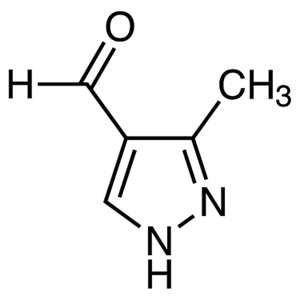
- TCI M2643 112758-40-4 3-Methylpyrazole-4-carboxaldehyde
- TCI M2179 27258-33-9 1-Methylpyrazole-5-carboxaldehyde
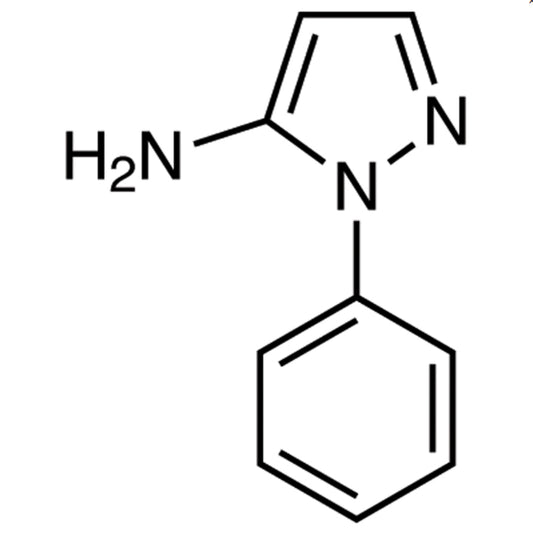
- TCI A0174 826-85-7 5-Amino-1-phenylpyrazole
- TCI T2724 1072-91-9 1,3,5-Trimethylpyrazole
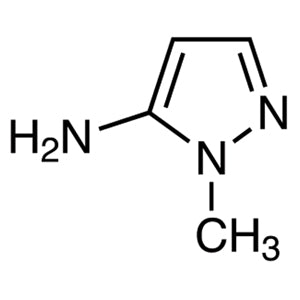
- TCI A3303 1192-21-8 5-Amino-1-methylpyrazole
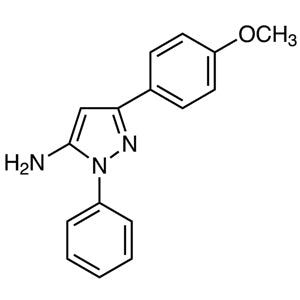
- TCI A3055 19652-13-2 5-Amino-3-(4-methoxyphenyl)-1-phenylpyrazole
- Reductive amination to secondary and tertiary amines: the C-4 aldehyde condenses cleanly with amine partners and is reduced in situ, giving direct access to pyrazole-containing amine libraries for structure-activity work.
- Wittig and Horner-Wadsworth-Emmons olefination: the aldehyde serves as the carbonyl partner for phosphorus ylides and phosphonate reagents, extending the pyrazole core into alkenes and conjugated systems with predictable regiochemistry.
- Imine and Schiff base formation: reaction with primary amines or hydrazines produces imine linkages that serve as intermediates toward larger nitrogen heterocycles and as ligand precursors in coordination chemistry studies.
- Aldol condensation and chalcone-type synthesis: the aldehyde couples with enolisable ketones to build extended carbon frameworks, a common route in medicinal chemistry screening programmes based on heterocyclic scaffolds.
- Oxidation and reduction handles: the aldehyde can be oxidised to the carboxylic acid or reduced to the primary alcohol, allowing a single stocked reagent to serve several downstream functional group requirements.
| Brand | TCI, product code M2372 |
|---|---|
| CAS number | 25016-11-9 |
| Molecular formula | — |
| Purity | — |
| Category | Chemistry > Building Blocks > Heterocyclic Building Blocks |
| Pack sizes | available in the catalogue pack sizes offered by TCI for this product code |
| Physical form | solid |
| Storage | keep in a tightly closed container in a cool, dry, well-ventilated place away from light |
Store the container tightly closed in a cool, dry, and well-ventilated area, protected from direct sunlight and away from heat sources, strong oxidising agents, and incompatible reagents. Keep the material in its original supplier container, or transfer it to a clean amber glass bottle with a chemically resistant closure, since aldehydes are generally sensitive to prolonged air exposure. Weigh and transfer the solid inside a fume hood while wearing safety glasses, nitrile gloves, and a laboratory coat. Avoid generating dust, close the container immediately after use, and label any secondary container clearly. Consult the supplier safety data sheet before first use and dispose of residues through the laboratory's chemical waste stream.
—
Produk Terkait
-
3-Methylpyrazole-4-carboxaldehyde TCI M2643
Regular price From Rp 1.008.000,00Regular price -
1-Methylpyrazole-5-carboxaldehyde TCI M2179
Regular price Rp 2.889.600,00Regular price -
5-Amino-1-phenylpyrazole TCI A0174
Regular price From Rp 4.373.250,00Regular price -
1,3,5-Trimethylpyrazole TCI T2724
Regular price From Rp 717.150,00Regular price -
5-Amino-1-methylpyrazole TCI A3303
Regular price From Rp 1.803.900,00Regular price -
5-Amino-3-(4-methoxyphenyl)-1-phenylpyrazole TCI A3055
Regular price From Rp 1.087.800,00Regular price -
5-Amino-3-(4-chlorophenyl)-1-phenylpyrazole TCI A3033
Regular price From Rp 1.510.950,00Regular price -
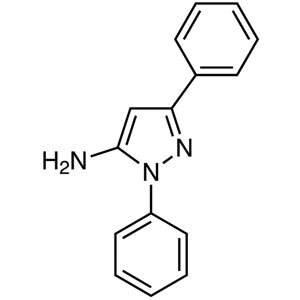
5-Amino-1,3-diphenylpyrazole TCI A2904
Regular price From Rp 823.200,00Regular price