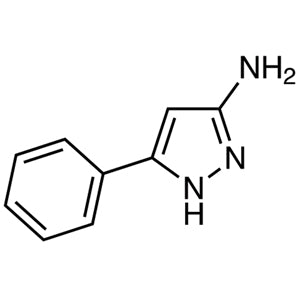
5-Amino-1,3-diphenylpyrazole is a chemical compound classified under the heterocyclic category, widely used in laboratory settings for its versatility in organic chemistry applications. This compound serves as a fundamental building block in the synthesis of complex molecules, particularly in the development of pharmaceuticals and advanced chemical structures. Its unique pyrazole ring with an amino group at the fifth position enhances its reactivity, making it a valuable tool for chemists seeking to modify molecular frameworks. The presence of phenyl groups at positions 1 and 3 further contributes to its stability and functional versatility.
The compound’s ability to participate in nucleophilic, electrophilic, and substitution reactions makes it a preferred choice for synthetic chemists. Its chemical stability under controlled conditions allows for reliable handling and storage, which is essential in laboratory environments. The combination of reactivity and stability ensures that it remains a key component in various synthetic pathways, supporting both academic and industrial research. Its predictable behavior in different reaction conditions also simplifies the design and execution of complex chemical processes.
In Indonesian laboratories, 5-Amino-1,3-diphenylpyrazole is commonly used in organic chemistry research, drug development, and the synthesis of heterocyclic compounds. It is a staple in academic and industrial settings where the creation of complex molecular structures is required. Researchers and students alike rely on this compound for its consistent performance and broad applicability in chemical synthesis. Its presence in many research institutions and universities underscores its importance in advancing chemical knowledge and innovation.
Related TCI products
- Organic synthesis is a primary application where 5-Amino-1,3-diphenylpyrazole is used to construct complex molecular frameworks due to its reactivity and structural versatility.
- Drug development benefits from this compound as it serves as a building block for synthesizing pharmaceutical compounds with specific biological activities.
- Heterocyclic compound synthesis relies on this material because of its pyrazole ring structure, which is essential for creating diverse chemical entities.
- Research in medicinal chemistry utilizes this compound to explore new therapeutic agents through structural modifications and functional group substitutions.
- Academic laboratories use it extensively in teaching and experimental research to demonstrate chemical reactivity and synthetic strategies in organic chemistry.
| Brand | TCI |
|---|---|
| CAS number | 5356-71-8 |
| Molecular formula | — |
| Purity | — |
| Category | Chemistry > Building Blocks > Heterocyclic Building Blocks |
| Pack sizes | Available in various quantities as per standard laboratory supply specifications |
| Physical form | Solid, typically in crystalline or powder form |
| Storage | Store in a cool, dry place away from light and moisture |
This compound should be stored in a cool, dry environment to maintain its chemical stability and prevent degradation. It is recommended to use airtight containers to protect it from moisture and air exposure. Due to its reactivity, it should be handled in a well-ventilated area, and appropriate personal protective equipment should be worn when working with it. Avoid direct contact with skin and eyes, and ensure that spillage is promptly cleaned up to prevent contamination. Proper storage conditions ensure the compound remains effective for use in laboratory applications, supporting consistent results in chemical synthesis and research.
—
Produk Terkait
-
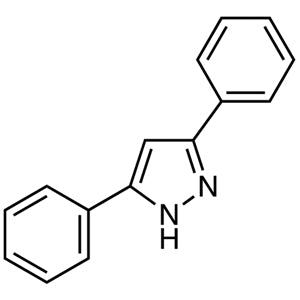
3,5-Diphenylpyrazole TCI D4197
Regular price From Rp 1.696.800,00Regular priceRp 1.202.250,00Sale price From Rp 1.696.800,00 -
5-Amino-1-phenylpyrazole TCI A0174
Regular price From Rp 4.425.750,00Regular priceRp 3.110.100,00Sale price From Rp 4.425.750,00 -
1,3,5-Trimethylpyrazole TCI T2724
Regular price From Rp 769.650,00Regular priceRp 553.350,00Sale price From Rp 769.650,00 -
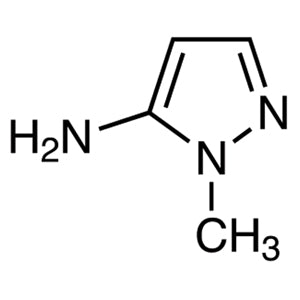
5-Amino-1-methylpyrazole TCI A3303
Regular price From Rp 1.856.400,00Regular priceRp 1.313.550,00Sale price From Rp 1.856.400,00 -
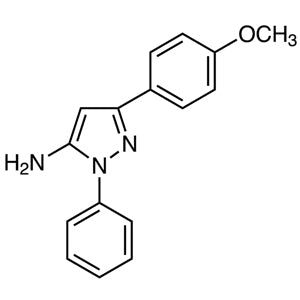
5-Amino-3-(4-methoxyphenyl)-1-phenylpyrazole TCI A3055
Regular price From Rp 1.140.300,00Regular priceRp 812.700,00Sale price From Rp 1.140.300,00 -
5-Amino-3-(4-chlorophenyl)-1-phenylpyrazole TCI A3033
Regular price From Rp 1.563.450,00Regular priceRp 1.108.800,00Sale price From Rp 1.563.450,00 -
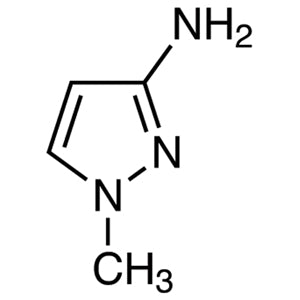
3-Amino-1-methylpyrazole TCI A2277
Regular price From Rp 582.750,00Regular priceRp 423.150,00Sale price From Rp 582.750,00 -
3-Amino-5-phenylpyrazole TCI A2102
Regular price Rp 689.850,00Regular priceRp 497.700,00Sale price Rp 689.850,00