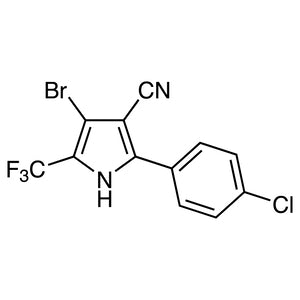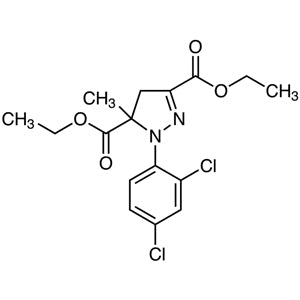
Mefenpyr-diethyl is a chemical compound widely used in life science research, particularly in cell biology and nutrition research. As a key reagent, it serves as an active ingredient in various experimental setups where the effects on cells or organisms need to be studied. Its role in the laboratory is to facilitate the investigation of biological activities and interactions, making it an essential component for researchers seeking to understand complex biochemical processes. This compound is often employed in the synthesis of other bioactive substances, expanding its utility across multiple scientific disciplines.
The stability and ease of handling of Mefenpyr-diethyl make it a preferred choice for laboratory use. Its non-reactive nature under normal conditions ensures consistent results and simplifies both usage and storage. Additionally, its chemical structure, while complex, allows for straightforward synthesis and chemical reactions, which is crucial for experimental reproducibility. These properties enable researchers to conduct experiments with confidence, knowing that the compound will behave predictably under controlled laboratory conditions.
In Indonesian laboratories, Mefenpyr-diethyl is commonly used in life science research, especially in cell biology and nutrition studies. It is frequently utilized by researchers to test the effects of various substances on cellular responses and biological systems. Its availability in different packaging options also makes it convenient for researchers to select the most suitable form for their specific experimental needs.
Related TCI products
- TCI D5948 333-41-5 O,O-Diethyl O-(2-Isopropyl-6-methylpyrimidin-4-yl) Phosphorothioate
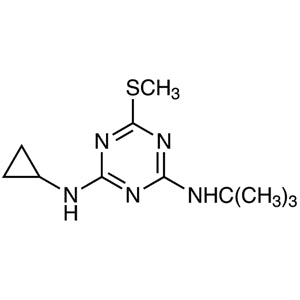
- TCI I0842 28159-98-0 2-(tert-Butylamino)-4-(cyclopropylamino)-6-(methylthio)-1,3,5-triazine
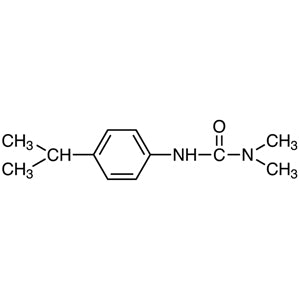
- TCI I0843 34123-59-6 Isoproturon
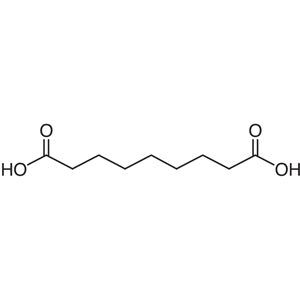
- TCI A0561 123-99-9 Azelaic Acid
- TCI A0001 514-10-3 Abietic Acid
- TCI U0110 122836-35-5 Sulfentrazone
- Cell biology research utilizes Mefenpyr-diethyl to study the effects of bioactive compounds on cellular functions and signaling pathways.
- Nutrition research benefits from Mefenpyr-diethyl as it aids in the synthesis of compounds that can be tested for their impact on nutrient absorption and metabolic processes.
- Biochemical synthesis experiments rely on Mefenpyr-diethyl due to its stable chemical structure and ease of manipulation in reaction conditions.
- Toxicology studies incorporate Mefenpyr-diethyl to evaluate the biological effects of compounds on living organisms under controlled environments.
- Long-term experimental setups prefer Mefenpyr-diethyl because of its resistance to degradation, ensuring consistent results over extended periods.
| Brand | TCI |
|---|---|
| CAS number | 135590-91-9 |
| Molecular formula | — |
| Purity | — |
| Category | Life Science > Cell Biology > Nutrition Research |
| Pack sizes | Available in various packaging options to suit different experimental needs |
| Physical form | — |
| Storage | Store in a cool, dry place away from direct sunlight |
Mefenpyr-diethyl should be stored in a cool, dry environment to maintain its chemical stability and prevent degradation. It is recommended to use airtight containers to minimize exposure to moisture and air, which could affect its integrity. Since it is non-reactive under normal conditions, it does not require special containment, but it should be kept away from incompatible substances. In laboratory settings, proper labeling and storage practices are essential to ensure safe handling and prevent accidental contamination. Researchers should always follow standard safety protocols when working with chemical compounds to maintain a secure and efficient research environment.
—
Produk Terkait
-
O,O-DiethylO-(2-Isopropyl-6-methylpyrimidin-4-yl)Phosphorothioate TCI D5948
Regular price From Rp 2.386.650,00Regular price -
2-(tert-Butylamino)-4-(cyclopropylamino)-6-(methylthio)-1,3,5-triazine TCI I0842
Regular price From Rp 1.644.300,00Regular price -
Isoproturon TCI I0843
Regular price From Rp 1.298.850,00Regular price -
AzelaicAcid TCI A0561
Regular price From Rp 505.050,00Regular price -
AbieticAcid TCI A0001
Regular price From Rp 1.510.950,00Regular price -
Sulfentrazone TCI U0110
Regular price From Rp 2.411.850,00Regular price -
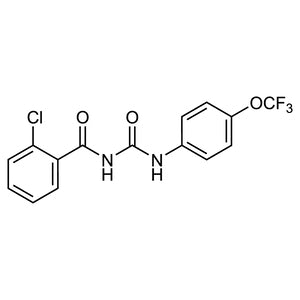
Triflumuron TCI T4364
Regular price From Rp 1.220.100,00Regular price -
Tralopyril TCI T4109
Regular price From Rp 2.730.000,00Regular price