TCI M3131 Methyl 2-Bromo-4-chlorobenzoate, CAS 57381-62-1, is the methyl ester of a benzoic acid that carries two different halogens on its aromatic ring: bromine at the ortho position and chlorine at the para position relative to the ester group. In the laboratory, this compound serves as a multifunctional building block that allows researchers to carry out stepwise transformations on a single aromatic framework. Its three functional groups can be addressed in sequence, making it an efficient starting point for assembling complex molecules from relatively simple starting material.
The principal advantage of this building block lies in the difference in reactivity between the carbon–bromine and carbon–chlorine bonds. The C–Br bond undergoes oxidative addition to palladium catalysts far more readily, so researchers can perform cross-coupling selectively at the ortho position while leaving the chlorine intact as a handle for a subsequent transformation using a more active catalyst system. The methyl ester group completes the picture, since it is readily hydrolysed, reduced, or converted into an amide. This degree of orthogonality is rarely available within one simple molecule.
In Indonesian laboratories, this reagent is typically used in synthetic organic chemistry groups at universities and research institutes, as well as in medicinal chemistry and materials development work where substituted aromatic scaffolds are required. The 5 g and 25 g pack sizes provide options suited to both exploratory reaction screening on a small scale and preparative work that requires a larger quantity of the same intermediate for repeated runs.
Related TCI products
- TCI B2255 76008-73-6 Ethyl 5-Bromo-2-chlorobenzoate
- TCI M2883 185312-82-7 Methyl 4-Bromo-2-chlorobenzoate
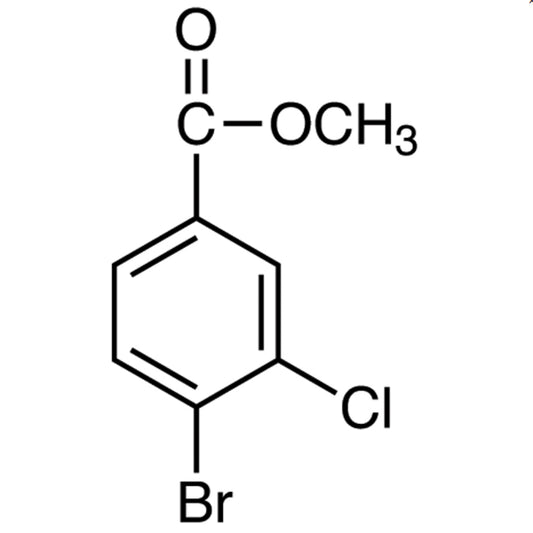
- TCI M2829 117738-74-6 Methyl 4-Bromo-3-chlorobenzoate
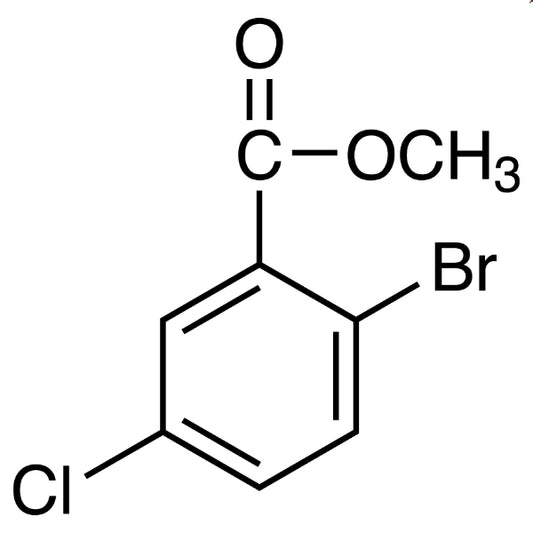
- TCI M2033 27007-53-0 Methyl 2-Bromo-5-chlorobenzoate
- TCI B1916 6942-36-5 Methyl 2-Bromo-5-nitrobenzoate
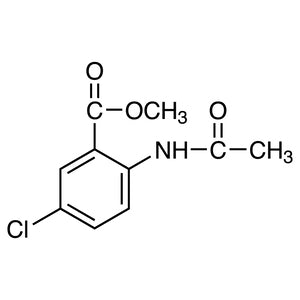
- TCI A1609 20676-54-4 Methyl 2-Acetamido-5-chlorobenzoate
- Selective palladium-catalysed cross-coupling: the C–Br bond reacts preferentially under standard conditions, giving clean substitution at the ortho position while the chlorine substituent remains untouched for later use.
- Sequential dual functionalisation: after the bromine has been consumed, a more active catalyst system can engage the remaining C–Cl bond, allowing two different groups to be installed on the same aromatic ring.
- Amide synthesis and library preparation: the methyl ester is readily converted into amides, which makes this building block useful for generating sets of related halogenated benzamide analogues.
- Ester hydrolysis to the free carboxylic acid: saponification releases the benzoic acid derivative for coupling, salt formation, or further elaboration while both halogen handles remain in place.
- Medicinal chemistry scaffold construction: the orthogonal reactivity of bromine, chlorine, and ester allows chemists to build substituted aromatic cores for structure–activity relationship studies from one common intermediate.
| Brand | TCI |
|---|---|
| CAS number | 57381-62-1 |
| Molecular formula | — |
| Purity | — |
| Category | Chemistry > Building Blocks > Non-Heterocyclic Building Blocks |
| Pack sizes | 5 g and 25 g |
| Physical form | — |
| Storage | keep in a tightly closed container, in a cool, dry, and well-ventilated place away from direct sunlight; refer to the manufacturer's documentation for the specific storage condition of the lot received. |
- Product code: M3131
Store the container tightly closed in a cool, dry, well-ventilated area, away from direct sunlight, heat sources, and incompatible materials. Keep the material in its original supplier packaging or in a clean, chemically compatible amber glass container that is clearly labelled, and reseal it promptly after each use to limit exposure to moisture and air. Handle the compound inside a fume hood, wearing safety goggles, chemically resistant gloves, and a laboratory coat. Avoid contact with skin and eyes, and avoid inhaling dust or vapour. Always consult the manufacturer's Safety Data Sheet before use, and dispose of residues and contaminated materials in accordance with applicable laboratory chemical waste procedures.
—
Produk Terkait
-
Ethyl5-Bromo-2-chlorobenzoate TCI B2255
Regular price From Rp 928.200,00Regular price -
Methyl4-Bromo-2-chlorobenzoate TCI M2883
Regular price From Rp 928.200,00Regular price -
Methyl4-Bromo-3-chlorobenzoate TCI M2829
Regular price From Rp 1.008.000,00Regular price -
Methyl2-Bromo-5-chlorobenzoate TCI M2033
Regular price From Rp 1.115.100,00Regular price -
Methyl2-Bromo-5-nitrobenzoate TCI B1916
Regular price From Rp 610.050,00Regular price -
Methyl2-Acetamido-5-chlorobenzoate TCI A1609
Regular price Rp 769.650,00Regular price -
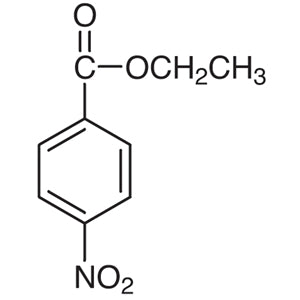
Ethyl4-Nitrobenzoate TCI N0485
Regular price Rp 743.400,00Regular price -
Methyl4-Nitrobenzoate TCI N0159
Regular price Rp 1.298.850,00Regular price