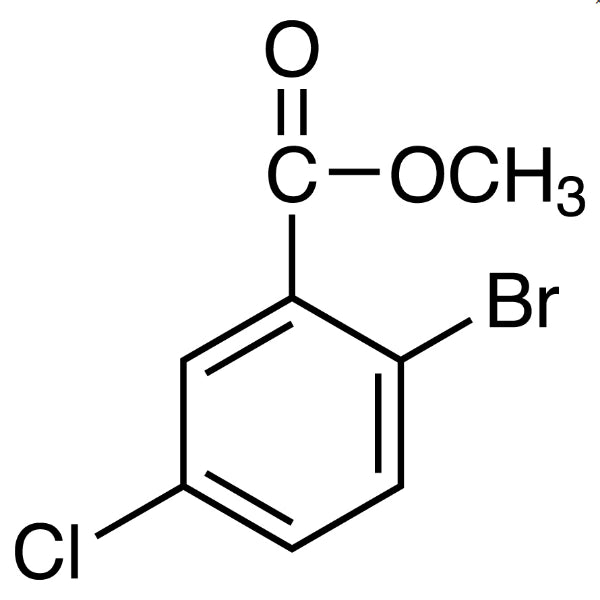
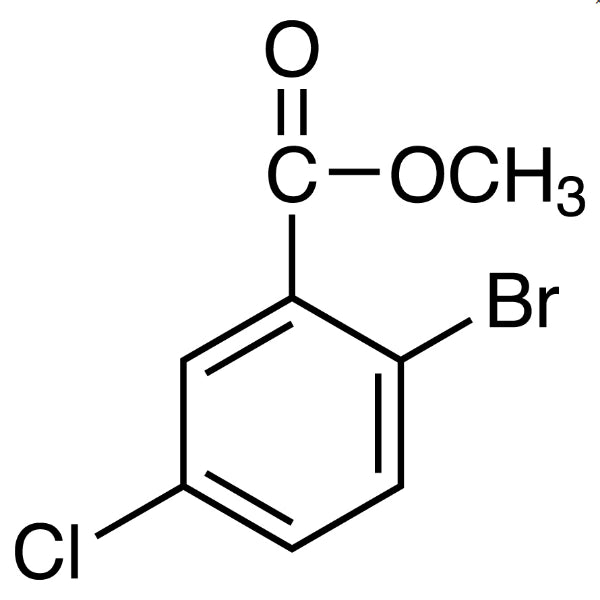
Methyl 2-Bromo-5-chlorobenzoate is a chemical compound widely used in organic synthesis as a building block in laboratory settings. It is a versatile reagent that plays a crucial role in the development of complex organic molecules. Its structure consists of a benzene ring substituted with bromo and chloro groups, along with an ester functional group. This unique molecular configuration makes it suitable for various synthetic pathways, particularly those involving electrophilic substitution reactions. Its presence in the chemical toolbox of Indonesian laboratories supports both research and educational activities in organic chemistry.
The compound is valued for its chemical stability and controlled reactivity, making it a reliable choice for laboratory applications. It exhibits good stability under normal conditions, which reduces the risk of unwanted side reactions during experiments. Additionally, its relatively high melting and boiling points allow it to be used in thermal processes that require precise temperature control. These properties make it an ideal candidate for use in both academic and industrial research environments.
In Indonesian laboratories, Methyl 2-Bromo-5-chlorobenzoate is commonly used in undergraduate and postgraduate research programs. It is a key reagent in the synthesis of various organic compounds, including pharmaceutical intermediates and functionalized aromatic derivatives. Its availability and reliability make it a preferred choice for both teaching and research purposes in the field of organic chemistry.
Related TCI products
- TCI B2255 76008-73-6 Ethyl 5-Bromo-2-chlorobenzoate
- TCI M3131 57381-62-1 Methyl 2-Bromo-4-chlorobenzoate
- TCI M2883 185312-82-7 Methyl 4-Bromo-2-chlorobenzoate
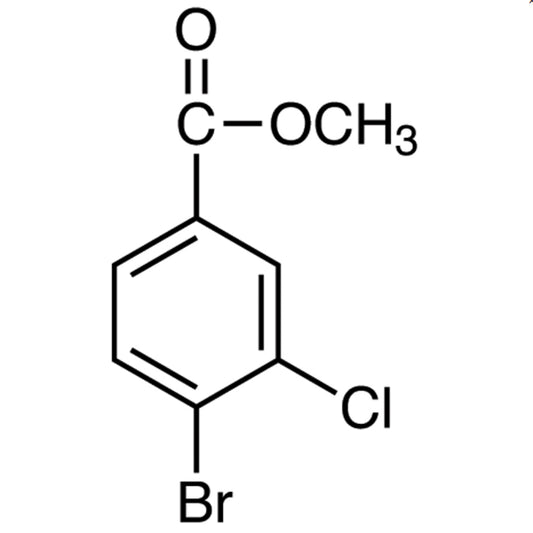
- TCI M2829 117738-74-6 Methyl 4-Bromo-3-chlorobenzoate
- TCI B1916 6942-36-5 Methyl 2-Bromo-5-nitrobenzoate
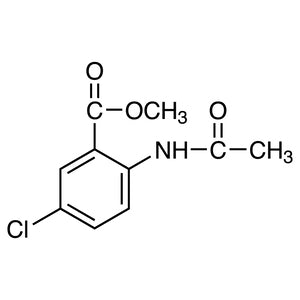
- TCI A1609 20676-54-4 Methyl 2-Acetamido-5-chlorobenzoate
- Organic synthesis of halogenated aromatic compounds due to its bromo and chloro substituents, enabling diverse reaction pathways.
- Electrophilic substitution reactions where aromatic rings require halogen substitution for functional group introduction.
- Preparation of ester derivatives for further modification in complex molecule synthesis, offering versatility in synthetic strategies.
- Research in pharmaceutical chemistry for the development of drug intermediates with specific halogenated functionalities.
- Educational experiments in organic chemistry to demonstrate the behavior of halogenated esters in different reaction conditions.
| Brand | TCI |
|---|---|
| CAS number | 27007-53-0 |
| Molecular formula | — |
| Purity | — |
| Category | Chemistry > Building Blocks > Non-Heterocyclic Building Blocks |
| Pack sizes | Available in standard laboratory quantities as per supplier specifications |
| Physical form | Solid, crystalline appearance |
| Storage | Store in a cool, dry place away from direct sunlight and moisture |
Methyl 2-Bromo-5-chlorobenzoate should be stored in a cool, dry environment to maintain its chemical stability. It is recommended to keep it in a sealed container to prevent exposure to moisture and air, which could lead to degradation. The compound is generally stable under normal laboratory conditions but should be handled with care to avoid direct contact with skin or inhalation. It is advisable to store it in a well-ventilated area and ensure that it is kept away from incompatible substances such as strong bases or reducing agents. Regular inspection of storage conditions is essential to ensure the integrity of the material during long-term use.
—
Produk Terkait
-
Ethyl5-Bromo-2-chlorobenzoate TCI B2255
Regular price From Rp 928.200,00Regular price -
Methyl2-Bromo-4-chlorobenzoate TCI M3131
Regular price From Rp 1.856.400,00Regular price -
Methyl4-Bromo-2-chlorobenzoate TCI M2883
Regular price From Rp 928.200,00Regular price -
Methyl4-Bromo-3-chlorobenzoate TCI M2829
Regular price From Rp 1.008.000,00Regular price -
Methyl2-Bromo-5-nitrobenzoate TCI B1916
Regular price From Rp 610.050,00Regular price -
Methyl2-Acetamido-5-chlorobenzoate TCI A1609
Regular price Rp 769.650,00Regular price -
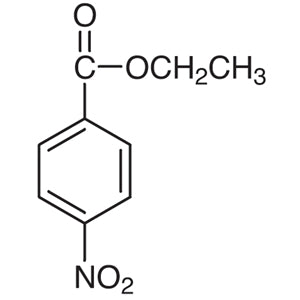
Ethyl4-Nitrobenzoate TCI N0485
Regular price Rp 743.400,00Regular price -
Methyl4-Nitrobenzoate TCI N0159
Regular price Rp 1.298.850,00Regular price