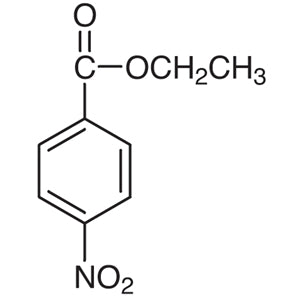
Ethyl 4-Nitrobenzoate is a chemical compound widely used in organic reactions as a building block or intermediate. It plays a crucial role in synthetic chemistry, particularly in the preparation of aromatic compounds and their derivatives. This compound is commonly found in chemical laboratories, where it serves as a versatile reagent for constructing complex molecular structures. Its utility spans across various fields, including pharmaceutical development, industrial chemical production, and analytical chemistry. Due to its stability and controlled reactivity, Ethyl 4-Nitrobenzoate is a favored choice among chemists for its reliability in experimental settings.
The compound is characterized by its clear molecular structure and predictable chemical properties. It is typically colorless and solid in form, with limited solubility in organic solvents. These physical and chemical attributes make it easy to handle and process in chemical reactions, allowing for consistent results in laboratory experiments. Its stable nature ensures that it remains effective under a variety of experimental conditions, making it a reliable component in both research and educational settings.
In Indonesian laboratories, Ethyl 4-Nitrobenzoate is frequently used in educational and research contexts. It is an essential part of chemistry practical courses in various institutions, where students gain hands-on experience with synthetic reactions. Its availability in small to medium pack sizes also supports its use in both academic and industrial research, facilitating experimentation at different scales.
Related TCI products
- Organic synthesis applications benefit from Ethyl 4-Nitrobenzoate due to its reactivity and stability, making it ideal for creating complex molecular structures.
- Pharmaceutical research utilizes this compound as an intermediate in the development of new drugs, contributing to the synthesis of active pharmaceutical ingredients.
- Industrial chemical production relies on Ethyl 4-Nitrobenzoate for the manufacture of various chemical products, supporting the production of specialty chemicals.
- Analytical chemistry laboratories use this compound as a standard for calibration and as a reagent in analytical procedures.
- Educational institutions incorporate Ethyl 4-Nitrobenzoate into their curriculum to teach students about organic synthesis and chemical reactions.
| Brand | TCI |
|---|---|
| CAS number | 99-77-4 |
| Molecular formula | — |
| Purity | — |
| Category | Chemistry > Building Blocks > Non-Heterocyclic Building Blocks |
| Pack sizes | 25 grams |
| Physical form | Solid |
| Storage | Store in a cool, dry place away from direct sunlight |
Ethyl 4-Nitrobenzoate should be stored in a cool, dry place, away from direct sunlight and sources of heat. It is recommended to keep the compound in a tightly sealed container to prevent moisture absorption and contamination. Due to its solid form, it is best stored in glass or plastic containers that are resistant to chemical reactions. In laboratory settings, it is important to handle the compound with care, using appropriate personal protective equipment such as gloves and safety goggles. Proper ventilation should be maintained when working with this compound to ensure a safe working environment. Regular inspection of storage conditions is advised to maintain the integrity and effectiveness of the material.
—
Produk Terkait
-
Ethyl5-Bromo-2-chlorobenzoate TCI B2255
Regular price From Rp 928.200,00Regular price -
Methyl2-Bromo-5-nitrobenzoate TCI B1916
Regular price From Rp 610.050,00Regular price -
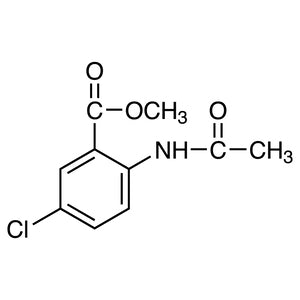
Methyl2-Acetamido-5-chlorobenzoate TCI A1609
Regular price Rp 769.650,00Regular price -
Methyl4-Nitrobenzoate TCI N0159
Regular price Rp 1.298.850,00Regular price -
Methyl2-Nitrobenzoate TCI N0158
Regular price Rp 1.115.100,00Regular price -
Methyl3-Nitrobenzoate TCI N0157
Regular price Rp 980.700,00Regular price -
Methyl4-Hydroxy-3-nitrobenzoate TCI M3649
Regular price From Rp 848.400,00Regular price -
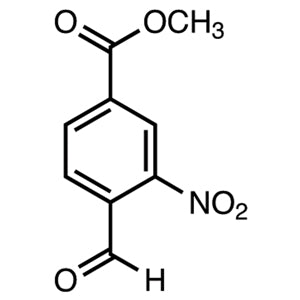
Methyl4-Formyl-3-nitrobenzoate TCI M3198
Regular price From Rp 1.326.150,00Regular price