Methyl 2-Naphthoate with CAS number 2459-25-8 is the methyl ester of 2-naphthoic acid, built on a naphthalene aromatic system that carries an ester group at the beta position. The compound is a simple yet versatile non-heterocyclic building block, and it appears regularly in the laboratory both as a synthetic intermediate and as a model compound. Its fused aromatic structure gives it interesting photophysical behaviour, while the ester group provides an entry point for a range of downstream transformations such as hydrolysis, reduction, aminolysis, and reactions with organometallic reagents in everyday organic synthesis research.
The property that makes this ester a frequent choice is the stability of the naphthalene system combined with an ester group whose reactivity is easy to control. The compound is stable enough to be stored and handled comfortably, yet it can still be converted into the corresponding carboxylic acid, alcohol, aldehyde, amide, or ketone through well-established reaction conditions. The naphthalene ring is also a chromophore, so the compound shows ultraviolet absorption and fluorescence behaviour that is useful in photochemical studies. In addition, the ester group can act as a weak directing group in aromatic substitution work.
In Indonesian laboratories, this building block is typically found in university organic synthesis groups, research institute chemistry units, and industrial R&D laboratories working on fine chemical intermediates. It is commonly used in methodology development, in teaching and practical work on ester transformations, and as a reference or model substrate when a stable aromatic ester is needed. Supplied under the TCI brand, it fits routine bench-scale synthetic work as well as instrumental analysis method development.
- Organic synthesis intermediate work: the beta-positioned ester group offers a reliable entry point into hydrolysis, reduction, and aminolysis routes toward acids, alcohols, and amides.
- Organometallic reaction studies: the ester reacts with organometallic reagents under established conditions, making it a practical substrate for building ketones and tertiary alcohols in methodology research.
- Photochemistry and fluorescence studies: the fused naphthalene chromophore gives useful ultraviolet absorption and fluorescence behaviour for investigations of aromatic excited-state properties and related photophysical measurements.
- Model compound and reference substrate: its predictable, well-documented reactivity makes it a dependable standard when comparing new synthetic methods or validating analytical and spectroscopic procedures.
- Aromatic substitution methodology: the ester functions as a weak directing group on the naphthalene ring, supporting studies of regioselectivity in substitution and functionalisation chemistry.
| Brand | TCI |
|---|---|
| CAS number | 2459-25-8 |
| Molecular formula | — |
| Purity | — |
| Category | Chemistry > Building Blocks > Non-Heterocyclic Building Blocks |
| Pack sizes | available in standard TCI catalogue pack sizes; please confirm the size required when ordering |
| Physical form | — |
| Storage | store in a tightly closed container in a cool, dry, well-ventilated place away from light |
- Product code: M3169
Keep the material in its original tightly closed container, stored in a cool, dry, and well-ventilated area away from direct sunlight, heat sources, and ignition sources. Amber glass or the supplier's original packaging is suitable, since the naphthalene chromophore makes protection from light advisable. Handle in a fume hood using standard personal protective equipment, including safety goggles, chemical-resistant gloves, and a laboratory coat, and avoid inhalation of dust or contact with skin and eyes. Keep the container away from strong oxidising agents and strong bases, which may attack the ester group. Reseal immediately after weighing to limit moisture uptake, label all working solutions clearly, and consult the supplier's safety data sheet before use and for waste disposal guidance.
—
Produk Terkait
-
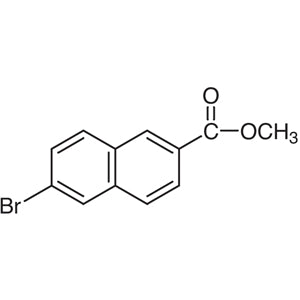
Methyl6-Bromo-2-naphthoate TCI B2202
Regular price From Rp 1.538.250,00Regular price -
Sodium2-Naphthoate TCI N0617
Regular price From Rp 2.254.350,00Regular price -
Methyl1-Naphthoate TCI N0615
Regular price Rp 3.446.100,00Regular price -
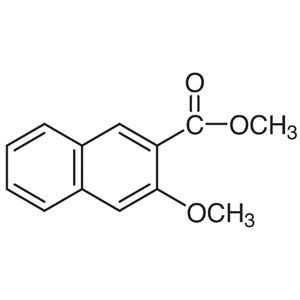
Methyl3-Methoxy-2-naphthoate TCI M1462
Regular price Rp 2.625.000,00Regular price -
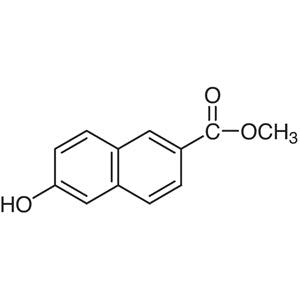
Methyl6-Hydroxy-2-naphthoate TCI H1053
Regular price Rp 1.961.400,00Regular price -
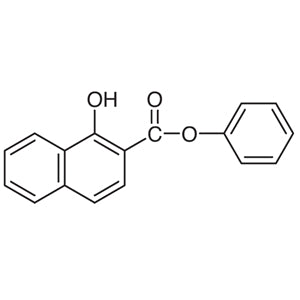
Phenyl1-Hydroxy-2-naphthoate TCI H0797
Regular price Rp 1.035.300,00Regular price -
Sodium3-Hydroxy-2-naphthoate TCI H0284
Regular price Rp 3.180.450,00Regular price -
Methyl3-Hydroxy-2-naphthoate TCI H0283
Regular price Rp 1.829.100,00Regular price