Methyl 6-Bromo-2-naphthoate is a chemical compound widely used in organic synthesis as a key building block. It is a derivative of naphthalene, modified with a bromo group and an ester functional group, making it highly versatile for various chemical reactions. In laboratory settings, it serves as a fundamental component in the development of complex organic molecules, including pharmaceuticals and industrial chemicals. Its structural characteristics allow for multiple reaction pathways, such as substitution, reduction, and nucleophilic reactions, which are essential in synthetic chemistry.
This compound is valued for its chemical stability under normal conditions, which ensures consistent performance during experiments. However, it is sensitive to heat and ultraviolet light, requiring careful handling and storage. Its complex molecular structure provides high reactivity, making it an ideal choice for synthesizing compounds with specific structural requirements. The solid form of the compound also facilitates easy handling and storage, enhancing its practicality for use in laboratory environments.
In Indonesian laboratories, Methyl 6-Bromo-2-naphthoate is commonly utilized in both academic and research settings. It is frequently employed in the synthesis of pharmaceutical compounds, materials science, and organic chemistry studies. Its availability and reliability make it a preferred choice for researchers and students working on advanced chemical projects. The compound’s role in supporting scientific innovation is vital to the development of new chemical products and processes in Indonesia.
- Organic synthesis of pharmaceutical compounds due to its reactivity and structural versatility.
- Development of industrial chemicals through nucleophilic and substitution reactions.
- Research in materials science for creating functional polymers and derivatives.
- Educational use in advanced chemistry courses for teaching synthetic techniques.
- Support for drug discovery projects by serving as a key intermediate in complex molecule synthesis.
| Brand | TCI |
|---|---|
| CAS number | 33626-98-1 |
| Molecular formula | — |
| Purity | — |
| Category | Chemistry > Building Blocks > Non-Heterocyclic Building Blocks |
| Pack sizes | Available in standard laboratory quantities |
| Physical form | Solid |
| Storage | Store in a cool, dark place away from heat and UV light |
Methyl 6-Bromo-2-naphthoate should be stored in a cool, dark environment to prevent degradation due to heat and UV exposure. It is recommended to keep the compound in a sealed container made of glass or inert plastic to minimize contamination and maintain its chemical integrity. Laboratory personnel should handle the material with care, using appropriate personal protective equipment such as gloves and safety goggles. Avoid exposure to direct sunlight and ensure proper ventilation in the workspace. The compound is not flammable but should be stored separately from incompatible substances to ensure safety. Regular monitoring of storage conditions is advised to maintain the quality and usability of the material in research and educational settings.
—
Produk Terkait
-
Sodium2-Naphthoate TCI N0617
Regular price From Rp 2.306.850,00Regular priceRp 1.628.550,00Sale price From Rp 2.306.850,00 -
Methyl1-Naphthoate TCI N0615
Regular price Rp 3.498.600,00Regular priceRp 2.462.250,00Sale price Rp 3.498.600,00 -
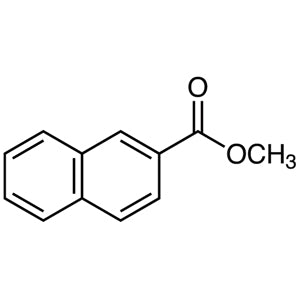
Methyl2-Naphthoate TCI M3169
Regular price From Rp 2.942.100,00Regular priceRp 2.072.700,00Sale price From Rp 2.942.100,00 -
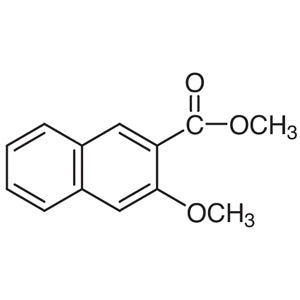
Methyl3-Methoxy-2-naphthoate TCI M1462
Regular price Rp 2.677.500,00Regular priceRp 1.887.900,00Sale price Rp 2.677.500,00 -
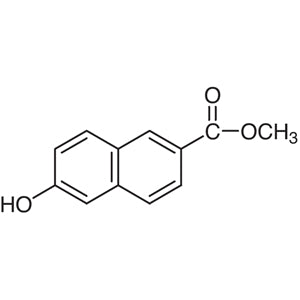
Methyl6-Hydroxy-2-naphthoate TCI H1053
Regular price Rp 2.013.900,00Regular priceRp 1.423.800,00Sale price Rp 2.013.900,00 -
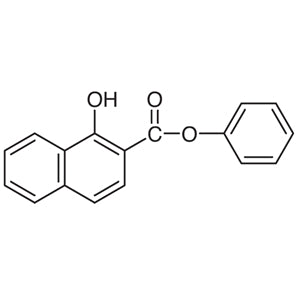
Phenyl1-Hydroxy-2-naphthoate TCI H0797
Regular price Rp 1.087.800,00Regular priceRp 775.950,00Sale price Rp 1.087.800,00 -
Sodium3-Hydroxy-2-naphthoate TCI H0284
Regular price Rp 3.232.950,00Regular priceRp 2.276.400,00Sale price Rp 3.232.950,00 -
Methyl3-Hydroxy-2-naphthoate TCI H0283
Regular price Rp 1.881.600,00Regular priceRp 1.331.400,00Sale price Rp 1.881.600,00