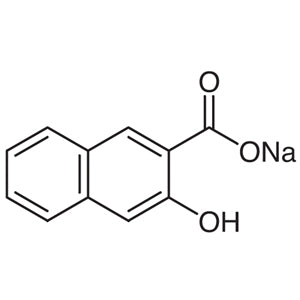
Sodium 3-Hydroxy-2-naphthoate is a chemical compound widely used in organic synthesis reactions within laboratory settings. As a key building block in the field of chemistry, it serves as a fundamental component for the creation of more complex organic molecules. This compound is particularly valued for its ability to participate in various chemical transformations, making it a versatile reagent in synthetic pathways. Its presence in laboratory environments is essential for researchers aiming to develop new compounds with specific structural and functional properties.
The chemical properties of Sodium 3-Hydroxy-2-naphthoate make it a preferred choice for synthetic chemists. It exhibits stability under controlled laboratory conditions and readily reacts with a variety of reagents, enabling efficient and predictable chemical reactions. Its molecular structure allows it to act as an electron donor or reactive intermediate in substitution and condensation reactions. These characteristics contribute to its reliability and effectiveness in both academic and industrial research settings.
In Indonesian laboratories, Sodium 3-Hydroxy-2-naphthoate is commonly used in organic chemistry research. It plays a crucial role in the development of pharmaceutical compounds and industrial chemicals. Its availability and chemical versatility make it a standard reagent in synthetic processes, supporting a wide range of applications in both academic and applied research. Its use is particularly prevalent in studies involving aromatic compound synthesis and functional group modification.
- Organic synthesis of aromatic compounds for the development of industrial chemicals due to its reactivity and structural versatility.
- Pharmaceutical research for the creation of complex drug molecules through controlled chemical transformations.
- Functional group modification in synthetic pathways requiring precise chemical reactivity and stability.
- Development of new chemical intermediates in the production of specialty chemicals and polymers.
- Research into catalytic processes where the compound's electron-donating properties enhance reaction efficiency.
| Brand | TCI |
|---|---|
| CAS number | 14206-62-3 |
| Molecular formula | — |
| Purity | — |
| Category | Chemistry > Building Blocks > Non-Heterocyclic Building Blocks |
| Pack sizes | Available in standard laboratory quantities as per supplier specifications |
| Physical form | Solid, typically in crystalline or powder form |
| Storage | Store in a cool, dry place away from moisture and direct sunlight |
Sodium 3-Hydroxy-2-naphthoate should be stored in a cool, dry environment to maintain its chemical stability. It is recommended to keep the compound in a sealed container to prevent exposure to moisture, which could affect its reactivity. Suitable storage containers include glass or high-density polyethylene (HDPE) bottles with tight-fitting lids. In laboratory settings, it is important to handle the compound with care, using appropriate personal protective equipment such as gloves and safety goggles. Avoid contact with incompatible materials and ensure proper ventilation when working with this compound. Regular monitoring of storage conditions will help preserve its integrity and ensure safe usage in chemical experiments.
—
Produk Terkait
-
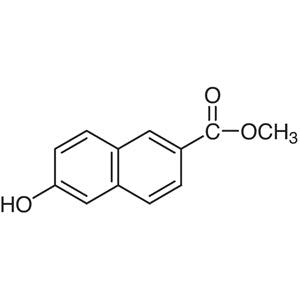
Methyl6-Hydroxy-2-naphthoate TCI H1053
Regular price Rp 1.961.400,00Regular price -
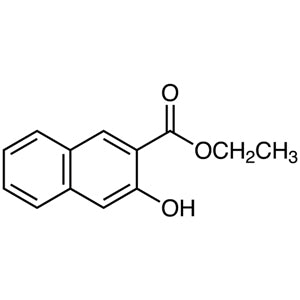
Ethyl3-Hydroxy-2-naphthoate TCI E1249
Regular price From Rp 928.200,00Regular price -
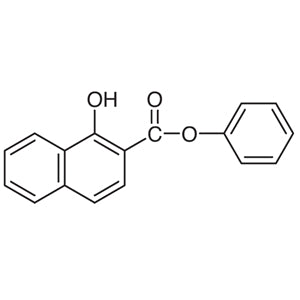
Phenyl1-Hydroxy-2-naphthoate TCI H0797
Regular price Rp 1.035.300,00Regular price -
Methyl3-Hydroxy-2-naphthoate TCI H0283
Regular price Rp 1.829.100,00Regular price -
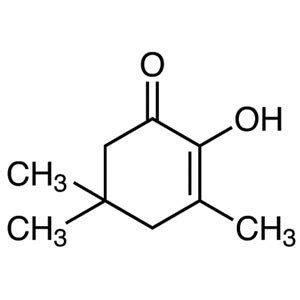
2-Hydroxy-3,5,5-trimethyl-2-cyclohexen-1-one TCI T2723
Regular price Rp 1.273.650,00Regular price -
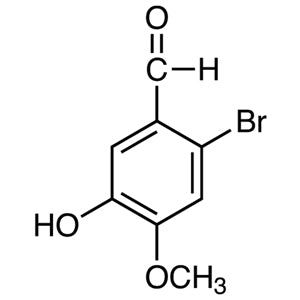
2-Bromo-5-hydroxy-4-methoxybenzaldehyde TCI B4681
Regular price Rp 4.293.450,00Regular price -
4-Bromo-3-hydroxy-2-naphthoicAcid TCI B3229
Regular price From Rp 2.174.550,00Regular price -
7-Bromo-3-hydroxy-2-naphthoicAcid TCI B3180
Regular price From Rp 769.650,00Regular price