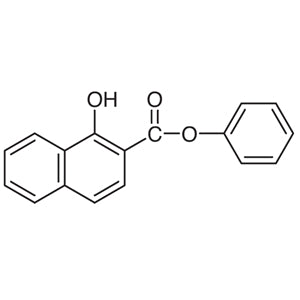
Phenyl 1-Hydroxy-2-naphthoate is a chemical compound widely used in organic synthesis reactions within laboratory settings. This compound serves as a versatile building block, enabling chemists to create more complex molecules through various synthetic pathways. Its molecular structure combines a naphthoate group with a phenyl group, making it an essential reagent in the development of new chemical compounds. Due to its stability and controlled reactivity, it is a reliable choice for researchers aiming to conduct precise and reproducible experiments.
The compound's chemical properties make it a preferred choice for laboratory use. It exhibits moderate reactivity, allowing it to participate in substitution, esterification, and other reaction types without requiring extreme conditions. Its solubility in organic solvents facilitates easy handling and integration into experimental workflows. Additionally, its chemical stability ensures that it remains effective over time, reducing the risk of degradation during storage or use. These characteristics make it a valuable tool for both academic and industrial research.
In Indonesian laboratories, Phenyl 1-Hydroxy-2-naphthoate is commonly used in chemical research and development. It is a key component in the synthesis of various organic compounds, supporting both fundamental and applied research. Its availability in the local market makes it accessible to educational institutions and research centers, enabling them to conduct experiments and develop new materials. Its role in advancing chemical innovation is significant, particularly in the context of Indonesian scientific progress.
Related TCI products
- Organic synthesis reactions benefit from its role as a building block, allowing for the creation of complex molecules through substitution and esterification processes.
- It is ideal for research in chemical synthesis due to its controlled reactivity and stability, making it suitable for precise experimental conditions.
- Educational institutions use it to teach synthetic chemistry techniques, providing students with hands-on experience in molecular construction.
- Industrial research laboratories incorporate it into the development of new compounds, supporting innovation in chemical manufacturing processes.
- It is frequently used in analytical chemistry for testing and characterizing new compounds, aiding in the identification of molecular structures.
| Brand | TCI |
|---|---|
| CAS number | 132-54-7 |
| Molecular formula | — |
| Purity | — |
| Category | Chemistry > Building Blocks > Non-Heterocyclic Building Blocks |
| Pack sizes | Available in standard laboratory quantities |
| Physical form | Solid |
| Storage | Store in a cool, dry place away from direct sunlight |
Phenyl 1-Hydroxy-2-naphthoate should be stored in a cool, dry environment to maintain its chemical stability. It is recommended to keep it in a sealed container to prevent moisture absorption and contamination. As a solid, it is typically stored in glass or plastic containers that are resistant to chemical reactions. Laboratory personnel should handle it with care, using appropriate personal protective equipment when necessary. It is important to ensure that the storage area is well-ventilated to avoid any potential exposure to airborne particles. Proper storage conditions help preserve the compound's integrity and ensure its effectiveness in experimental applications.
—
Produk Terkait
-
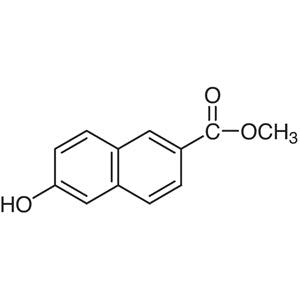
Methyl6-Hydroxy-2-naphthoate TCI H1053
Regular price Rp 1.961.400,00Regular price -
Sodium3-Hydroxy-2-naphthoate TCI H0284
Regular price Rp 3.180.450,00Regular price -
Methyl3-Hydroxy-2-naphthoate TCI H0283
Regular price Rp 1.829.100,00Regular price -
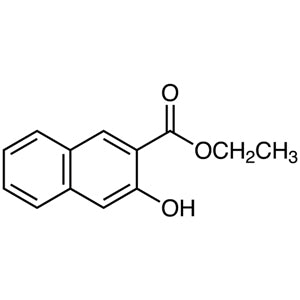
Ethyl3-Hydroxy-2-naphthoate TCI E1249
Regular price From Rp 928.200,00Regular price -
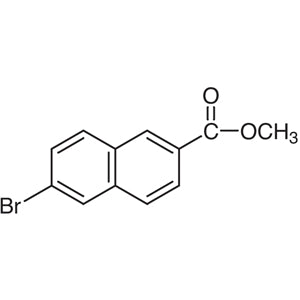
Methyl6-Bromo-2-naphthoate TCI B2202
Regular price From Rp 1.538.250,00Regular price -
Sodium2-Naphthoate TCI N0617
Regular price From Rp 2.254.350,00Regular price -
Methyl1-Naphthoate TCI N0615
Regular price Rp 3.446.100,00Regular price -
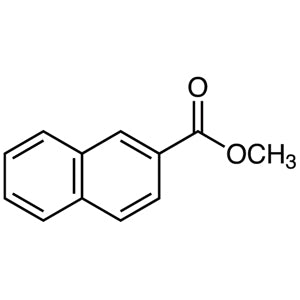
Methyl2-Naphthoate TCI M3169
Regular price From Rp 2.889.600,00Regular price