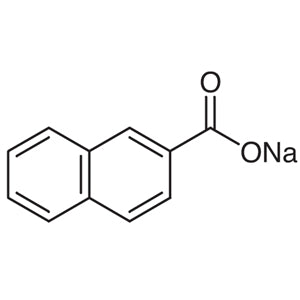
TCI N0617 Sodium 2-Naphthoate (CAS 17273-79-9) is the sodium salt of 2-naphthoic acid, an aromatic carboxylic acid built on a naphthalene framework with the carboxylate group at the 2-position. As a salt, it supplies a carboxylate anion that is ready to react, and it usually dissolves in water more easily than the free acid. In the laboratory it serves as a non-heterocyclic building block for organic synthesis, as a ligand in coordination chemistry, and as a source of the naphthoate anion for a range of physicochemical studies.
Researchers choose Sodium 2-Naphthoate because it pairs a rigid aromatic framework with a water-soluble ionic group. That pairing makes it useful in aqueous systems, such as aggregation studies, work on interactions with surfactants, and metal complex formation. The salt form is also practical for synthesis. It can be acidified to give 2-naphthoic acid, or it can react directly with suitable electrophiles to form esters. The naphthalene framework absorbs UV light and fluoresces, so the compound can also work as a simple spectroscopic probe for monitoring the systems it is added to.
For laboratories in Indonesia, Sodium 2-Naphthoate suits inorganic and coordination chemistry researchers who prepare metal carboxylate complexes, as well as organic chemists who need a naphthalene-based building block for synthesis. University research groups, graduate students, and institutional laboratories working in physical chemistry can use it to study aggregation, surfactant interactions, and spectroscopic behaviour in aqueous media. Because it comes from TCI as a catalogue reagent, experiments are more reproducible across research projects and teaching work.
- Organic synthesis building block: the naphthalene framework with a ready-to-react carboxylate lets chemists build larger aromatic molecules and naphthoate-containing target compounds.
- Coordination chemistry ligand: the carboxylate anion can bind metal centres, which makes this salt a convenient starting material for preparing and studying metal naphthoate complexes.
- Ester preparation: the salt can react directly with suitable electrophiles to form naphthoate esters, so the free acid does not need to be deprotonated first.
- Aggregation and surfactant interaction studies: the rigid aromatic framework combined with a water-soluble ionic group makes it suitable for investigating self-association and interactions with surfactants in aqueous systems.
- Simple spectroscopic probe: the naphthalene framework absorbs UV light and fluoresces, so the compound can be used to monitor changes in its environment with UV and fluorescence measurements.
| Brand | TCI (product code N0617) |
|---|---|
| CAS number | 17273-79-9 |
| Molecular formula | — |
| Purity | — |
| Category | Chemistry > Building Blocks > Non-Heterocyclic Building Blocks |
| Pack sizes | as listed in the TCI catalogue for this product code |
| Physical form | solid sodium salt |
| Storage | keep tightly closed in a cool, dry place away from strong acids |
Store Sodium 2-Naphthoate in its original, tightly closed container in a cool, dry, well-ventilated area, away from moisture, direct sunlight, and incompatible materials such as strong acids and strong oxidising agents. Keep the container clearly labelled and reseal it promptly after each use to limit exposure to air and humidity. Follow standard laboratory safety practice when handling it: wear safety glasses, gloves, and a lab coat, avoid creating or breathing in dust, and weigh the material in a well-ventilated area or a fume hood. Wash your hands after handling, and consult the supplier's Safety Data Sheet for specific hazard, first-aid, and disposal information before use.
—
Produk Terkait
-
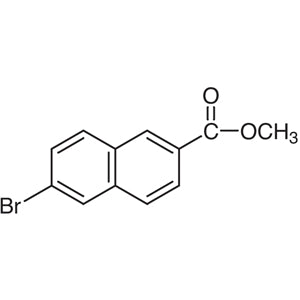
Methyl6-Bromo-2-naphthoate TCI B2202
Regular price From Rp 1.538.250,00Regular price -
Methyl1-Naphthoate TCI N0615
Regular price Rp 3.446.100,00Regular price -
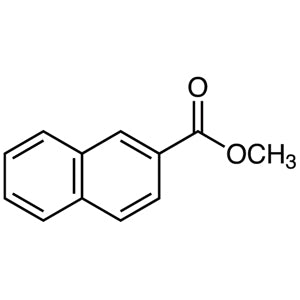
Methyl2-Naphthoate TCI M3169
Regular price From Rp 2.889.600,00Regular price -
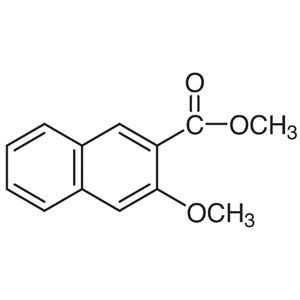
Methyl3-Methoxy-2-naphthoate TCI M1462
Regular price Rp 2.625.000,00Regular price -
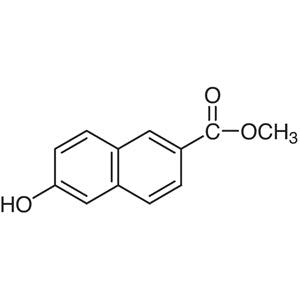
Methyl6-Hydroxy-2-naphthoate TCI H1053
Regular price Rp 1.961.400,00Regular price -
Phenyl1-Hydroxy-2-naphthoate TCI H0797
Regular price Rp 1.035.300,00Regular price -
Sodium3-Hydroxy-2-naphthoate TCI H0284
Regular price Rp 3.180.450,00Regular price -
Methyl3-Hydroxy-2-naphthoate TCI H0283
Regular price Rp 1.829.100,00Regular price