1-(p-Tolyl)butane-1,3-dione is a chemical compound widely used in organic reactions for the synthesis of complex molecules. As a building block in chemical synthesis, it serves as a versatile intermediate that enables the formation of various functional groups through substitution and oxidation reactions. Its structural simplicity and reactivity make it a valuable tool in both academic and industrial research settings. This compound is particularly useful in the development of aromatic and heterocyclic compounds, contributing to the advancement of chemical research and innovation.
The compound is known for its chemical stability and consistent performance across different reaction conditions. Its molecular structure allows for high reactivity, making it suitable for a wide range of chemical transformations. Additionally, it remains stable under normal storage conditions, which enhances its usability and reduces the risk of degradation. These properties make it a reliable choice for researchers seeking a dependable and flexible reagent.
In Indonesian laboratories, 1-(p-Tolyl)butane-1,3-dione is commonly used in chemical research, especially in the synthesis of new compounds and the development of chemical materials. Its availability in solid form and compatibility with various reagents contribute to its widespread application in both academic and industrial settings. The compound’s reliability and versatility make it a preferred choice for chemists working on complex molecular structures and functional group modifications.
Related TCI products
- TCI C4041 6302-55-2 1-(4-Chlorophenyl)butane-1,3-dione
- TCI M3573 1631-28-3 1-(p-Tolyl)-1H-pyrrole-2,5-dione
- TCI B2935 1070-70-8 1,4-Bis(acryloyloxy)butane (stabilized with MEHQ)
- TCI B0684 4534-68-3 meso-Butane-1,2,3,4-tetracarboxylic Acid
- TCI M3139 760-93-0 Methacrylic Anhydride [stabilized with 1,1,3-Tris(3-tert-butyl-4-hydroxy-6-methylphenyl)butane]
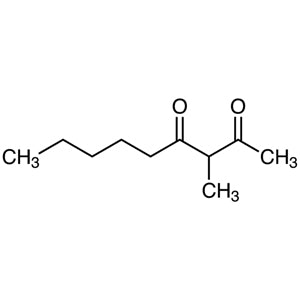
- TCI M3277 113486-29-6 3-Methylnonane-2,4-dione
- Organic synthesis applications benefit from this compound's ability to participate in substitution and oxidation reactions, enabling the creation of complex molecular structures.
- It is ideal for the development of aromatic and heterocyclic compounds due to its structural versatility and reactivity in chemical transformations.
- In molecular structure studies, the compound provides a stable base for exploring reactivity and chemical behavior under various conditions.
- It supports research into chemical reactivity and molecular interactions, making it a key reagent in analytical and synthetic chemistry.
- Indonesian laboratories use it extensively in the synthesis of new chemical compounds, contributing to advancements in material science and pharmaceutical research.
| Brand | TCI |
|---|---|
| CAS number | 4023-79-4 |
| Molecular formula | — |
| Purity | — |
| Category | Chemistry > Building Blocks > Non-Heterocyclic Building Blocks |
| Pack sizes | Available in various quantities as per standard laboratory supply |
| Physical form | Solid |
| Storage | Store in a cool, dry place away from direct sunlight |
This compound should be stored in a cool, dry environment to maintain its stability and prevent degradation. It is recommended to keep it in airtight containers to minimize exposure to moisture and air. Due to its chemical reactivity, it should be handled with appropriate personal protective equipment such as gloves and safety goggles. It is important to ensure that the storage area is well-ventilated to avoid the accumulation of any potentially harmful vapors. Proper labeling of containers is essential for safe handling and to prevent accidental use. Laboratories should follow standard chemical safety protocols to ensure safe storage and use of this compound.
—
Produk Terkait
-
1-(4-Chlorophenyl)butane-1,3-dione TCI C4041
Regular price From Rp 2.332.050,00Regular price -
1-(p-Tolyl)-1H-pyrrole-2,5-dione TCI M3573
Regular price From Rp 2.386.650,00Regular price -
1,4-Bis(acryloyloxy)butane(stabilizedwithMEHQ) TCI B2935
Regular price Rp 637.350,00Regular price -
meso-Butane-1,2,3,4-tetracarboxylicAcid TCI B0684
Regular price From Rp 717.150,00Regular price -
MethacrylicAnhydride[stabilizedwith1,1,3-Tris(3-tert-butyl-4-hydroxy-6-methylphenyl)butane] TCI M3139
Regular price From Rp 1.193.850,00Regular price -
3-Methylnonane-2,4-dione TCI M3277
Regular price From Rp 2.279.550,00Regular price -
1,3,4,6-Tetrakis(butoxymethyl)tetrahydroimidazo[4,5-d]imidazole-2,5(1H,3H)-dione TCI T3799
Regular price Rp 5.141.850,00Regular price -
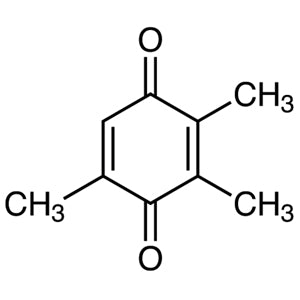
2,3,5-Trimethylcyclohexa-2,5-diene-1,4-dione TCI T3768
Regular price Rp 3.949.050,00Regular price


![760-93-0 Methacrylic Anhydride [stabilized with 1,1,3-Tris(3-tert-butyl-4-hydroxy-6-methylphenyl)butane] - AMI Scientific](http://amiscientific.com/cdn/shop/files/TCI2510M3139.jpg?v=1767127793&width=533)
![15968-37-3 1,3,4,6-Tetrakis(butoxymethyl)tetrahydroimidazo[4,5-d]imidazole-2,5(1H,3H)-dione - AMI Scientific](http://amiscientific.com/cdn/shop/files/TCI2510T3799.jpg?v=1769058295&width=533)