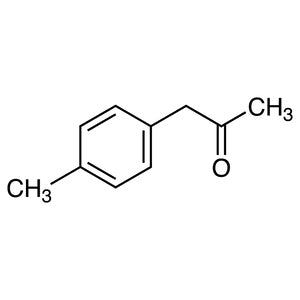
1-(p-Tolyl)propan-2-one is a versatile organic compound widely used in laboratory settings for the synthesis of complex molecules. As a key building block in organic chemistry, it plays a crucial role in the development of heterocyclic compounds and their derivatives. Its structural simplicity allows for easy modification through various functional group substitutions, making it a valuable tool for chemists engaged in synthetic research. This compound is commonly found in both academic and industrial laboratories, supporting a wide range of chemical transformations and experimental protocols.
The compound's stable molecular structure and controlled reactivity make it a preferred choice for laboratory use. It exhibits predictable behavior under different reaction conditions, which enhances its reliability in synthetic processes. Its ability to participate in both substitution and addition reactions further broadens its applicability. These properties ensure that it can be safely handled and utilized in diverse experimental setups, contributing to the efficiency and accuracy of chemical synthesis.
In Indonesian laboratories, 1-(p-Tolyl)propan-2-one is frequently used in pure chemical research and pharmaceutical development. Chemists and researchers rely on this compound for the synthesis of new compounds, testing reactivity, and creating intermediate substances. Its availability in solid form and ease of processing make it a practical choice for laboratories requiring consistent and reliable chemical materials.
Related TCI products
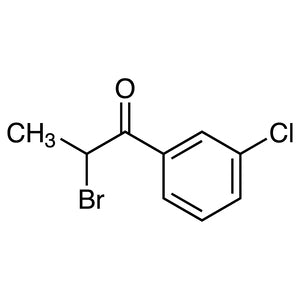
- TCI B2932 34911-51-8 2-Bromo-1-(3-chlorophenyl)propan-1-one
- TCI T4311 104-09-6 2-(p-Tolyl)acetaldehyde
- TCI T3700 7391-28-8 3-Oxo-3-(p-tolyl)propanenitrile
- TCI T3097 84682-27-9 1-(p-Tolyl)-1-cyclohexanecarboxylic Acid
- TCI T2797 1505-50-6 3-(p-Tolyl)propionic Acid
- TCI T2377 7148-03-0 2-(p-Tolyl)benzoic Acid
- Organic synthesis: This compound is ideal for creating complex molecules due to its reactivity and structural versatility.
- Pharmaceutical research: It serves as a building block for developing new drug compounds and intermediate chemicals.
- Heterocyclic compound synthesis: Its ability to form stable intermediates makes it suitable for creating ring structures.
- Functional group modification: It allows for the introduction of various functional groups in synthetic pathways.
- Analytical chemistry: It is used as a reference standard for identifying and quantifying organic compounds in samples.
| Brand | TCI |
|---|---|
| CAS number | 2096-86-8 |
| Molecular formula | — |
| Purity | — |
| Category | Chemistry > Building Blocks > Non-Heterocyclic Building Blocks |
| Pack sizes | Available in various quantities as per standard laboratory supply |
| Physical form | Solid |
| Storage | Store in a cool, dry place away from light and moisture |
This compound should be stored in a cool, dry environment, away from direct sunlight and moisture. It is recommended to use airtight containers to prevent exposure to air and humidity. Due to its chemical nature, it should be handled in a well-ventilated area to minimize inhalation risks. Avoid contact with skin and eyes, and use appropriate personal protective equipment when handling. It is important to keep the material away from incompatible substances to ensure safe storage and usage in the laboratory.
—
Produk Terkait
-
2-Bromo-1-(3-chlorophenyl)propan-1-one TCI B2932
Regular price From Rp 1.881.600,00Regular price -
2-(p-Tolyl)acetaldehyde TCI T4311
Regular price From Rp 3.100.650,00Regular price -
3-Oxo-3-(p-tolyl)propanenitrile TCI T3700
Regular price Rp 1.273.650,00Regular price -
1-(p-Tolyl)-1-cyclohexanecarboxylicAcid TCI T3097
Regular price From Rp 1.644.300,00Regular price -
3-(p-Tolyl)propionicAcid TCI T2797
Regular price From Rp 2.359.350,00Regular price -
2-(p-Tolyl)benzoicAcid TCI T2377
Regular price From Rp 769.650,00Regular price -
4-(p-Tolyl)butyricAcid TCI T1727
Regular price From Rp 1.035.300,00Regular price -
p-TolylAcetate TCI A0670
Regular price From Rp 584.850,00Regular price