5-(4-Methoxyphenyl)-1,3,4-thiadiazol-2-amine is a chemical compound widely used as a building block in the synthesis of heterocyclic compounds. This material plays a crucial role in organic chemistry laboratories, where it serves as a key intermediate in the development of complex molecular structures. Its unique combination of a methoxyphenyl group and a thiadiazole ring makes it highly versatile for chemical modifications and functional group transformations. Due to its structural complexity, it is often employed in the design of pharmaceuticals and other specialized chemical products.
The compound is valued for its chemical stability under controlled conditions, making it a reliable reagent for synthetic processes. However, it is sensitive to moisture and air exposure, requiring careful handling and storage. Its reactivity with various functional groups allows for precise chemical manipulations, which is essential in research requiring high accuracy and reproducibility. These properties make it a preferred choice for scientists working on advanced chemical synthesis projects.
In Indonesian laboratories, this compound is commonly used in pharmaceutical and organic chemistry research. It supports the development of new drug candidates and other specialized chemical compounds. Its application spans across academic institutions and research centers, contributing to the advancement of chemical sciences in the region. Researchers rely on its predictable behavior and structural versatility to achieve their experimental goals.
Related TCI products
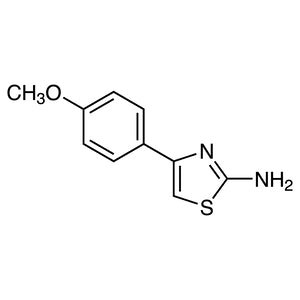
- TCI A3631 2104-04-3 4-(4-Methoxyphenyl)thiazol-2-amine
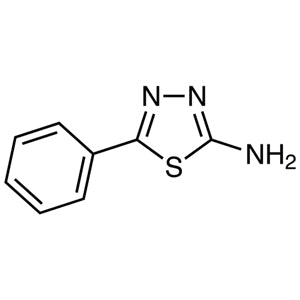
- TCI A3002 2002-03-1 2-Amino-5-phenyl-1,3,4-thiadiazol
- TCI M2100 53723-88-9 (5-Mercapto-1,3,4-thiadiazol-2-ylthio)acetic Acid
- TCI A0425 2349-67-9 2-Amino-5-mercapto-1,3,4-thiadiazole
- TCI T3544 2937-81-7 1,3,4-Thiadiazole-2,5-diamine
- TCI T2884 18686-82-3 1,3,4-Thiadiazole-2-thiol
- Pharmaceutical research utilizes this compound for the synthesis of novel drug molecules due to its ability to form stable heterocyclic structures.
- Organic chemistry experiments benefit from its reactivity with various functional groups, enabling the creation of complex molecular frameworks.
- Drug development projects incorporate this compound as a key intermediate in the design of bioactive compounds with therapeutic potential.
- Academic research in chemical synthesis leverages its structural versatility for the exploration of new chemical reactions and pathways.
- Industrial chemical processes use this compound as a building block for the production of specialized chemical intermediates.
| Brand | TCI |
|---|---|
| CAS number | 1014-25-1 |
| Molecular formula | — |
| Purity | — |
| Category | Chemistry > Building Blocks > Heterocyclic Building Blocks |
| Pack sizes | — |
| Physical form | — |
| Storage | Store in a dry, cool place away from moisture and air exposure. |
This compound should be stored in a dry, cool environment to prevent moisture absorption and degradation. It is recommended to use airtight containers to minimize exposure to air and humidity. Due to its reactivity, it should be handled in a well-ventilated area with appropriate personal protective equipment. Avoid contact with moisture and ensure that storage conditions are controlled to maintain its chemical integrity. Regular monitoring of storage conditions is essential to ensure the compound remains suitable for use in laboratory applications. Proper labeling and safe handling practices are crucial to prevent accidents and ensure the compound's effectiveness in research settings.
—
Produk Terkait
-
4-(4-Methoxyphenyl)thiazol-2-amine TCI A3631
Regular price From Rp 1.696.800,00Regular price -
2-Amino-5-phenyl-1,3,4-thiadiazol TCI A3002
Regular price Rp 2.121.000,00Regular price -
(5-Mercapto-1,3,4-thiadiazol-2-ylthio)aceticAcid TCI M2100
Regular price From Rp 1.458.450,00Regular price -
2-Amino-5-mercapto-1,3,4-thiadiazole TCI A0425
Regular price From Rp 769.650,00Regular price -
1,3,4-Thiadiazole-2,5-diamine TCI T3544
Regular price Rp 2.995.650,00Regular price -
1,3,4-Thiadiazole-2-thiol TCI T2884
Regular price Rp 3.180.450,00Regular price -
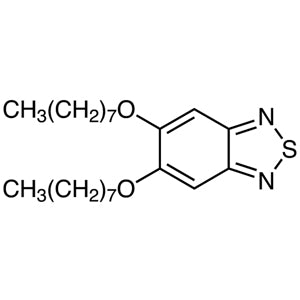
5,6-Bis(n-octyloxy)-2,1,3-benzothiadiazole TCI B4440
Regular price Rp 3.817.800,00Regular price -
2,1,3-Benzothiadiazole TCI B0921
Regular price From Rp 1.140.300,00Regular price