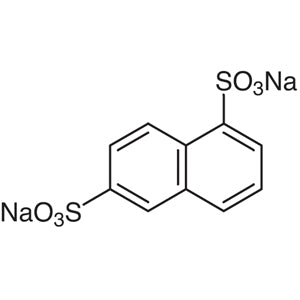
TCI N0011 Disodium 1,6-Naphthalenedisulfonate with CAS number 1655-43-2 is the disodium salt of naphthalene-1,6-disulfonic acid, an aromatic compound carrying two sulfonate groups at the 1 and 6 positions of the naphthalene skeleton. In the laboratory, this material serves as a non-heterocyclic building block for organic synthesis, particularly in routes toward dyes, aromatic intermediates, and surface-active compounds. This specific sulfonate positional isomer matters because it determines the direction of subsequent substitution reactions and the final shape of the target molecule a chemist intends to construct.
The characteristics that make it a preferred choice begin with its good solubility in water, thanks to two highly polar sulfonate groups, so reactions can be run in an aqueous medium that is safer and more environmentally friendly than organic solvents. The sulfonate groups are strongly acidic and have already been neutralised into the sodium salt, so the material is a stable solid, not corrosive in the way the free acid form is, and easy to handle on the bench. Its naphthalene skeleton also provides characteristic ultraviolet absorption, so reaction monitoring and purity analysis can be carried out by liquid chromatography.
In Indonesian laboratories, this building block is typically used in academic and industrial research settings working on dye chemistry, aromatic intermediates, and surfactant development. Because the reactions it supports can be run in water, it fits well in laboratories where solvent handling and waste management are practical constraints. Its solid, non-corrosive, salt form also suits routine weighing and preparation work at the bench without the special precautions demanded by free sulfonic acids.
Related TCI products
- TCI N0441 1655-29-4 Disodium 1,5-Naphthalenedisulfonate
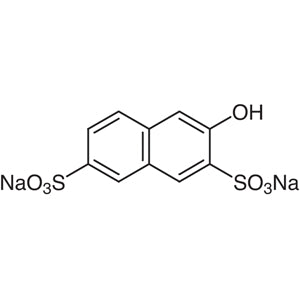
- TCI N0029 135-51-3 Disodium 3-Hydroxy-2,7-naphthalenedisulfonate
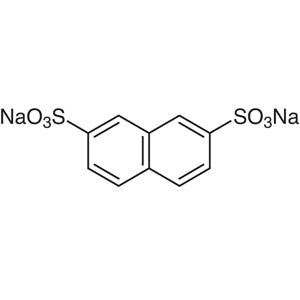
- TCI N0014 1655-35-2 Disodium 2,7-Naphthalenedisulfonate
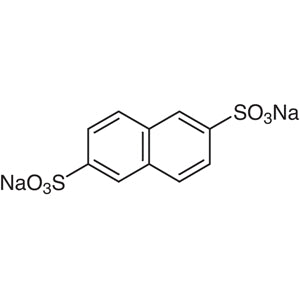
- TCI N0013 1655-45-4 Disodium 2,6-Naphthalenedisulfonate
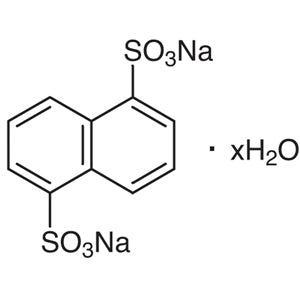
- TCI N0012 1655-29-4 Disodium 1,5-Naphthalenedisulfonate Hydrate
- TCI A0337 842-15-9 Monopotassium 7-Amino-1,3-naphthalenedisulfonate Hydrate
- Dye synthesis research: the defined 1,6-sulfonate substitution pattern directs subsequent coupling and substitution steps, giving chemists control over the structure of the aromatic colourant being built.
- Aromatic intermediate preparation: the naphthalene skeleton bearing two sulfonate handles serves as a starting scaffold for multi-step routes toward more elaborate aromatic target molecules.
- Surfactant and surface-active compound development: the combination of a hydrophobic naphthalene core and two highly polar sulfonate groups reflects the structural motif these materials require.
- Aqueous-medium organic synthesis: excellent water solubility allows reactions to be performed in water rather than organic solvents, simplifying both safety handling and laboratory waste management.
- Chromatographic method work: the characteristic ultraviolet absorption of the naphthalene ring system makes this compound convenient for liquid chromatography monitoring of reaction progress and purity assessment.
| Brand | TCI |
|---|---|
| CAS number | 1655-43-2 |
| Molecular formula | — |
| Purity | — |
| Category | Chemistry > Building Blocks > Non-Heterocyclic Building Blocks |
| Pack sizes | available in standard TCI catalogue pack sizes; please confirm the required size when ordering |
| Physical form | stable solid, non-corrosive in its sodium salt form |
| Storage | keep in a closed container in a dry place, protected from moisture |
- Chemical identity: disodium salt of naphthalene-1,6-disulfonic acid
Store this material in a tightly closed container in a cool, dry place, away from moisture, since the sulfonate salt is polar and readily takes up water from humid air. Original manufacturer containers or clean, well-sealed glass or chemically compatible plastic bottles with clear labelling are suitable. Handle the solid on the bench with standard laboratory personal protective equipment: safety glasses, gloves, and a laboratory coat. Weigh and transfer the powder in a way that avoids generating dust, preferably in a fume hood or a well-ventilated area. Although the sodium salt is not corrosive in the way the free sulfonic acid is, avoid direct contact with skin and eyes, and wash hands after handling. Keep containers closed when not in use, and consult the manufacturer's safety data sheet before first use and before disposal of any residues.
—
Produk Terkait
-
Disodium1,5-Naphthalenedisulfonate TCI N0441
Regular price From Rp 505.050,00Regular price -
Disodium3-Hydroxy-2,7-naphthalenedisulfonate TCI N0029
Regular price From Rp 1.510.950,00Regular price -
Disodium2,7-Naphthalenedisulfonate TCI N0014
Regular price Rp 2.094.750,00Regular price -
Disodium2,6-Naphthalenedisulfonate TCI N0013
Regular price Rp 1.035.300,00Regular price -
Disodium1,5-NaphthalenedisulfonateHydrate TCI N0012
Regular price Rp 477.750,00Regular price -
Monopotassium7-Amino-1,3-naphthalenedisulfonateHydrate TCI A0337
Regular price From Rp 903.000,00Regular price -
Disodium1-Naphthol-3,6-disulfonateHydrate TCI V0037
Regular price Rp 584.850,00Regular price -
Sodium4-Amino-1,5-naphthalenedisulfonate TCI A0342
Regular price Rp 1.298.850,00Regular price