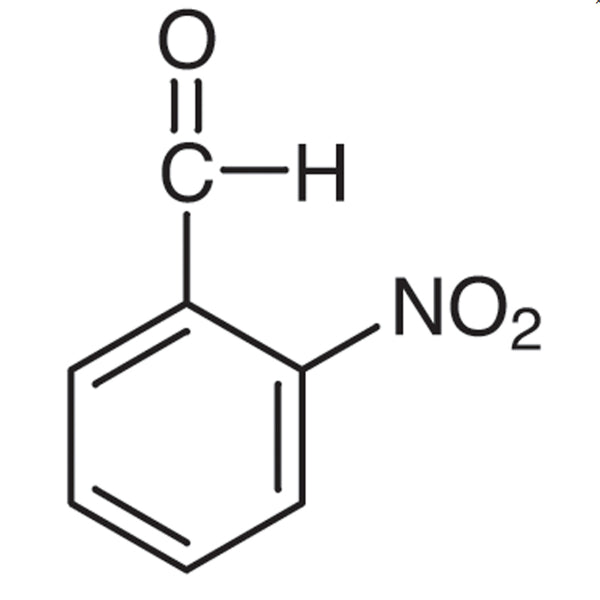
2-Nitrobenzaldehyde is a chemical compound widely used in organic laboratory reactions. It serves as a key building block in the synthesis of various complex molecules due to its reactive nature. The compound contains both an aldehyde group and a nitro group, which contribute to its versatility in chemical transformations. Its unique molecular structure makes it an essential reagent for chemists working on diverse synthetic pathways. In laboratory settings, it is frequently employed in the development of heterocyclic compounds, intermediates, and other chemical products with significant applications in pharmaceuticals, materials science, and industrial chemistry.
The reactivity of 2-Nitrobenzaldehyde is largely attributed to the presence of the nitro group, which imparts electron-withdrawing properties. This characteristic enables the compound to participate effectively in substitution and reduction reactions, making it a preferred choice for chemists seeking high reactivity. The compound's ability to interact with a wide range of reagents enhances its utility in complex synthetic processes. Additionally, its relatively stable nature under controlled conditions ensures safe handling and storage, making it a reliable option for laboratory use.
In Indonesian laboratories, 2-Nitrobenzaldehyde is commonly used in organic chemistry research, particularly in academic and research institutions. It plays a vital role in the development of new chemical compounds and the study of reaction mechanisms. Its availability and chemical properties make it an essential component in the toolkit of chemists working on advanced synthetic projects.
- Organic synthesis is a primary application where 2-Nitrobenzaldehyde is used to construct complex molecules through various reaction mechanisms.
- Heterocyclic compound development benefits from its reactivity, allowing for the formation of nitrogen-containing ring structures essential in pharmaceuticals.
- Intermediate production relies on this compound due to its ability to participate in multiple chemical transformations, making it a versatile building block.
- Material science research utilizes it for the synthesis of polymers and functional materials with specific chemical properties.
- Pharmaceutical research employs it in the development of drug candidates, where its reactivity supports the creation of bioactive compounds.
| Brand | TCI |
|---|---|
| CAS number | 552-89-6 |
| Molecular formula | — |
| Purity | — |
| Category | Chemistry > Building Blocks > Non-Heterocyclic Building Blocks |
| Pack sizes | Available in various quantities as per standard laboratory requirements |
| Physical form | Liquid |
| Storage | Store in a cool, dry place away from direct sunlight and incompatible materials |
2-Nitrobenzaldehyde should be stored in a cool, dry environment to maintain its stability and prevent degradation. It is recommended to keep the compound in a tightly sealed container to minimize exposure to air and moisture. Due to its reactivity, it should be stored away from strong oxidizing agents and incompatible substances. Proper ventilation is essential when handling the compound to ensure safe laboratory conditions. Always use appropriate personal protective equipment, such as gloves and safety goggles, to prevent direct contact. Regular monitoring of storage conditions is advised to ensure the compound remains in optimal condition for use.
—
Produk Terkait
-
4-Bromo-3-nitrobenzaldehyde TCI B5101
Regular price From Rp 717.150,00Regular price -
3-Bromo-5-nitrobenzaldehyde TCI B4982
Regular price From Rp 637.350,00Regular price -
5-Bromo-2-nitrobenzaldehyde TCI B4192
Regular price From Rp 1.035.300,00Regular price -
4-Bromo-2-nitrobenzaldehyde TCI B4146
Regular price From Rp 1.326.150,00Regular price -
4-Nitrobenzaldehyde TCI N0559
Regular price From Rp 1.167.600,00Regular price -
4'-Nitrobenzanilide TCI N0396
Regular price Rp 2.466.450,00Regular price -
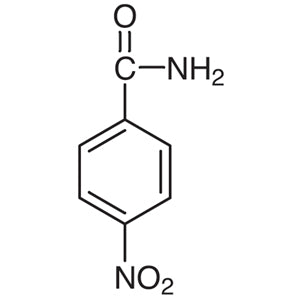
4-Nitrobenzamide TCI N0323
Regular price From Rp 1.220.100,00Regular price -
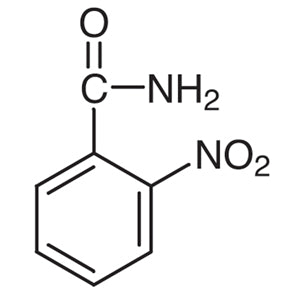
2-Nitrobenzamide TCI N0322
Regular price Rp 3.260.250,00Regular price