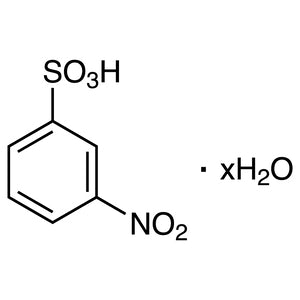
3-Nitrobenzenesulfonic Acid is a chemical compound widely used in laboratory settings as a fundamental building block in various chemical reactions. It plays a critical role in organic synthesis, particularly in the creation of complex organic molecules. Its unique molecular structure, containing both a nitro group and a sulfonic acid group, contributes to its high reactivity and versatility. This compound is essential for researchers aiming to develop new materials, pharmaceuticals, or chemical intermediates. Due to its functional groups, it can participate in multiple reaction mechanisms, making it a valuable tool in synthetic chemistry.
The compound's reactivity stems from its ability to undergo substitution and redox reactions, which are fundamental in organic chemistry. Its high reactivity allows it to interact with a wide range of reagents, enabling the synthesis of diverse chemical structures. Additionally, its sulfonic acid group provides stability and solubility in aqueous solutions, which is advantageous in many laboratory procedures. These properties make it a preferred choice for chemists working on complex molecular transformations and functional group modifications.
In Indonesian laboratories, 3-Nitrobenzenesulfonic Acid is commonly used in organic chemistry research, especially in the development of new compounds and molecular modifications. It is also integrated into advanced educational programs to help students understand reaction mechanisms and synthetic strategies. Its availability in various packaging formats supports both small-scale experiments and larger research projects, ensuring accessibility for a wide range of applications.
Related TCI products
- Organic synthesis is a primary application where this compound is used to build complex molecular structures through substitution and redox reactions.
- Pharmaceutical research benefits from its reactivity, enabling the synthesis of drug intermediates and functionalized compounds.
- Material science applications leverage its chemical properties to develop new polymers and functional materials.
- Analytical chemistry utilizes its reactivity for the identification and quantification of compounds in various samples.
- Educational institutions incorporate it into advanced chemistry courses to teach synthesis techniques and reaction mechanisms.
| Brand | TCI |
|---|---|
| CAS number | 98-47-5 |
| Molecular formula | — |
| Purity | — |
| Category | Chemistry > Building Blocks > Non-Heterocyclic Building Blocks |
| Pack sizes | Available in various sizes to suit different experimental needs |
| Physical form | Solid powder |
| Storage | Store in a cool, dry place away from direct sunlight |
This compound should be stored in a cool, dry environment to maintain its chemical integrity. It is recommended to keep it in a sealed container to prevent moisture absorption, which could affect its reactivity. Due to its potential reactivity, it should be handled in a well-ventilated area, preferably with appropriate personal protective equipment. Avoid exposure to heat or direct sunlight to prevent degradation. It is important to store it separately from incompatible substances to ensure safety in the laboratory. Proper labeling and storage conditions are essential for maintaining the compound's effectiveness and safety during use.
—
Produk Terkait
-
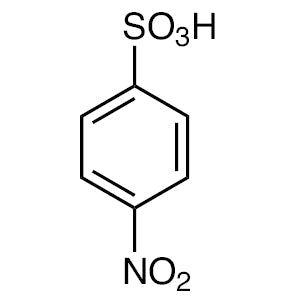
4-NitrobenzenesulfonicAcid TCI N0140
Regular price From Rp 3.312.750,00Regular price -
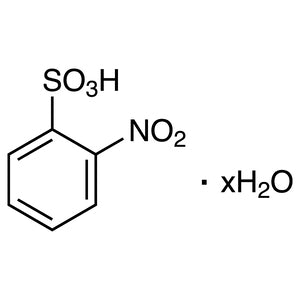
2-NitrobenzenesulfonicAcid TCI N0139
Regular price From Rp 1.008.000,00Regular price -
3-AminobenzenesulfonicAcid TCI A0265
Regular price From Rp 505.050,00Regular price -
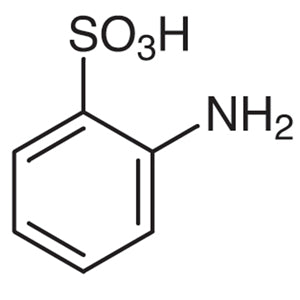
2-AminobenzenesulfonicAcid TCI A0266
Regular price From Rp 769.650,00Regular price -
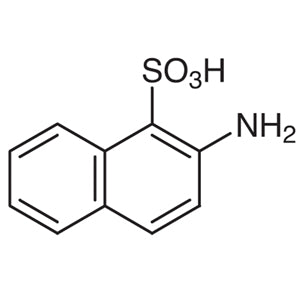
2-Amino-1-naphthalenesulfonicAcid TCI A0343
Regular price From Rp 477.750,00Regular price -
5-Amino-2-naphthalenesulfonicAcid TCI A0346
Regular price From Rp 717.150,00Regular price -
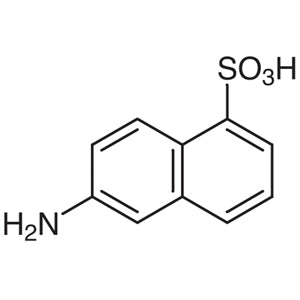
6-Amino-1-naphthalenesulfonicAcid TCI A0347
Regular price From Rp 955.500,00Regular price -
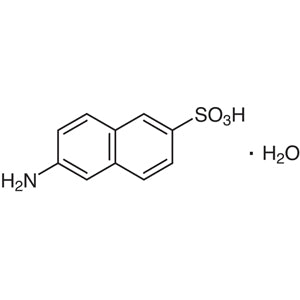
6-Amino-2-naphthalenesulfonicAcidMonohydrate TCI A0348
Regular price From Rp 1.405.950,00Regular price