2-Nitrobenzenesulfonic Acid (2-NBSA) is a chemical compound widely used in various organic reactions within laboratory settings. It serves as a key building block in the synthesis of complex molecules due to its reactive functional groups. The compound contains both a nitro group and a sulfonic acid group, which make it highly versatile in chemical transformations. Its ability to participate in multiple reaction types makes it an essential reagent for chemists working in both academic and industrial environments.
The chemical properties of 2-NBSA, including its high reactivity and compatibility with a range of reaction conditions, make it a preferred choice for synthetic chemists. It is particularly useful in substitution and electrophilic reactions, where its functional groups can act as electrophilic centers. The compound's ability to undergo nitration, sulfonation, and coupling reactions further enhances its utility in organic synthesis. These characteristics make it a valuable tool in the development of new compounds and materials.
In Indonesian laboratories, 2-NBSA is commonly used in both pure and applied chemical research. It is frequently found in chemical, pharmaceutical, and industrial laboratories, where it plays a crucial role in the synthesis of heterocyclic compounds, pharmaceuticals, and specialty chemicals. Its widespread application in research and development makes it an essential component in scientific studies conducted by educational and research institutions across Indonesia.
Related TCI products
- Synthesis of heterocyclic compounds due to its reactive nitro and sulfonic acid groups, enabling functional group transformations.
- Development of pharmaceuticals as a key intermediate in the synthesis of various drug molecules and medicinal compounds.
- Industrial chemical production where it is used in the manufacture of dyes, surfactants, and other specialty chemicals.
- Organic reaction studies for its ability to participate in electrophilic substitution and coupling reactions.
- Research in chemical engineering for its role in catalytic processes and functional group modifications.
| Brand | TCI |
|---|---|
| CAS number | 80-82-0 |
| Molecular formula | — |
| Purity | — |
| Category | Chemistry > Building Blocks > Non-Heterocyclic Building Blocks |
| Pack sizes | Available in various sizes as per standard laboratory supply |
| Physical form | Solid |
| Storage | Store in a cool, dry place away from moisture and direct sunlight |
2-Nitrobenzenesulfonic Acid should be stored in a cool, dry place, away from moisture and direct sunlight to maintain its chemical integrity. It is recommended to use airtight containers made of materials such as polyethylene or glass to prevent exposure to air and moisture. Due to its reactivity, it should be handled with care using appropriate personal protective equipment, including gloves and safety goggles. It is important to ensure proper ventilation in the laboratory when working with this compound. Avoid contact with incompatible substances such as strong oxidizing agents. Always follow standard laboratory safety protocols to minimize risks associated with its handling and storage.
—
Produk Terkait
-
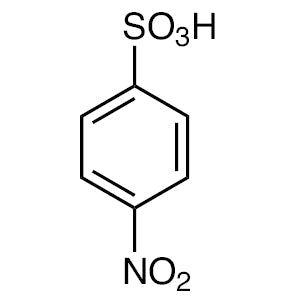
4-NitrobenzenesulfonicAcid TCI N0140
Regular price From Rp 3.312.750,00Regular price -
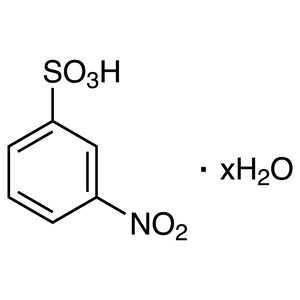
3-NitrobenzenesulfonicAcid TCI N0138
Regular price From Rp 2.704.800,00Regular price -
3-AminobenzenesulfonicAcid TCI A0265
Regular price From Rp 505.050,00Regular price -
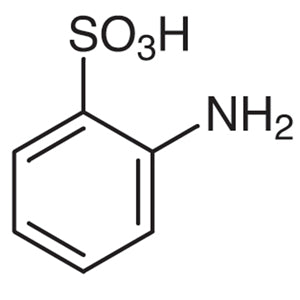
2-AminobenzenesulfonicAcid TCI A0266
Regular price From Rp 769.650,00Regular price -
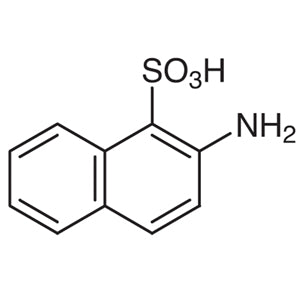
2-Amino-1-naphthalenesulfonicAcid TCI A0343
Regular price From Rp 477.750,00Regular price -
5-Amino-2-naphthalenesulfonicAcid TCI A0346
Regular price From Rp 717.150,00Regular price -
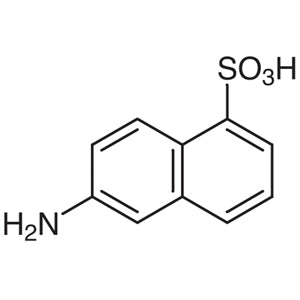
6-Amino-1-naphthalenesulfonicAcid TCI A0347
Regular price From Rp 955.500,00Regular price -
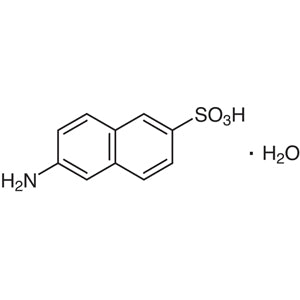
6-Amino-2-naphthalenesulfonicAcidMonohydrate TCI A0348
Regular price From Rp 1.405.950,00Regular price