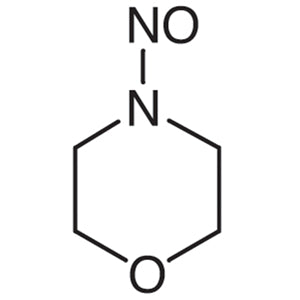
N-Nitrosomorpholine is a chemical compound widely used in laboratory research and development across various scientific disciplines. As a heterocyclic building block, it plays a crucial role in the synthesis of complex organic molecules. Its unique molecular structure allows it to participate in a range of chemical reactions, making it a valuable tool for chemists seeking to create new compounds with specific functional groups. This compound is commonly found in organic chemistry laboratories, where it supports the development of pharmaceuticals, materials science, and biochemical research.
The chemical properties of N-Nitrosomorpholine make it a preferred choice for researchers. It exhibits stability under controlled conditions but is sensitive to temperature and humidity, requiring careful handling. Its ability to react with various functional groups enables it to be used in the synthesis of a wide array of compounds. The reactivity and versatility of N-Nitrosomorpholine make it an essential component in the toolkit of chemists working on innovative projects. Its role in creating complex molecular structures is particularly important in the fields of pharmacology and materials science.
In Indonesian laboratories, N-Nitrosomorpholine is commonly used in academic and industrial research settings. It is an essential material for the development of new pharmaceutical products, chemical compounds, and advanced materials. Its availability in the local market supports the needs of researchers, ensuring that they have access to the necessary reagents for their experiments. The compound’s importance in both academic and industrial contexts highlights its significance in the scientific community.
- Pharmaceutical research utilizes N-Nitrosomorpholine to synthesize new drug compounds due to its reactivity and structural versatility.
- Organic chemistry experiments benefit from its role as a heterocyclic building block, enabling the creation of complex molecular structures.
- Materials science applications leverage its chemical properties to develop advanced polymers and functional materials.
- Biochemical studies employ it in the design of molecules that interact with biological systems, aiding in drug discovery.
- Industrial research uses it as a key reagent in the production of specialty chemicals and chemical intermediates.
| Brand | TCI |
|---|---|
| CAS number | 59-89-2 |
| Molecular formula | — |
| Purity | — |
| Category | Chemistry > Building Blocks > Heterocyclic Building Blocks |
| Pack sizes | Available in standard laboratory quantities |
| Physical form | Liquid |
| Storage | Store in a cool, dry place away from light and moisture |
N-Nitrosomorpholine should be stored in a cool, dry environment, away from direct light and moisture to maintain its chemical stability. It is recommended to use airtight containers made of glass or high-density polyethylene to prevent contamination and evaporation. Due to its sensitivity to temperature and humidity, it should be handled with care during storage and use. Laboratory personnel should wear appropriate personal protective equipment, such as gloves and safety goggles, to ensure safe handling. Regular monitoring of storage conditions is essential to maintain the integrity of the compound and ensure its effectiveness in research applications. Proper storage practices help preserve the compound’s reactivity and ensure its suitability for use in various scientific experiments.
—
Produk Terkait
-
TCI B5774 5,10-Bis(4,4,5,5-tetramethyl-1,3,2-dioxaborolan-2-yl)naphtho[1,2-c:5,6-c']bis([1,2,5]oxadiazole)
Regular price Rp 10.255.350,00Regular price -
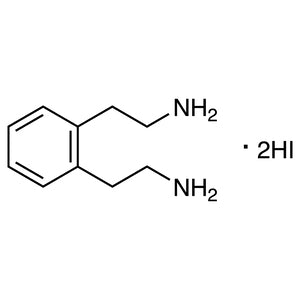
Dihydroiodide TCI B6569
Regular price From Rp 1.936.200,00Regular price -
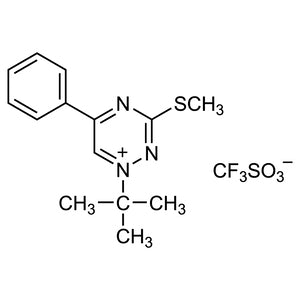
Trifluoromethanesulfonate TCI B7003
Regular price From Rp 1.936.200,00Regular price
![5,10-Bis(4,4,5,5-tetramethyl-1,3,2-dioxaborolan-2-yl)naphtho[1,2-c:5,6-c']bis([1,2,5]oxadiazole) - TCI B5774 - AMI Scientific](http://amiscientific.com/cdn/shop/files/TCI2510B5774.jpg?v=1769180228&width=533)